


Webflow
Website design and development platform.
We may earn a commission from links on this Webflow profile. That does not change the facts we publish.
About
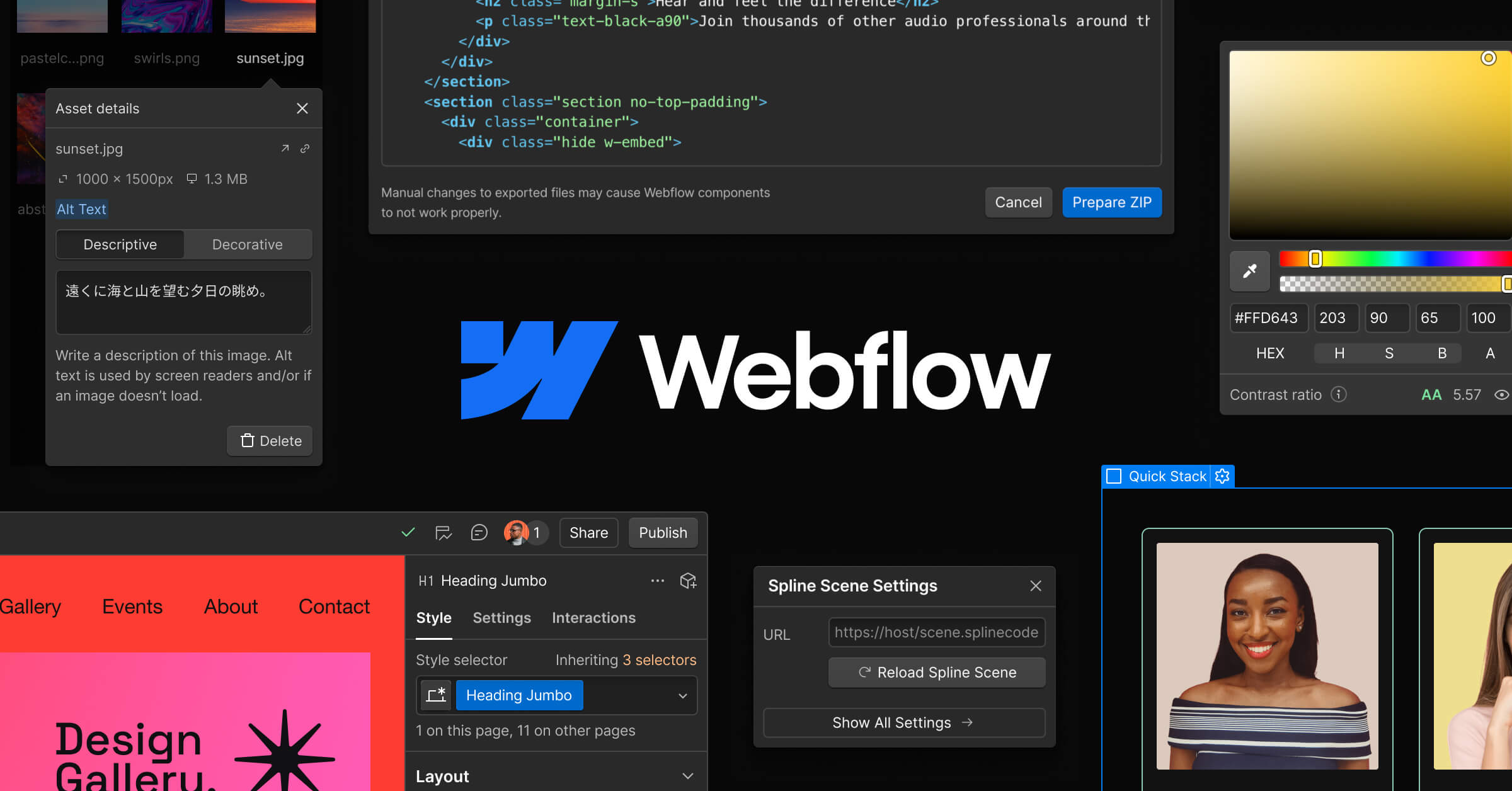
Webflow is a cloud-based SaaS platform offering a visual editor for designing, building, and launching responsive websites. It automatically generates HTML, CSS, and JavaScript, making web development accessible without coding knowledge. The platform also includes AI site building capabilities and is used by businesses of all sizes, from freelancers to enterprises.
Key facts
At-a-glance profile data
- Website
- webflow.com
- Headquarters
- San Francisco, United States
- Founded
- 2013
- Employees
- 10
- Total funding
- $335M (Series D)
- Business model
- B2B
Funding rounds
Tech stack
Detected on webflow.com, last scanned 4 Sept 2026. Run your own scan
- Frontend
- Bootstrap
- Support
- Zendesk
- CMS / Builders
- Webflow
- CDN
- Cloudflare
- Hosting
- AWS
- Email provider
- Google Workspace
- Email marketing
- Adobe Marketo
- Status page
- Statuspage
Frequently asked
How much funding has Webflow raised?
Webflow has raised a total of $335M in funding. The most recent round on record is Series D.
How many employees does Webflow have?
Webflow has approximately 10 people on record.
Does Webflow have an affiliate program?
Yes, Webflow has an affiliate program. Register here: https://try.webflow.com/jlf747qf4olc
Adobe Experience Manager Sites
Adobe Experience Manager Sites is a content management system that competes with Webflow in providing tools for building and managing websites, particularly for enterprise clients.
WordPress Hosting
WP Engine offers managed WordPress hosting, which competes with Webflow as a platform for building and hosting websites, especially for users who prefer the WordPress ecosystem.
Enterprise advertising
Amazon Ads' Brand Innovation Lab uses Webflow to empower designers to build ad experiences, reducing development cycles by nearly 50% and freeing technologists for R&D.
Enterprise financial services
Ebury migrated from 30 separate WordPress instances to Webflow to consolidate its brand and give local teams control of their markets, indicating a need for scalable and flexible web development.
Enterprise electric vehicle charging infrastruct
IONITY rebuilt its website on Webflow Enterprise to launch a custom-integrated, 24-market platform, demonstrating a need for a robust platform to manage a global digital presence.
Mid-market HR software
Lattice transformed its website with Webflow Enterprise to increase site-wide conversion by 20% and launch new web experiences in two days instead of two weeks, highlighting Webflow's ability to support rapid iteration and growth.
Enterprise skincare retail
Dermalogica uses Webflow Optimize to run hundreds of experiments across six global sites, indicating a need for advanced A/B testing and personalization capabilities to enhance customer experience and inform business investments.
Enterprise facility services
ABM utilized Webflow to reshape its brand story and accelerate publishing from weeks to hours, demonstrating a need for a platform that can support digital transformation and global scalability.
Confirmed customer relationships for Webflow. Speculative buyer-fit guesses are not shown.