


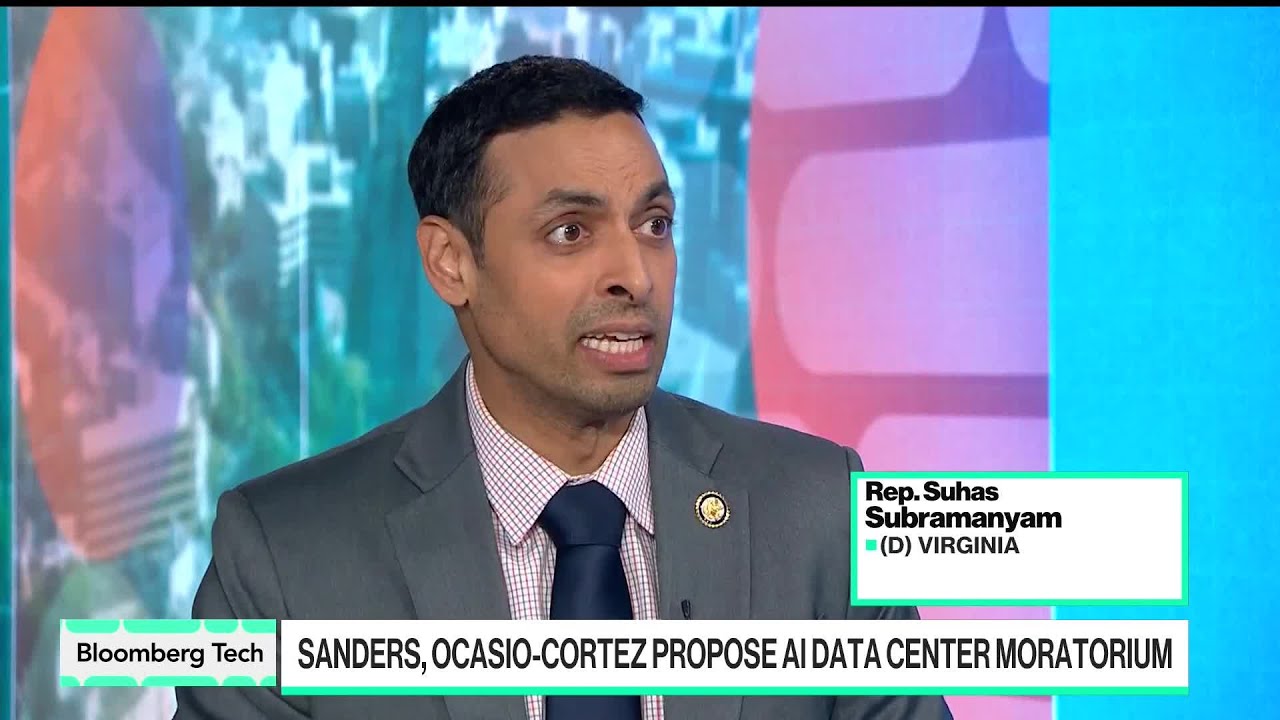
Rep. Subramanyam on AI Data Centers and Power

Rep. Suhas Subramanyam discusses the challenges of AI data center expansion, advocating for distributed development and greater corporate responsibility for energy infrastructure.

5 min read
Rep. Subramanyam on AI Data Centers and Power
Bloomberg Technology

On Bloomberg Technology, U.S. Representative Suhas Subramanyam (D-Virginia) discussed the rapid expansion of AI data centers and their impact on communities, particularly regarding energy consumption and infrastructure strain. Subramanyam, a member of the House Committee on Science, Space, and Technology, argued against a complete moratorium on data centers, emphasizing the need for a more balanced and distributed approach to their development.

The full discussion can be found on Bloomberg Technology's YouTube channel.
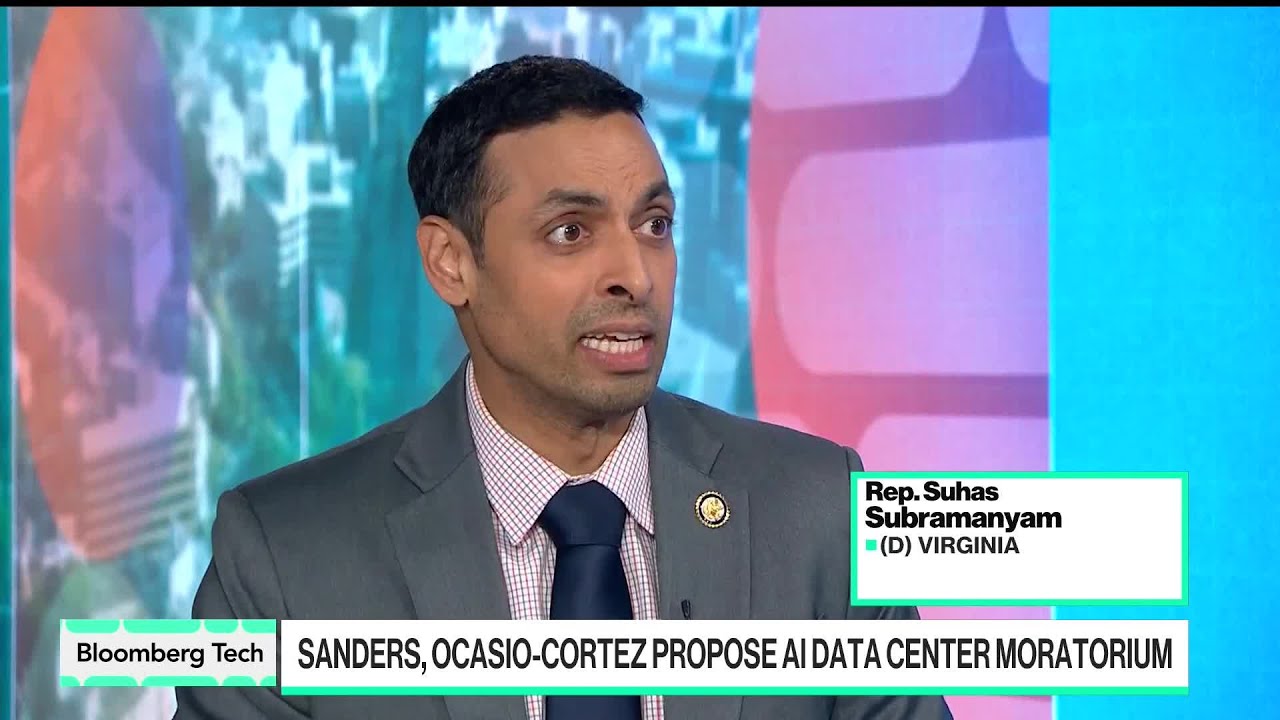
Virginia Rep. Calls for Spreading AI Build-Out Across the Country - Bloomberg Technology
Virginia Rep. Calls for Spreading AI Build-Out Across the Country — from Bloomberg Technology

Who Is Suhas Subramanyam?

Suhas N. Subramanyam is a Democratic member of the U.S. House of Representatives, representing Virginia's 10th congressional district. Before entering Congress, he served in the Virginia House of Delegates and as a technology advisor in the White House during the Obama administration. His background in technology policy and his focus on constituent concerns in his home state of Virginia inform his perspective on the challenges and opportunities presented by the AI boom.

AI Data Centers and Community Impact

The conversation centered on the burgeoning demand for data centers, driven by the computational needs of artificial intelligence. Subramanyam highlighted the significant energy draw of these facilities, noting that in his district, the footprint of data centers is substantial and growing. He pointed out that communities are experiencing frustration as data centers "steamroll" local concerns and strain power grids, leading to issues like brownouts and increased energy costs for residents.

Related startups

Subramanyam stated, "I don't support a full data center moratorium at all. But I do think there's a lot of frustration in communities like mine when it comes to data centers steamrolling communities and having siting issues where communities aren't listened to." He elaborated on the broader impact, explaining that the concentration of data centers in certain areas can lead to unintended consequences such as increased traffic, strains on local infrastructure, and potential impacts on property values.

The Case for Distributed Development

Subramanyam advocated for a more strategic and distributed approach to data center siting. He argued that instead of concentrating these energy-intensive facilities in a few locations, development should be spread across the country. This would help mitigate the strain on local power grids and reduce the concentration of environmental and infrastructural impacts on any single community.

He further elaborated on this point, saying, "What we really need to do is spread out the data centers across the country and get them in places where community buying is there." He suggested that this approach would be more beneficial for both industry and communities, preventing the over-reliance on specific regions and ensuring a more equitable distribution of development.

Addressing the "AI PR Problem"

The discussion also touched upon the public relations challenges faced by the AI industry. Subramanyam observed that AI "doesn't have very much good PR at the moment." He suggested that the industry needs to better communicate the benefits of AI and engage more proactively with communities to address their concerns. He emphasized the importance of transparency and collaboration between tech companies and local governments.

Subramanyam stressed the need for a more proactive approach from the tech sector: "We need to give them a voice. Congress, at the state level, at the local level, every level of government needs to give their constituents a voice." He believes that by working together, rather than being adversarial, the tech industry and government can find solutions that benefit everyone.

Balancing AI Expansion with Power Demand

A key point of contention was how to balance the rapid growth of AI with the existing energy infrastructure and demand. Subramanyam criticized the current model where communities often bear the brunt of the costs associated with new data center development. He stated, "What they [tech companies] do is they take on the capital burden of grid modernization. They buy electricity in bulk, and that's going to raise our electricity prices."

He further explained the economic implications: "The reason why our electricity prices have gone up is because we had to pay for that infrastructure. They're not taking that cost into account. So yes, bring more energy infrastructure, but we have to pay upfront for that energy infrastructure." This highlights a critical issue of who shoulders the financial burden of supporting the massive energy needs of AI.

Subramanyam proposed that companies should be more responsible for the energy infrastructure required to support their operations. He suggested that companies should "volunteering to pay for their own energy infrastructure" and that this approach would be beneficial for the long term. He believes this would help alleviate the financial burden on local communities and ensure a more sustainable growth model for AI development.

The Need for Government Oversight

The representative underscored the necessity of increased government oversight and engagement in the siting and development of data centers. He argued that current practices are short-sighted and can lead to significant backlash from communities facing the negative consequences of concentrated development.

Subramanyam concluded by emphasizing the need for a collaborative approach: "We don't have to be adversarial all the time. We can work together, and we can solve this together." He called for a more structured dialogue and policy framework to ensure that the expansion of AI infrastructure is managed responsibly, considering the needs of both the industry and the communities it impacts.

© 2026 StartupHub.ai. All rights reserved. Do not enter, scrape, copy, reproduce, or republish this article in whole or in part. Use as input to AI training, fine-tuning, retrieval-augmented generation, or any machine-learning system is prohibited without written license. Substantially-similar derivative works will be pursued to the fullest extent of applicable copyright, database, and computer-misuse laws. See our terms.