

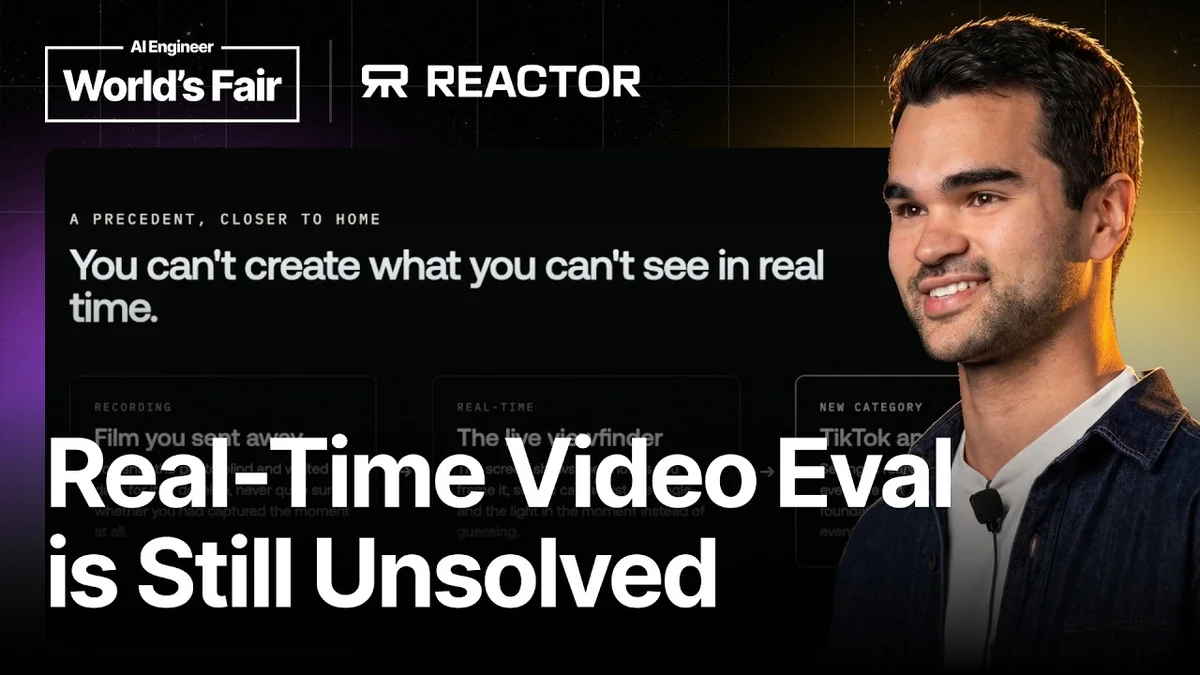
Reactor's Ahmed Ahres on Real-Time Interactive Video

Ahmed Ahres of Reactor discusses the transformative potential of real-time interactive video, moving beyond static generative models to dynamic, programmable content.

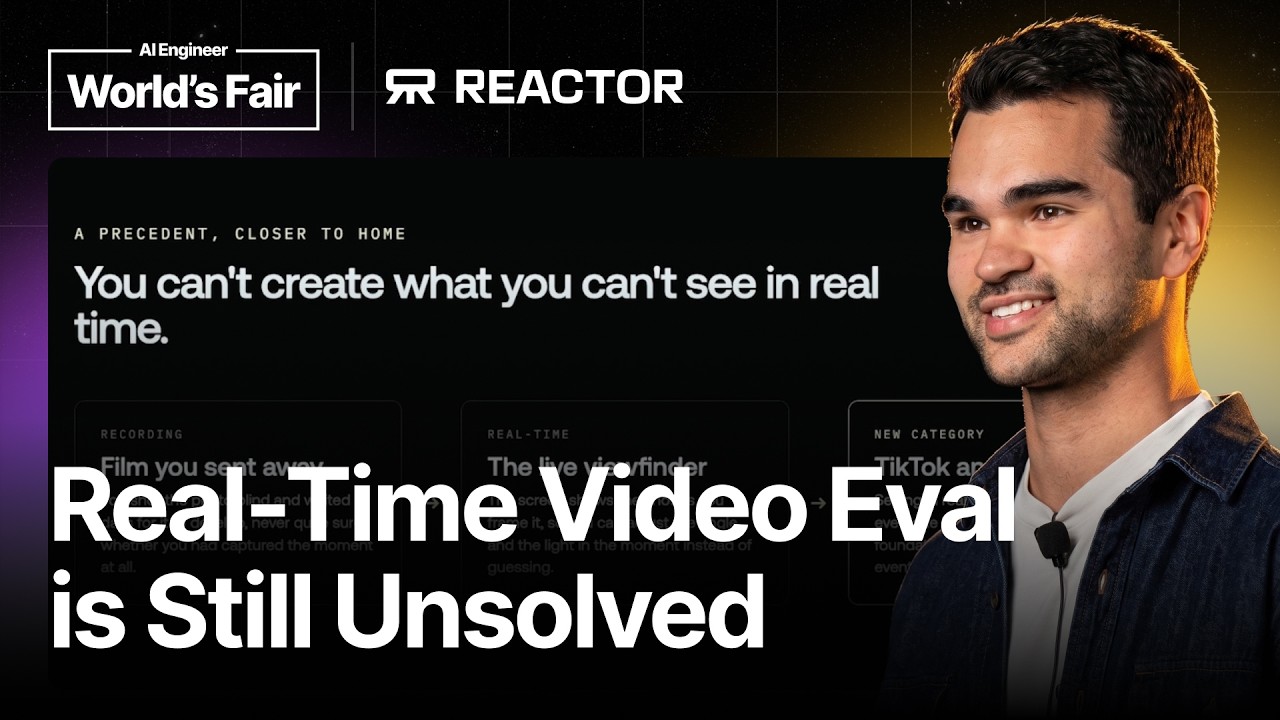
Ahmed Ahres speaking on stage about real-time interactive video.
AI Engineer
Visual TL;DR
Current Generative VideoDriver
static output, cannot alter after generation, like a slot machine
From the article 2 mentionsAhres began by highlighting a fundamental limitation in today's generative video technology: the lack of interactivity and control.
Ahmed Ahres (Reactor)Core
computer vision background, leading Series A company building 'world models'
From the articleAhmed Ahres, Head of Go-to-Market at Reactor, presented a compelling vision for the future of media at the AI Engineer World's Fair, arguing that real-time interactive video is poised to transform content production and consumption.
Lack of InteractivityDriver
users generate video from prompts but output is a static file
From the article 2 mentionsAhres began by highlighting a fundamental limitation in today's generative video technology: the lack of interactivity and control.
Real-Time VideoCore
dynamic, programmable content with transformative potential for media
From the article 9+ mentionsAhmed Ahres, Head of Go-to-Market at Reactor, presented a compelling vision for the future of media at the AI Engineer World's Fair, arguing that real-time interactive video is poised to transform content production and consumption.
Transform ContentEffect
moving beyond static generative models to dynamic, programmable content
From the article 6 mentionsAhmed Ahres, Head of Go-to-Market at Reactor, presented a compelling vision for the future of media at the AI Engineer World's Fair, arguing that real-time interactive video is poised to transform content production and consumption.
Future of MediaOutcome
real-time interactive video as the next medium for content creation
From the article 2 mentionsAhmed Ahres, Head of Go-to-Market at Reactor, presented a compelling vision for the future of media at the AI Engineer World's Fair, arguing that real-time interactive video is poised to transform content production and consumption.
Diverse ApplicationsEffect
poised to transform content production and consumption across industries
From the article 3 mentionsThe presentation showcased diverse applications being built by Reactor's users, demonstrating the practical impact of these models:
Contents(5)

Ahmed Ahres, Head of Go-to-Market at Reactor, presented a compelling vision for the future of media at the AI Engineer World's Fair, arguing that real-time interactive video is poised to transform content production and consumption. Ahres, whose background lies in computer vision and machine learning, heads up a Series A company building the platform for these advanced 'world models'.

Reactor's Ahmed Ahres on Real-Time Interactive Video - AI Engineer
Reactor's Ahmed Ahres on Real-Time Interactive Video, AI Engineer

The Problem with Current Generative Video

Ahres began by highlighting a fundamental limitation in today's generative video technology: the lack of interactivity and control. Current models, such as Sora and Vio, allow users to generate video based on prompts, but the output is a static file. "You get it back, you can't do anything about it. It's a slot machine," Ahres stated, emphasizing that these videos are merely recordings that cannot be altered after generation.

Real-Time as the Next Medium

The core of Ahres's argument centers on the transformative power of real-time interaction. He drew parallels to historical technological shifts: the move from static maps to live GPS, and from film photography to digital cameras with live viewfinders. In both instances, real-time capabilities did not just offer speed improvements; they fundamentally changed the medium and enabled entirely new applications, such as Uber and platforms like Instagram and TikTok.

Ahres posited that when video becomes programmable, like software, "pixels can be generated in real time." This shift, he believes, will alter how we consume and produce content. He outlined three emerging categories of models that facilitate this:

  • Infinite, interactive, real-time video generators: These models are not limited by short runtimes and allow users to steer the narrative and content as it plays out.
  • World models with character control: Similar to the concept behind Google's Genie models, these allow users to control characters within generated worlds, opening possibilities beyond traditional gaming.
  • Live and interactive avatars: While still in early stages and often exhibiting uncanny valley effects, these models promise more realistic and engaging virtual interactions.

Unlocking programmable content and Control

Ahres elaborated on what these real-time models unlock for content creators: programmable content and real control. He asserted that the current struggle for content creators is the lack of granular control over AI-generated media. Real-time feedback, he argued, provides the ultimate level of control, moving away from the "slot machine mentality" of current models.

The potential applications are vast, including personalized advertising, where ads could be generated in real-time based on user behavior. Ahres acknowledged that brands may initially be hesitant due to concerns about AI accuracy, but predicted this would become a standard practice.

Diverse Applications and Future Potential

The presentation showcased diverse applications being built by Reactor's users, demonstrating the practical impact of these models:

  • Interactive live streams: Viewers can influence the content of a live stream in real-time.
  • Medical simulations: Creating virtual environments for training medical professionals to practice procedures and test the effects of treatments.
  • Cooking simulations: Allowing users to interactively follow recipes and experiment with ingredients in a virtual kitchen.
  • Video editing: Applying visual effects and making changes to videos in real-time through prompts or voice commands.

Ahres also detailed the infrastructure required for real-time video, emphasizing the difference between batch inference and continuous streaming, the need for session management to maintain context, and the critical importance of global scale with low-latency processing.

Getting Started with Real-Time Video

Reactor offers a platform to integrate these capabilities through an API, with models like Helios (interactive video), LingBot (world models), LongLive 2.0 (multi-shot film), and Sana-Streaming (video-to-video editing). Ahres encouraged developers to explore the possibilities, noting that integration can be achieved with just a few lines of code. A promotional QR code offered $75 in credits for new users, highlighting Reactor's focus on making advanced AI accessible.

© 2026 StartupHub.ai. All rights reserved. You may not republish this article in full without a license. Search engines and AI research tools may crawl and summarize for reference. Bulk reproduction or model training requires a license. See our terms.
Daniel Singer

Written by

Daniel Singer

Editor, StartupHub.ai

Daniel Singer is the editor of StartupHub.ai, a technology expert and thought leader on AI and its applications across sectors, from fintech and healthcare to developer tooling and consumer software. He writes and tests the tools covered here thoroughly and regularly, and built StartupHub.ai to give founders, operators and buyers a clearer read on what they are actually being sold.