



Phia Faces Scrutiny Over Cookie Stuffing

AI startup Phia, co-founded by Phoebe Gates and Sophia Kianni, faces allegations of cookie stuffing and commission hijacking, raising ethical questions in the AI commerce space.

3 min read
Phoebe Adele Gates and Sophia Kianni co-founded Phia, an AI shopping assistant.
Phoebe Adele Gates and Sophia Kianni, co-founders of Phia, developed an AI shopping assistant.

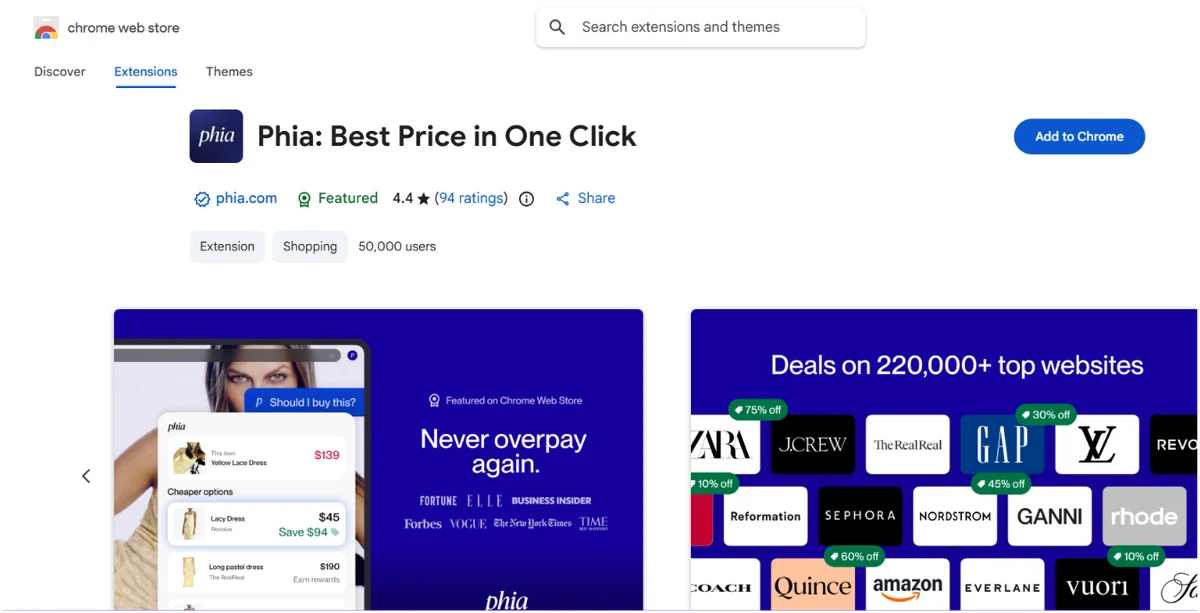
Phia, the AI shopping assistant co-founded by Phoebe Gates and Sophia Kianni, is facing serious allegations of affiliate commission manipulation. Launched in January 2023, the startup quickly garnered attention and significant funding, positioning itself as an innovative tool for smarter, more sustainable shopping.

The Core Allegations

A Bloomberg investigation in July 2026 revealed that Phia’s browser extension allegedly engaged in a practice known as "cookie stuffing." Researchers and competitors found that the extension would inject Phia’s affiliate tracking cookies during the checkout process on major retail sites. This often overrode existing affiliate codes from legitimate sources like publishers and content creators.
Phia co-founders Phoebe Gates and Sophia Kianni
Image credit: Phia

This tactic, also referred to as attribution hijacking, allows a company to claim commissions on sales it did not directly influence. It violates the terms of service for most affiliate networks and merchants, who rely on accurate tracking to compensate genuine referrers.

Phia's Defense and Prior Issues

Phia has responded by stating that the behavior resulted from a December 2024 code change and was not intentional. The company claims the issue was fixed immediately upon notification and the offending functionality removed. Despite these assurances, Impact.com suspended Phia’s account pending its own investigation.

This is not the first time Phia has faced scrutiny. In November 2025, security researchers discovered that an earlier version of the extension transmitted full HTML snapshots of visited webpages to Phia’s servers. This included sensitive, non-shopping pages, raising significant AI shopping assistant privacy concerns, a practice deemed "highly unusual" by experts.

Funding, Celebrity Backing, and Market Context

Phia had raised approximately $45 million in funding, attracting high-profile investors like Notable Capital, Khosla Ventures, and Kleiner Perkins. The company also boasted a significant list of celebrity backers, including Khloé Kardashian, Hailey Bieber, and Kris Jenner, underscoring the trend of substantial startup funding and celebrity investors in the AI space.

These allegations place Phia within a broader context of ethical debates surrounding browser extensions and affiliate marketing. Competitors like Honey and Capital One Shopping have faced similar accusations and legal challenges regarding their own practices, highlighting the inherent browser extension ethical issues.

Legal and Investor Ramifications

As of July 11, 2026, no formal lawsuits or regulatory actions have been publicly filed against Phia, Gates, or Kianni specifically for the cookie stuffing allegations. However, potential legal claims could include breach of contract, tortious interference, and violations of unfair competition laws. Criminal wire fraud charges are possible in egregious cases, though rare for early-stage startups.

While most investors, including celebrity backers, have limited liability, they may face reputational damage and scrutiny over their due diligence. The association with alleged deceptive practices could harm personal brands and future fundraising prospects.

Phia’s situation underscores the tension between aggressive growth tactics and sustainable, ethical scaling for AI consumer startups. Transparency and robust compliance are paramount in navigating the complex affiliate marketing landscape.

© 2026 StartupHub.ai. All rights reserved. Do not enter, scrape, copy, reproduce, or republish this article in whole or in part. Use as input to AI training, fine-tuning, retrieval-augmented generation, or any machine-learning system is prohibited without written license. Substantially-similar derivative works will be pursued to the fullest extent of applicable copyright, database, and computer-misuse laws. See our terms.