


• StartupHub.ai
    StartupHub.aiAI Intelligence
Discover
  • Home
  • Search
  • Trending
  • News
Intelligence
  • Market Analysis
  • Comparison
Tools
  • Market Map Maker
    New
  • Email Validator
Company
  • Pricing
  • About
  • Editorial
  • Terms
  • Privacy
  1. Home
  2. AI News
  3. Neurosymbolic AI Bridging Brains Logic
  1. Home
  2. AI News
  3. Technology
  4. NeuroSymbolic AI: Bridging Brains & Logic
Technology

NeuroSymbolic AI: Bridging Brains & Logic

NeuroSymbolic AI aims to combine the pattern recognition power of neural networks with the logical reasoning of symbolic AI, promising systems that truly understand.

S
StartupHub.ai Staff
Feb 23 at 12:16 PM2 min read
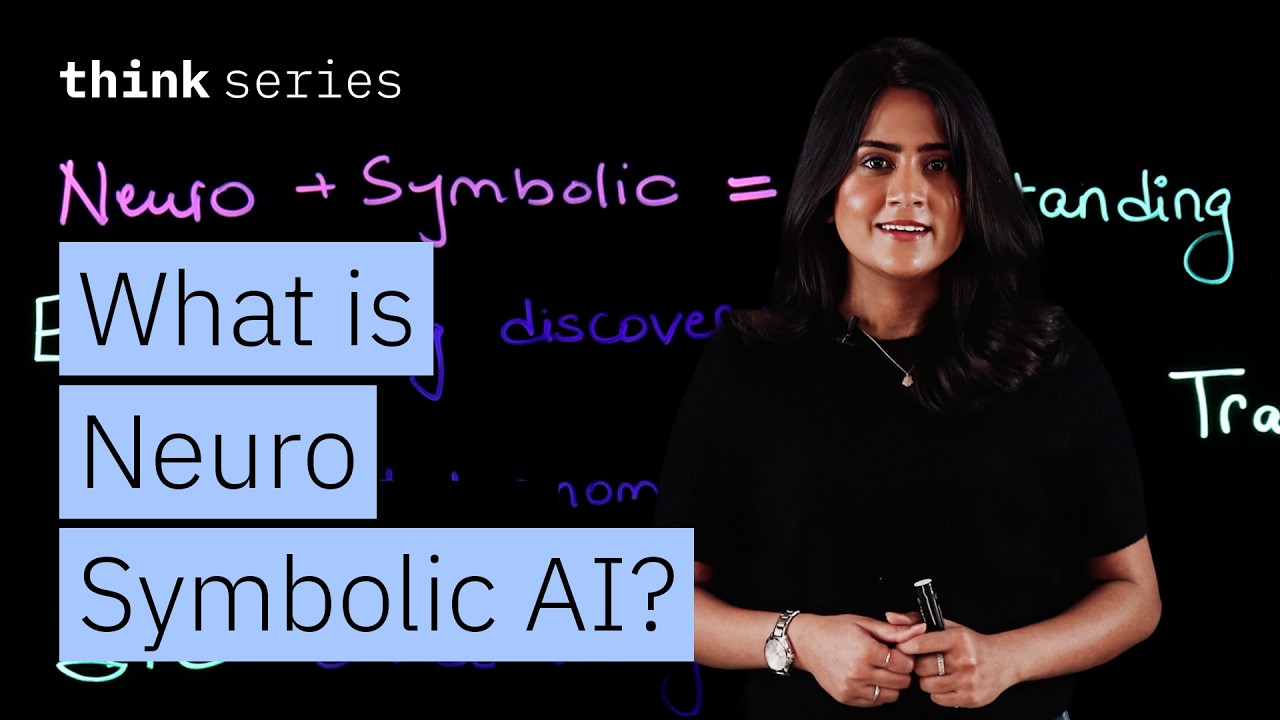
Illustration of neural networks and symbolic logic combining, representing NeuroSymbolic AI, with concepts of understanding and reasoning.
What Is NeuroSymbolic AI? Bridging Reasoning & Neural Networks — IBM on YouTube

The latest frontier in artificial intelligence, NeuroSymbolic AI, seeks to merge the raw pattern recognition power of neural networks with the structured reasoning capabilities of traditional symbolic AI. This hybrid approach, highlighted by IBM, aims to move beyond mere correlation to achieve genuine understanding and explainable intelligence.

Current AI models, often built on neural networks, excel at tasks like image classification or text generation. They identify patterns, tagging a photo as a "cat" or a "beach" based on vast datasets. However, they struggle to explain why they made that classification. Their intelligence is largely associative, recognizing what they've seen before without true comprehension.

Conversely, traditional symbolic AI operates on explicit rules and logic, allowing for step-by-step reasoning. While this provides explainability, it falters when real-world scenarios deviate from predefined templates. A rule-based system might identify a plant by its leaves and stem but fail to classify a cactus, which lacks leaves, as a plant.

What Is NeuroSymbolic AI? Bridging Reasoning & Neural Networks — from IBM

NeuroSymbolic AI combines these strengths. It leverages neural networks for tasks like perceiving shapes and colors in an image. Subsequently, a symbolic reasoning layer applies logical rules. For instance, a NeuroSymbolic system could identify a red, octagonal sign as a "stop sign," even if it's partially obscured or altered, because it understands the underlying rules that define a stop sign, not just its visual pattern.

This integration facilitates "meta-learning," where AI can learn how to reason, not just what to recognize. A NeuroSymbolic model could infer that whales are mammals, even without fur, by applying logical rules about live birth and lungs, updating its understanding without needing millions of new examples for retraining. This results in more robust and adaptive systems.

Practical applications span various sectors. In drug discovery, NeuroSymbolic AI can analyze chemical structures and molecular properties to simulate potential drug candidates. Financial institutions can detect anomalies in transactions with greater accuracy. Legal professionals can extract and reason through clauses in complex documents. For machine learning developers, it offers tools to debug models, check output consistency, and validate reasoning steps, bridging the crucial gap between what a model predicts and why.

Ultimately, NeuroSymbolic AI is not about replacing human intelligence but augmenting it. By creating AI systems that are more explainable and trustworthy, integrating logical reasoning with powerful learning, it paves the way for more collaborative and responsible AI development.

#NeuroSymbolic AI
#Artificial Intelligence
#Neural Networks
#Symbolic AI
#IBM
#Machine Learning
#AI Ethics
Mentioned Profiles

Loading...

AI Daily Digest

Get the most important AI news daily.

GoogleSequoiaOpenAIa16z
+40k readers