Michelle Giuda: The AI Race is About US Open Models, Not China Bans

Michelle Giuda argues the US AI race hinges on fostering domestic open-weight models, not just restricting China, to counter national security risks and ensure global AI leadership.

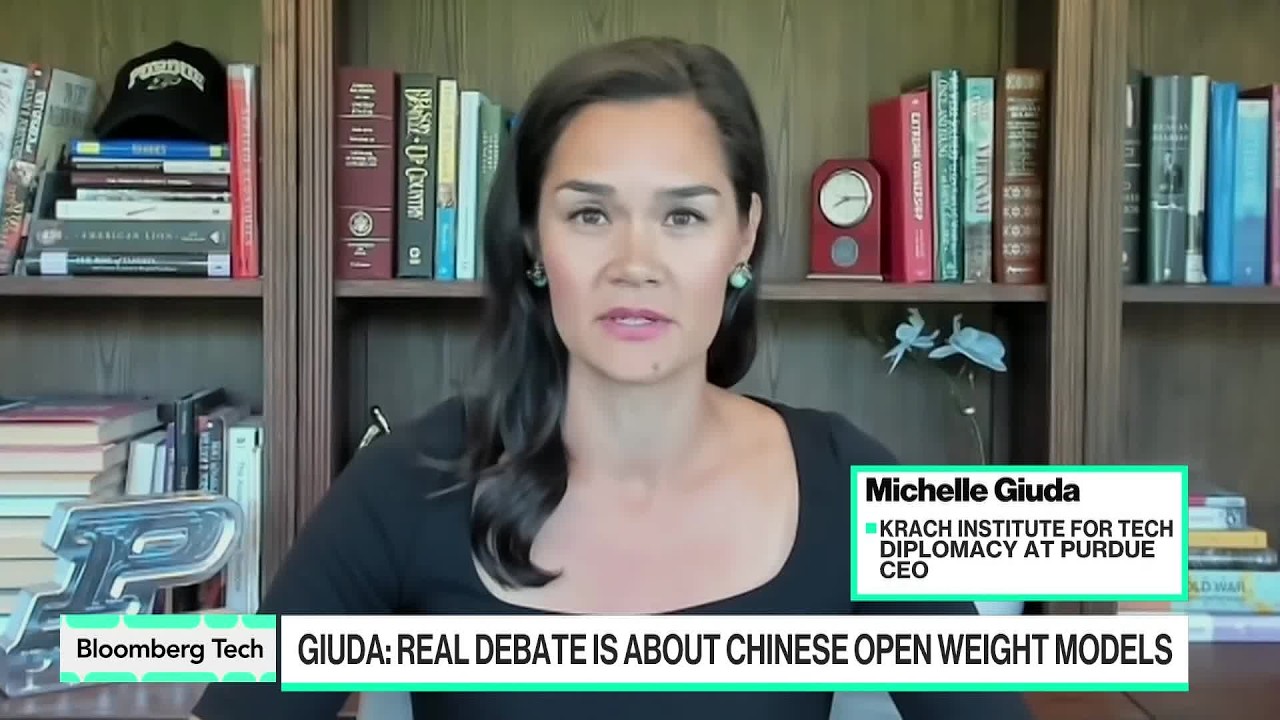
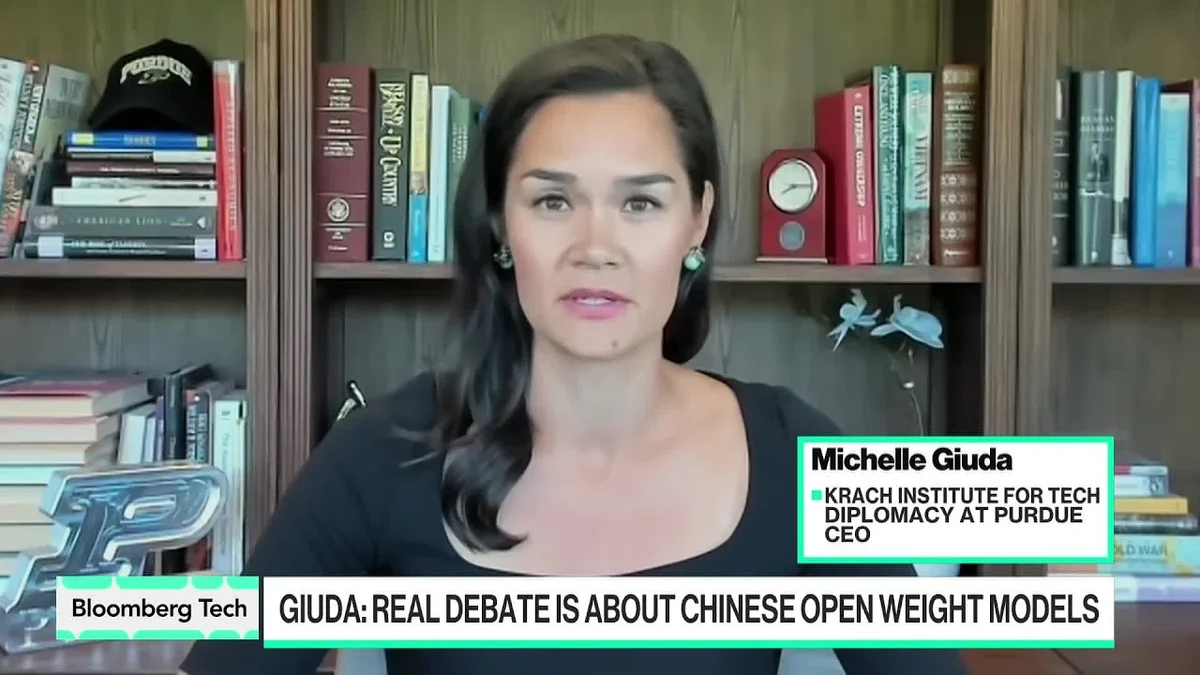
Michelle Giuda speaking in a video interview about AI competition between the US and China.
Bloomberg Technology
Visual TL;DR
Silicon Valley vs. DCDriver
From the articleSpeaking on Bloomberg Tech, Giuda emphasized that the current debate, sparked by recent open-letter discussions, highlights a disconnect between Silicon Valley and Washington D.C.
US AI RaceContext
US AI leadership hinges on domestic open-weight models, not just China bans
From the articleMichelle Giuda, CEO of the Krach Institute for Tech Diplomacy at Purdue and former Assistant Secretary of State, asserts that the United States cannot win the artificial intelligence race by merely limiting China's technological advancements.
Chinese Open ModelsDriver
prevalence and affordability of Chinese open-weight models becoming foundational for startups
From the article 2 mentionsThe core issue, according to Giuda, lies with the prevalence and affordability of Chinese open-weight models.
Giuda's ArgumentCore
Michelle Giuda, CEO Krach Institute, argues against merely limiting China's tech
From the article 9+ mentionsHowever, she countered the argument that simply advocating for open-source models is sufficient.
National Security RiskDriver
From the article 2 mentionsHowever, their origin from an adversary presents significant national security and corporate risks, drawing parallels to past bans on Chinese technology like Huawei and concerns surrounding TikTok and connected vehicles from China.
Foster US ModelsEffect
US must foster domestic open-weight models to counter risks and ensure leadership
From the article 9 mentionsThese models, she explained, are becoming foundational for many startups and new businesses building their AI stacks.
Global AI LeadershipOutcome
ensuring global AI leadership by focusing on offense over defense strategies
From the articleShe also emphasized the importance of securing allies' participation, as a global AI landscape dominated by Chinese technology poses a risk even if the U.S. restricts its domestic use.
Contents(3)

Michelle Giuda, CEO of the Krach Institute for Tech Diplomacy at Purdue and former Assistant Secretary of State, asserts that the United States cannot win the artificial intelligence race by merely limiting China's technological advancements. Speaking on Bloomberg Tech, Giuda emphasized that the current debate, sparked by recent open-letter discussions, highlights a disconnect between Silicon Valley and Washington D.C.

The core issue, according to Giuda, lies with the prevalence and affordability of Chinese open-weight models. These models, she explained, are becoming foundational for many startups and new businesses building their AI stacks. However, their origin from an adversary presents significant national security and corporate risks, drawing parallels to past bans on Chinese technology like Huawei and concerns surrounding TikTok and connected vehicles from China.

StartupHub data

In our directory

TikTok is a short-form video platform that enables users to create, share, and discover entertaining content globally.

Founded
2016
Location
Los Angeles, United States and Singapore
Funding
$27.0B

Global leader in telecommunications equipment, consumer electronics, and digital solutions.

Founded
1987
Location
Shenzhen, China
Funding
$2.7B

The full discussion can be found on Bloomberg Technology's YouTube channel.

'The Real Debate Isn't Open-Weight AI, It's Chinese AI': Krach Institute's Giuda - Bloomberg Technology
'The Real Debate Isn't Open-Weight AI, It's Chinese AI': Krach Institute's Giuda, from Bloomberg Technology

The Real Debate: Chinese Open-Weight AI

Giuda clarified that the debate isn't about open-weight models in general, but specifically about the open-weight models originating from China. She pointed to the recent launch of Kimi 3 as a catalyst for this heightened awareness. "The problem there, right, is we know that presents national security risk. We know it presents corporate risk given all that we know about Chinese technology being untrustworthy," Giuda stated.

She argued that the current focus on what to ban versus what to keep open is a misdirection. Instead, Giuda advocates for a proactive strategy: "The focus should be on how do we turbocharge America's open-weight ecosystem so we have a world-class, robust, really price-effective offering for the rest of the world so we can diffuse American AI as fast as possible." This includes ensuring domestic businesses have access to affordable and capable AI solutions.

Silicon Valley vs. Washington: A Misplaced Focus

Giuda addressed the concern that Washington might overregulate open-source models, potentially hindering American interests. She acknowledged that cheaper, effective open-weight models are crucial for businesses, especially in light of the high costs associated with AI development, referencing a recent significant market capitalization wipeout attributed to AI expenses.

However, she countered the argument that simply advocating for open-source models is sufficient. "The problem is it comes from an adversary, and there is no really robust US trusted alternative to the Chinese open-weight models that we're seeing," Giuda explained. She also touched upon NVIDIA CEO Jensen Huang's views, noting that while Huang advocates for using excellent open-source models, the risk calculus changes when these models originate from an economic adversary.

The Path Forward: Offense Over Defense

Giuda stressed that entrenching Chinese technology into the core of American companies' AI stacks is counterproductive, especially after years of efforts to decouple from China due to various risks. She believes the U.S. government should prioritize developing and deploying affordable, effective, and trusted American AI.

For policy action, Giuda suggested that the President's PCAST (Presidential Advisory Council on Science, Technology, and Engineering) should convene urgently to devise a strategy for aggressively advancing American open-weight AI. She also emphasized the importance of securing allies' participation, as a global AI landscape dominated by Chinese technology poses a risk even if the U.S. restricts its domestic use.


Drawing lessons from past international tech diplomacy, particularly concerning Huawei, Giuda concluded, "We're not gonna win on principle. We're gonna win on price. So how do we get much more cost-effective, trusted American AI open-weight models out into the world now?"

© 2026 StartupHub.ai. All rights reserved. You may not republish this article in full without a license. Search engines and AI research tools may crawl and summarize for reference. Bulk reproduction or model training requires a license. See our terms.
Daniel Singer

Written by

Daniel Singer

Editor, StartupHub.ai

Daniel Singer is the editor of StartupHub.ai, a technology expert and thought leader on AI and its applications across sectors, from fintech and healthcare to developer tooling and consumer software. He writes and tests the tools covered here thoroughly and regularly, and built StartupHub.ai to give founders, operators and buyers a clearer read on what they are actually being sold.

More from Daniel Singer