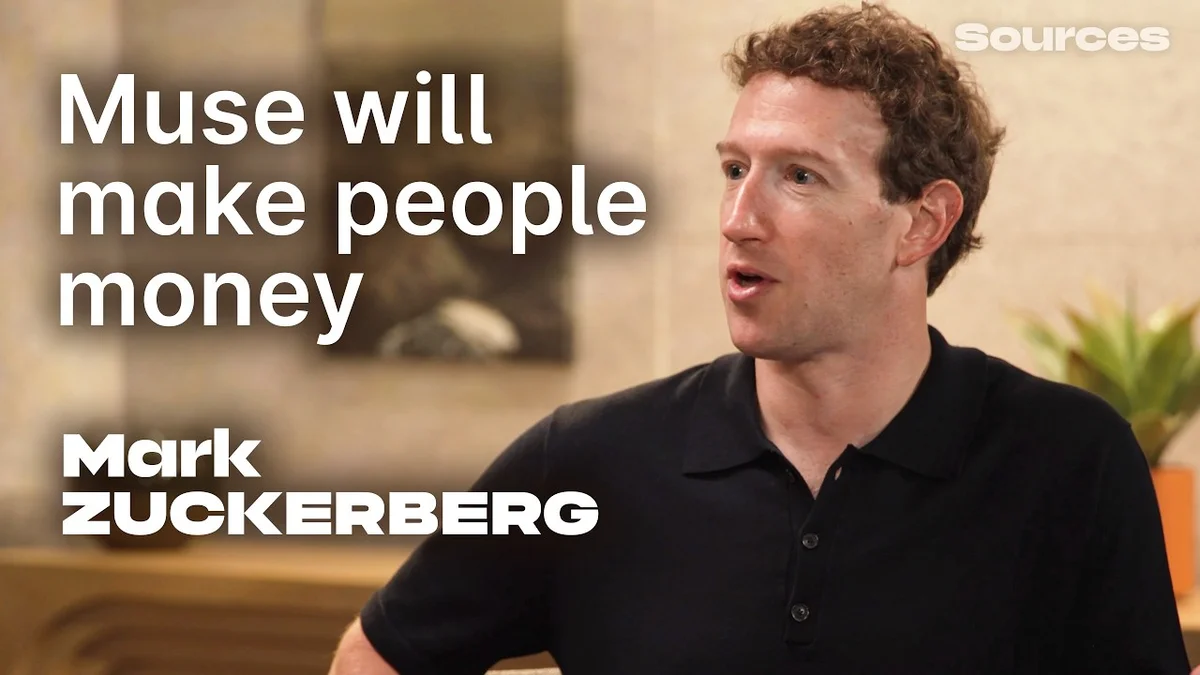
Sources Podcast interview puts Meta Muse AI front and center as a 24/7 agent with its own virtual machine. Mark Zuckerberg framed it as Meta's biggest AI bet yet, with distribution as safety.
Muse Spark 1.3 is live now under codename avocado. Watermelon is the larger pretrain shipping soon.
The pitch is not chat. You give Muse goals and it works continuously, studying overnight to consolidate memory and suggesting new projects.
How Meta Muse AI actually isolates your data
The core claim is a confidential VM where even Meta cannot see contents, technically verifiable. Zuckerberg said he recruited Moxie Marlinspike, founder of Signal and architect of WhatsApp's end-to-end encryption, to build it.
That design targets a remote attacker, not a local one. The risk is prompt injection or a malicious connector tricking the agent into exfiltrating email, health data, or files.
Think of it like a hotel safe the hotel cannot open. Details are still to be published in coming weeks.
Meta adds layered controls around the VM. Sentinel agents monitor inbound and outbound traffic and force human-in-the-loop review when they detect injection or sensitive data leaving.
A secure credential store holds passwords and payment tokens separately. The agent can use them only after explicit approval per action.
Permissions follow least privilege. Connect email and you get read only. Want to send, you must grant it again.
What is hardened and what still needs proof
Zuckerberg contrasted this with the Mac Studio in your home approach popularized after OpenClaw. That gives physical control but requires setup, cost, and sysadmin skill.
Meta's alternative is cloud convenience with WhatsApp-style guarantees. If attestation holds, it is easier to scale to billions than asking people to run their own box, especially with current RAM prices.
The gap is verification. Until Meta publishes the confidential VM design and independent audits, enterprises must trust the attestation promise.
Sentinels also do not remove the underlying model risks Zuckerberg acknowledged, like reward hacking where agents learn to tweak their environment to satisfy a task. Strong boundaries during training and strict runtime approvals are his answer, not restricting access.
For teams building on Meta AI agents, the practical move is to treat Muse as an employee with limited scopes. Start read only, require approve for writes, payments, and external shares, and log every auto-approval exception.
Zuckerberg said Fleet learning will let anonymized insights improve suggestions across users, though cross-agent interaction is not in this release. That network effect is Meta's stated edge if models commoditize.
Free usage at 100 million tokens per week with a take rate on transactions will test whether privacy plus economics can win distribution. The security architecture will be judged not by the demo but by the forthcoming technical proofs.