


Mara Spike counter-UAS system raises $7M

Mara raised $7M pre-seed led by Khosla Ventures to scale Spike, a distributed counter-UAS system built to stop fiber-guided FPV swarms.

4 min read
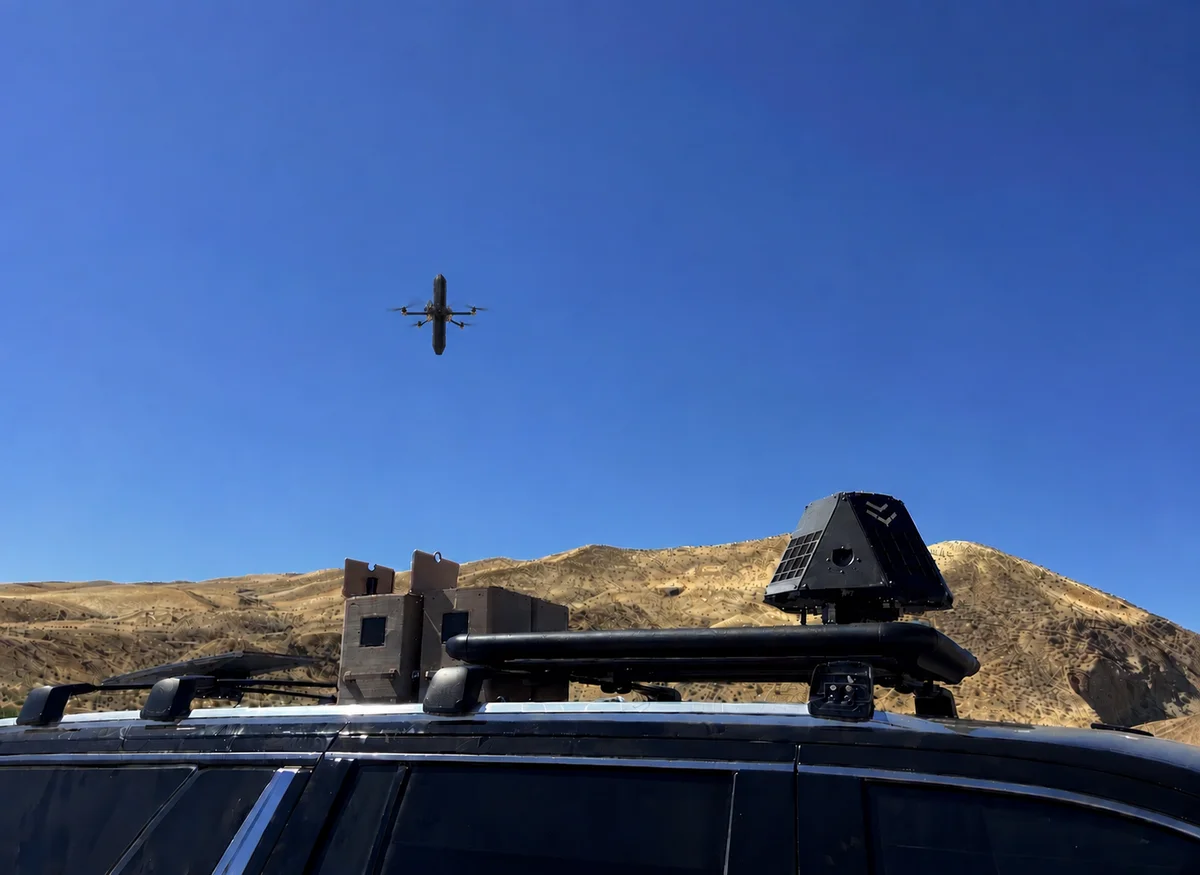
Mara Spike Seeker interceptor drone and Spotter sensor system
Mara's Spike system pairs Spotter sensors with Seeker interceptors for 360-degree FPV defense
Key Takeaways
  • 1
    Mara raised $7M pre-seed led by Khosla Ventures to scale Spike, a cheap distributed interceptor system for FPV swarms

  • 2
    Spike pairs Spotter sensors with 250g tube-launched Seeker interceptors for 360-degree autonomous engagement

  • 3
    Field tests with US Army, special operations and Ukrainian forces show the shift from jamming to kinetic swarm defense
Contents(5)

The Mara Spike counter-UAS system just raised $7 million to kill the cheapest weapon on earth.

San Francisco-based Mara will use the pre-seed to move Spike from field testing to ground-mounted deployment by end of 2026. The round was led by Khosla Ventures, with a16z Speedrun, Night Capital, Palmdrive, Protagonist, Freedom Fund and Indicator Fund participating.
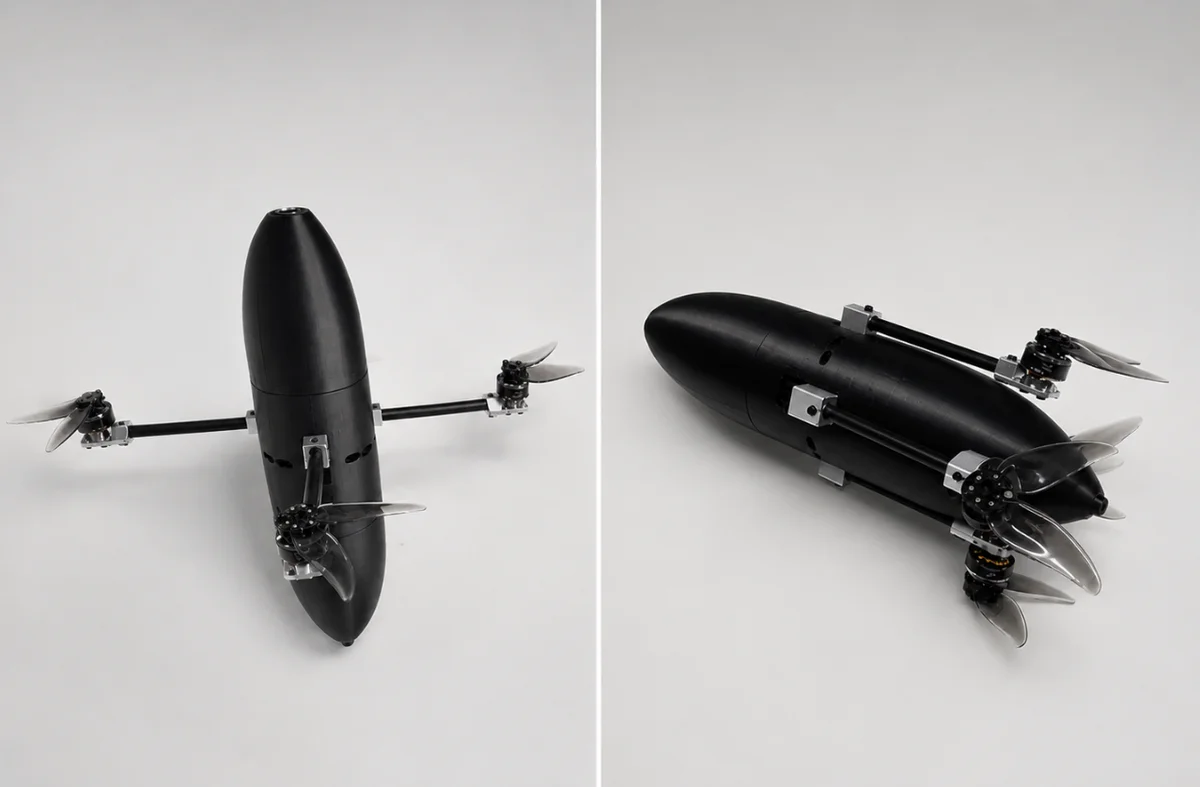
Mara Spike Seeker interceptor drone with folded propeller arms next to deployed sensor
Image credit: Mara

Why does a $7M pre-seed matter now?

An FPV drone costs a few hundred dollars and can disable a vehicle worth millions. Ukrainian commanders attribute 70 to 80 percent of battlefield casualties to drones.

The timing is tactical. Small FPVs now launch from anywhere, arrive in groups from several directions and fly on fiber-optic links that jamming cannot touch.

Russia fielded fiber drones in spring 2024 and Ukraine had approved more than 80 own designs by February 2026. In June 2025, Ukraine's Operation Spiderweb used 117 FPVs launched from trucks inside Russia to hit five airbases thousands of kilometers from the front.

Why can't existing defenses stop them?

Traditional counter-UAS puts one gun, laser or semi-piloted interceptor behind one sensor cone. It works against a large Shahed flying high and predictable. It fails when several cheap FPVs come from different vectors within seconds.

Fiber makes it worse. The cable removes the drone from the electromagnetic spectrum, preventing jamming, interception and spoofing. Epirus had to demonstrate in December 2025 that high-power microwaves could still disable fiber-guided FPVs where RF jamming cannot.

Mara's answer is to distribute the defense. "Small drones changed the battlefield because they distributed the cost and capability of precise attack," said co-founder and CEO Daniel Kofman. Spike creates a mesh of cheap nodes that each aim and shoot in multiple directions at once.

How does Spike actually work?

Spike combines two modular parts that work alone or together. Spotter is the targeting unit, with visual and acoustic sensors plus optional low-signature radar and in-house AI for day, night and all-weather detection.

Seeker is the kinetic interceptor: a 250-gram, tube-launched drone that flies at 200 kilometers per hour and closes with onboard intelligence. A single magazine holds up to 48 Seekers and reloads in under a minute, and Spotter can pass launch orders autonomously while a human stays on the loop to set rules of engagement and abort if needed.

The system is designed to be fully attritable from sensors to interceptors, with 360-degree hemispherical coverage in a portable package. A rucksack kit protects a squad, vehicle mounts cover a convoy, and larger deployments create multi-kilometer perimeters around bases, power plants or even sporting events.

Who built it and has it been tested?

Founders Daniel Kofman and Sriram Raghu met in high school in 2013 and started with tactical FPV prototypes for a Department of Homeland Security program built in dorm rooms. They later co-founded Optivolt, which shipped shade-tolerant smart solar panels to Anduril, the US Air Force and Ukraine. Optivolt had raised an $8.2M seed as a full-stack solar platform for machines and infrastructure.

Mara was founded in October 2024 and went through a16z Speedrun in early 2025. In recent months Seeker completed intercepts cued through US Army software in Texas, Spotter ran hands-free on an armored vehicle in Europe feeding Army command software, and an end-to-end engagement with a US special operations unit saw Spotter detect and cue Seeker without operator input.

In July, Ukrainian forces operated Spotter 40 kilometers from the front line tracking multiple FPVs, and Mara is also running a civilian pilot at a South Korean port. The company holds cooperative testing agreements with three US defense organizations and was selected for NATO's DIANA accelerator.

How does Mara compare on funding and competition?

Investors are crowding the gap. Khosla co-led a $36 million seed for counter-swarm company Skapion in July, Epirus raised $250 million in 2025 for microwave defenses, and Allen Control Systems raised $200 million at a $2.2 billion valuation in June for its Bullfrog gun turret.

StartupHub.ai data shows Mara at 43/100 and its Spike platform at 45/100. That trails the competitors we track: dLocal at 66/100, Fido Solutions at 56/100, Talino at 51/100 and BitPesa at 48/100.

StartupHub.ai data also shows VERIFIED financials for Mara at $950M raised in 2025. Nicole Fraenkel, partner at Khosla Ventures, said what stood out was system cost orders of magnitude lower than anything else seen. Mara plans ground-mounted Spike to customers by end of 2026, with vehicle and man-portable variants and scaled production in 2027.

The bet is simple. Jamming no longer stops the dominant casualty maker, and one-directional guns cannot handle swarms. Cheap autonomy that can fire on dozens of threats at once is the only math that fits.

© 2026 StartupHub.ai. All rights reserved. Do not enter, scrape, copy, reproduce, or republish this article in whole or in part. Use as input to AI training, fine-tuning, retrieval-augmented generation, or any machine-learning system is prohibited without written license. Substantially-similar derivative works will be pursued to the fullest extent of applicable copyright, database, and computer-misuse laws. See our terms.