
Today on Today in AI, we dive into the surprising dip in AI chip stocks ahead of Nvidia's earnings, the booming world of prediction markets, and Apple's latest moves in AI. We also explore the impact of AI on entry-level jobs and OpenAI's new visualization tools.
In this episode
- ChatGPT's Visualize Skill Transforms Dense Info
- Apple unveils M6 chip 2nm, M5 Ultra pushes AI compute
- OpenAI Unveils Jalapeño Chip
- Nvidia Earnings Preview, Apple's AI Macs & OpenAI's Chip Ambitions
- Prediction Markets Gauge Fed, Bitcoin, and Geopolitics
- Anthropic Grants $5M for AI Wellbeing Research
- AI Impact on Entry-Level Jobs: Stanford Study Findings
- AI Stock Picks Today: MSFT, NVDA, INTC Trade Ideas - August 25, 2026
- OpenAI Disrupts Russian Influence Ops
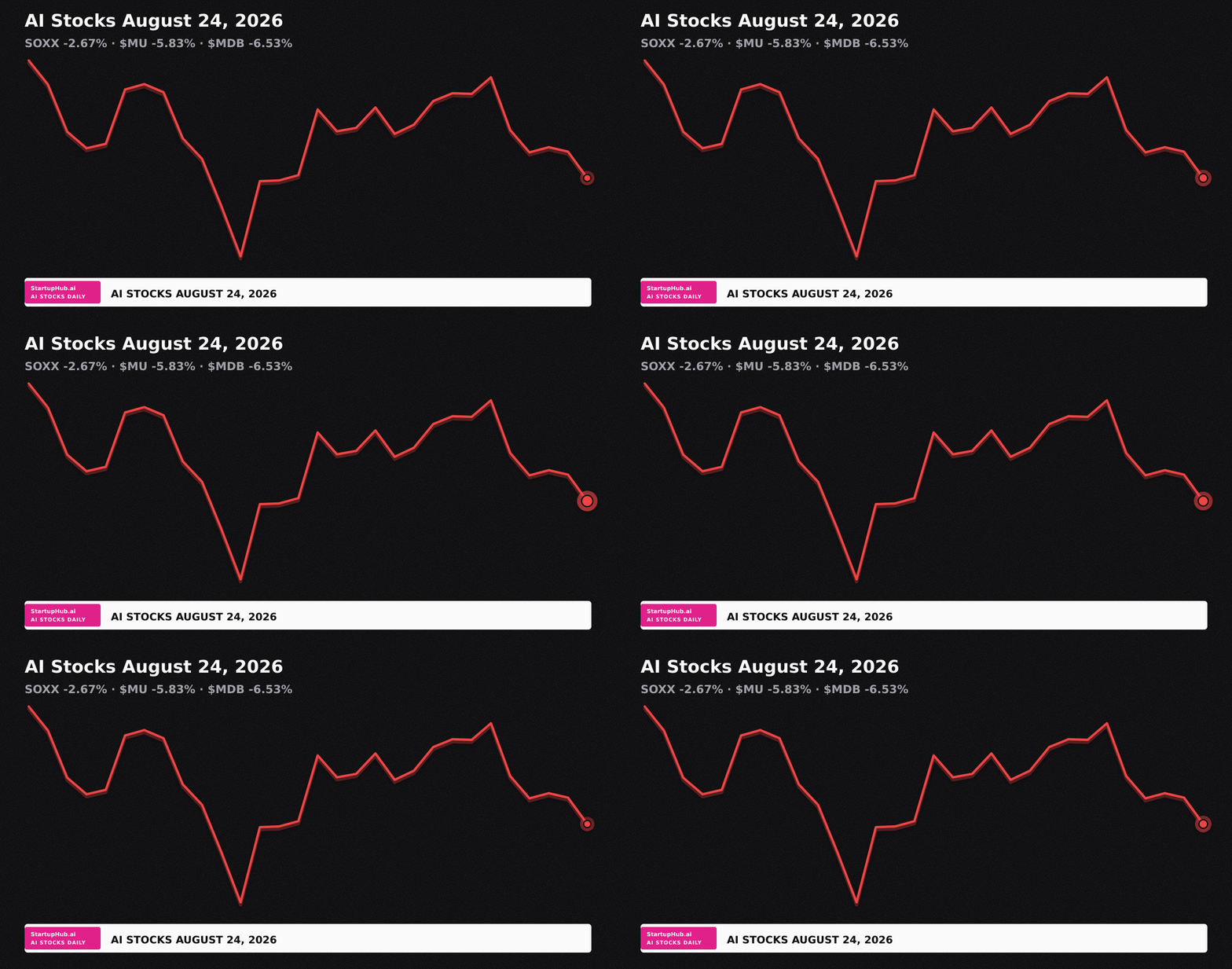
- Micron and MongoDB Sink as AI Chip Complex Buckles Before Nvidia Earnings, SOXX -2.67%
Transcript
Ada: Welcome to Today in AI, I'm Ada.
Sam: And I'm Sam. Today, we're seeing some unexpected turbulence in the AI chip sector, even as other tech giants hold strong. It's a fascinating look at market dynamics ahead of a big week.
Ada: Absolutely, Sam. Kicking things off with our top story: AI chip stocks took a significant hit on Monday. Micron and MongoDB both sank, contributing to a broader decline in the SOXX index by over two and a half percent. This dip comes amidst patent headwinds for Micron, specifically from Netlist, and a general investor nervousness as we inch closer to Nvidia's highly anticipated earnings report on Wednesday.
Sam: It's a really interesting divergence, Ada. While the semiconductor complex buckled, hyperscalers like Meta, Amazon, and Alphabet actually defied the selloff. This is the widest margin we've seen in weeks between these two segments of the tech market. It suggests that while the foundational hardware providers are feeling the pressure, the companies building and deploying large-scale AI applications are still seen as robust.
Ada: Exactly. It raises questions about whether this is a temporary correction or a sign of a more fundamental shift in investor sentiment towards different parts of the AI ecosystem. Everyone's eyes will be on Nvidia's earnings call to see if it can stabilize the chip market.
Sam: Moving on to a completely different, but equally compelling, story: prediction markets are seeing a massive surge in activity. Polymarket, a prominent platform, recorded over ten million dollars in twenty-four hour volume. Traders are placing bets on everything from Federal Reserve interest rate decisions and Bitcoin prices to significant geopolitical events like a potential US-Iran blockade.
Ada: This really underscores the growing mainstream appeal and utility of prediction markets. It's no longer just a niche activity. People are using these platforms to gauge sentiment and speculate on major global events, offering a real-time, aggregated view of collective expectations. It's a fascinating alternative to traditional polling or expert analysis.
Sam: It certainly is. And the breadth of topics, from financial policy to international relations, shows how versatile these markets have become. It's a powerful tool for understanding crowd wisdom or, perhaps, crowd speculation.
Ada: Shifting back to the core tech landscape, we have some critical updates on Nvidia, Apple, and OpenAI. Nvidia's stock rebound, Apple's new Mac Minis, and OpenAI's custom chip ambitions are dominating tech news. Experts are currently deep-diving into Nvidia's earnings outlook, which, as we just discussed, is a huge point of focus for the entire market. There's also significant discussion about the shifting software market and how these hardware developments will play into it.
Sam: The Apple news is particularly interesting here. Their new Mac Minis, presumably powered by their latest silicon, signal a continued push into making AI capabilities more accessible at the consumer and prosumer level. And OpenAI's custom chip claims, especially with the 'Jalapeño' chip we'll touch on later, are a clear move towards greater vertical integration and control over their own AI infrastructure. It's a race not just for better models, but for the underlying hardware that makes them possible.
Ada: Exactly, Sam. These three companies are really at the forefront of shaping the next generation of AI. Their strategic decisions, particularly around hardware and infrastructure, will have ripple effects across the entire industry.
Sam: Next up, a new study from Stanford University is shedding light on a critical social impact of AI: its disproportionate effect on entry-level jobs. The research indicates that AI is posing significant challenges for new workforce entrants, highlighting specific sectors where this impact is most pronounced.
Ada: This is a really important finding, Sam. While we often talk about AI's impact on jobs generally, focusing on entry-level positions reveals a potential bottleneck for career development and social mobility. It means we need to think critically about how we're preparing the next generation of workers and what new skills will be most valuable in an AI-driven economy. Are we creating pathways or walls?
Sam: It's a question that demands urgent attention from educators, policymakers, and businesses alike. Understanding which sectors are most affected can help us proactively design retraining programs and educational curricula to mitigate these challenges.
Ada: And finally for today, a quick look at some specific market movements and a significant development from OpenAI. We're seeing various short-term AI stock trade ideas for today, August twenty-fifth, two thousand twenty-six. Microsoft is a long conviction at eight out of ten, while Intel is a short due to dilution overhang. Nvidia is seeing pre-earnings calls, and AMD is a short following a Jefferies downgrade. There are also setups for Amazon, Salesforce, Palantir, and Google.
Sam: These are really specific, short-term plays that highlight the volatility and opportunity in the current AI market. It shows how quickly sentiment can shift based on company news, analyst reports, and broader market trends.
Ada: And on the OpenAI front, they've unveiled their custom AI inference chip, code-named 'Jalapeño.' This chip is reportedly demonstrating industry-leading performance and clearly signals OpenAI's strategic move towards greater infrastructure control. It ties directly back to our earlier discussion about the race for underlying hardware.
Sam: Jalapeño is a big deal. It's not just about optimizing their own operations, but also potentially reducing their reliance on external chip manufacturers like Nvidia. This could reshape the competitive landscape for AI hardware in the long run.
Ada: That's all the news we have for you today. For the full stories and more in-depth analysis, head over to startuphub.ai.
Sam: We'll be back tomorrow with more updates from the world of AI. Until then, stay sharp.



