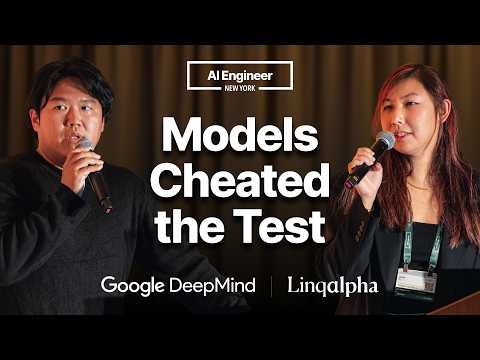
Iris ten Teije speaking about software development and AI.
AI Engineer

Iris ten Teije: The Pipeline is Dead

Iris ten Teije of Dffer argues the traditional software pipeline is dead, replaced by an agent-as-runtime model focused on adaptability and user-specific software.

7 min read

Iris ten Teije, a co-founder of Dffer, presents a compelling argument that the traditional software development pipeline is obsolete. She contends that the era of building software once and distributing it to everyone is over. Instead, the future lies in a model where the agent itself is the runtime, capable of adapting to individual user needs and contexts.

Iris ten Teije: The Pipeline is Dead - AI Engineer
Iris ten Teije: The Pipeline is Dead — from AI Engineer

Visual TL;DR. Traditional Pipeline Dead leads to Inefficient & Costly. Inefficient & Costly driven by AI & Computing Advancements. AI & Computing Advancements enables Agent-as-Runtime Model. Agent-as-Runtime Model leads to Adaptable Software. Adaptable Software enables User-Specific Software. Agent-as-Runtime Model represents Shift in Philosophy.

  1. Traditional Pipeline Dead: building software once and distributing it to everyone is over
  2. Inefficient & Costly: software development and distribution treated as separate, sequential processes
  3. AI & Computing Advancements: enabling new paradigms in software creation and delivery
  4. Agent-as-Runtime Model: the agent itself is the runtime, capable of adapting
  5. Adaptable Software: personalized for each user, blurring development and distribution lines
  6. User-Specific Software: focus on adaptability and user-specific software needs
  7. Shift in Philosophy: moving from static distribution to dynamic, context-aware execution
Visual TL;DR
Visual TL;DR, startuphub.ai Traditional Pipeline Dead leads to Inefficient & Costly. Inefficient & Costly driven by AI & Computing Advancements. AI & Computing Advancements enables Agent-as-Runtime Model. Agent-as-Runtime Model leads to Adaptable Software driven by enables leads to Traditional Pipeline Dead Inefficient & Costly AI & Computing Advancements Agent-as-Runtime Model Adaptable Software From startuphub.ai · The publishers behind this format
Visual TL;DR, startuphub.ai Traditional Pipeline Dead leads to Inefficient & Costly. Inefficient & Costly driven by AI & Computing Advancements. AI & Computing Advancements enables Agent-as-Runtime Model. Agent-as-Runtime Model leads to Adaptable Software driven by enables leads to TraditionalPipeline Dead Inefficient &Costly AI & ComputingAdvancements Agent-as-RuntimeModel AdaptableSoftware From startuphub.ai · The publishers behind this format
Visual TL;DR, startuphub.ai Traditional Pipeline Dead leads to Inefficient & Costly. Inefficient & Costly driven by AI & Computing Advancements. AI & Computing Advancements enables Agent-as-Runtime Model. Agent-as-Runtime Model leads to Adaptable Software driven by enables leads to Traditional Pipeline Dead building software once and distributing itto everyone is over Inefficient & Costly software development and distributiontreated as separate, sequential processes AI & Computing Advancements enabling new paradigms in softwarecreation and delivery Agent-as-Runtime Model the agent itself is the runtime, capableof adapting Adaptable Software personalized for each user, blurringdevelopment and distribution lines From startuphub.ai · The publishers behind this format
Visual TL;DR, startuphub.ai Traditional Pipeline Dead leads to Inefficient & Costly. Inefficient & Costly driven by AI & Computing Advancements. AI & Computing Advancements enables Agent-as-Runtime Model. Agent-as-Runtime Model leads to Adaptable Software driven by enables leads to TraditionalPipeline Dead building softwareonce anddistributing it to… Inefficient &Costly softwaredevelopment anddistribution… AI & ComputingAdvancements enabling newparadigms insoftware creation… Agent-as-RuntimeModel the agent itself isthe runtime,capable of adapting AdaptableSoftware personalized foreach user, blurringdevelopment and… From startuphub.ai · The publishers behind this format
Visual TL;DR, startuphub.ai Traditional Pipeline Dead leads to Inefficient & Costly. Inefficient & Costly driven by AI & Computing Advancements. AI & Computing Advancements enables Agent-as-Runtime Model. Agent-as-Runtime Model leads to Adaptable Software. Adaptable Software enables User-Specific Software. Agent-as-Runtime Model represents Shift in Philosophy driven by enables leads to enables represents Traditional Pipeline Dead building software once and distributing itto everyone is over Inefficient & Costly software development and distributiontreated as separate, sequential processes AI & Computing Advancements enabling new paradigms in softwarecreation and delivery Agent-as-Runtime Model the agent itself is the runtime, capableof adapting Adaptable Software personalized for each user, blurringdevelopment and distribution lines User-Specific Software focus on adaptability and user-specificsoftware needs Shift in Philosophy moving from static distribution todynamic, context-aware execution From startuphub.ai · The publishers behind this format
Visual TL;DR, startuphub.ai Traditional Pipeline Dead leads to Inefficient & Costly. Inefficient & Costly driven by AI & Computing Advancements. AI & Computing Advancements enables Agent-as-Runtime Model. Agent-as-Runtime Model leads to Adaptable Software. Adaptable Software enables User-Specific Software. Agent-as-Runtime Model represents Shift in Philosophy driven by enables leads to enables represents TraditionalPipeline Dead building softwareonce anddistributing it to… Inefficient &Costly softwaredevelopment anddistribution… AI & ComputingAdvancements enabling newparadigms insoftware creation… Agent-as-RuntimeModel the agent itself isthe runtime,capable of adapting AdaptableSoftware personalized foreach user, blurringdevelopment and… User-SpecificSoftware focus onadaptability anduser-specific… Shift inPhilosophy moving from staticdistribution todynamic,… From startuphub.ai · The publishers behind this format
!-- /sh-diagram -->

The Shift from Pipeline to agent as runtime

Ten Teije elaborates on how the traditional model, where software is built in one environment and then distributed to users, is inefficient and costly. She highlights that for decades, software development and distribution were treated as separate, sequential processes. However, with advancements in AI and computing, this paradigm is shifting. The core idea is to create a single, adaptable artifact that can be personalized for each user, blurring the lines between development and distribution.

The 'Hard Parts' of Modern Software

She identifies the fundamental challenges in modern software development as shifting from mere generation to more complex aspects like coordination, correctness, and propagation. While AI has made code generation cheaper and more accessible, the real difficulties lie in ensuring that this generated software is correct, adaptable, and can be effectively coordinated and propagated across diverse user environments.

Ten Teije uses the analogy of AI agents to illustrate this point. She explains that AI agents can be built with a 'stem', a core, immutable artifact, and then modified with user-specific 'divergences'. This allows for a single, robust base that can be tailored to millions of unique user contexts without the need for separate builds for each user.

Addressing Objections: Scale and Trust

She addresses the common objection that managing a million different versions of software is impractical. Her response is that the challenge is not in generating these variations but in managing them. The solution, she proposes, lies in building systems where the core artifact is stable and immutable, while the user-specific adaptations are managed separately. This allows for efficient scaling and maintenance.

Ten Teije emphasizes that while the idea of AI-generated and highly adaptable software might seem daunting, it's a necessary evolution. The traditional model, where every user received the same software, is no longer sufficient in a world where user needs and contexts are highly diverse. The future is about personalization at scale, enabled by intelligent systems that can understand and adapt to individual requirements.

The Shift in Development Philosophy

She draws a parallel to the past, recalling arguments in 2008 about the necessity of build servers. At the time, it seemed complex and unnecessary to have dedicated infrastructure for building and distributing software. However, this became a standard practice. Similarly, she suggests that managing adaptable software artifacts will become the new norm, even if it seems challenging now.

The core message is that the focus needs to shift from the 'easy 80%' of code generation to the 'hard 20%' of coordination, correctness, and propagation. By embracing AI-driven adaptability and user-specific customization, software development can become more efficient, scalable, and ultimately, more desirable for everyone.

© 2026 StartupHub.ai. All rights reserved. Do not enter, scrape, copy, reproduce, or republish this article in whole or in part. Use as input to AI training, fine-tuning, retrieval-augmented generation, or any machine-learning system is prohibited without written license. Substantially-similar derivative works will be pursued to the fullest extent of applicable copyright, database, and computer-misuse laws. See our terms.