
Laurie Voss, head of developer relations at Arize AI and co-founder of NPM Inc., told AI Engineer that autonomous coding agents let developers write 741% more code, about eight times as much, yet ship only 30% faster.
The code is free. Shipping is not.
Voss said the immediate bottleneck this month is code review, and his bet for the next 10 years is that the bottleneck stays on describing the problem and defining what good means. He said "agents have made writing code basically free," citing a Cisco study from 20 years ago that human review accuracy falls off after about 450 lines per hour.
GitHub Copilot now does more than one in five reviews on GitHub as of last month, Voss said, with an opt-in to let Copilot act as final approver. OpenAI tells staff humans may review pull requests but are not required. The limitation is reliability. Four AI reviewers in one test found different bugs and agreed on none, and Voss pointed to failures when review was skipped, including a six-month no-review experiment by Dexter Horty that he called a disaster, outages at Amazon from agent slop that pushed the company to require senior sign-off, and a postmortem from Anthropic on bugs that bypassed human and machine reviewers.
That puts the same squeeze seen in other agent work. Voss runs a separate workshop on evals with Phoenix and Claude that catches hallucinations like a stock report claiming 116% of analysts agree, per daily.dev, while a September Chain of Thought entry notes AMD’s Anush Elangovan tuning GPU performance with agents on ROCm 10. One track grades what good means, the other tunes how fast it runs, and both leave review, ops and security as the gates that decide whether code reaches production.
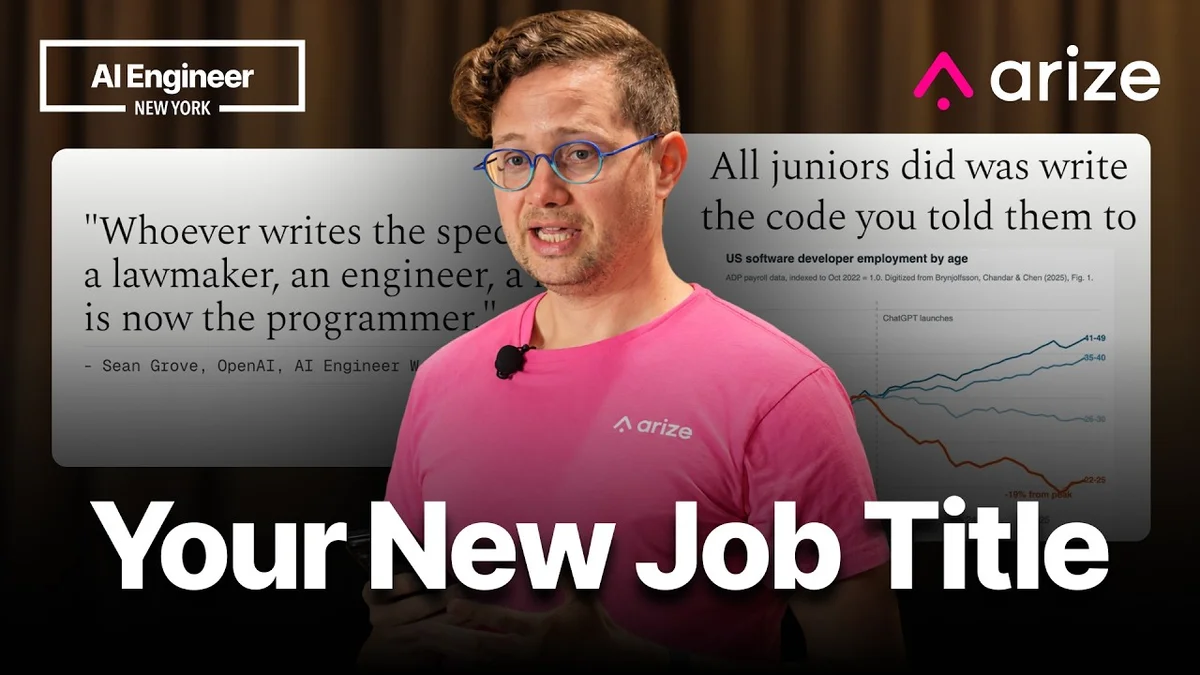
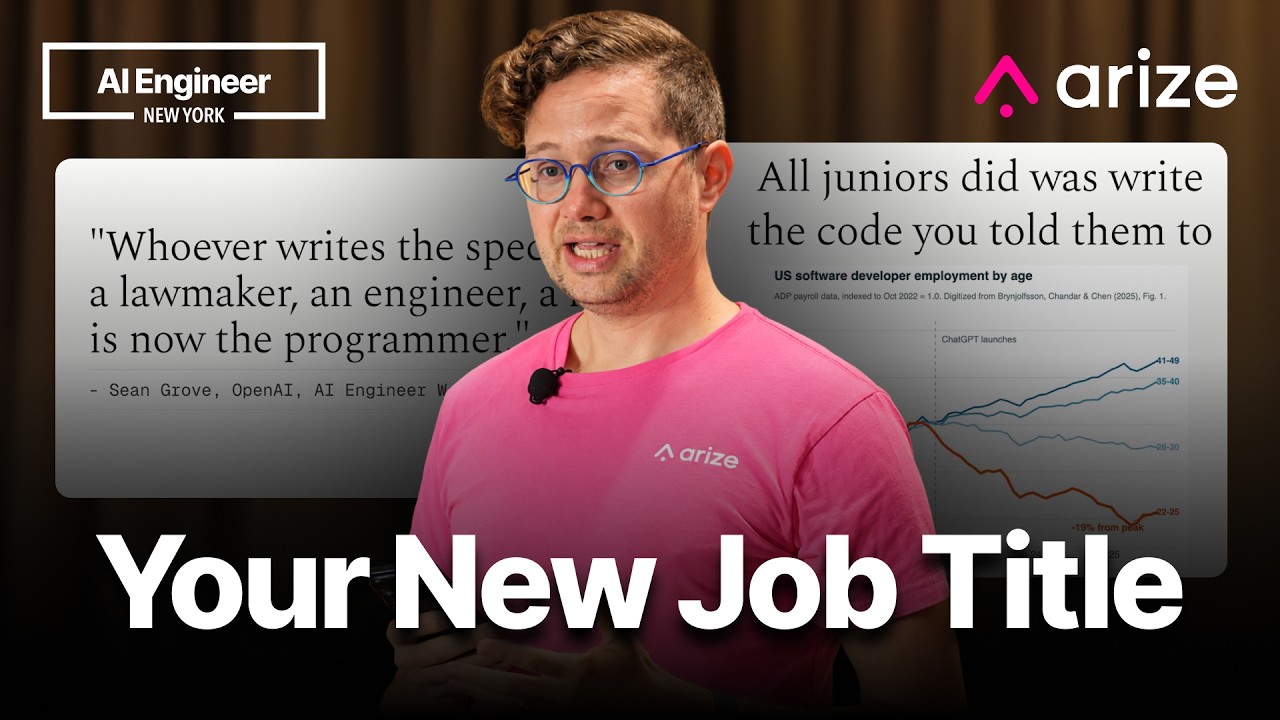
Voss framed the pattern with Eliyahu Goldratt’s Theory of Constraints and with Fred Brooks’s 1986 argument that no tool delivers 10 times productivity because essential complexity remains. He cited Claude Fable 5 passing 80% of a standard coding benchmark but Cognition’s Devin merge test falling to 54% from 87% when the question is whether a maintainer would merge, plus Shawn Grove’s note that code is a lossy projection of the spec and Andrew Ng’s push to blur product and engineering. Demand for forward deployed engineers rose 800% in nine months of 2025 to an average $240,000 in compensation, employment for engineers 22 to 25 has collapsed since January 2023 while employment for those 41 to 49 has risen, and IBM is redesigning entry roles around customer interviews and spec writing. Voss said the industry needs 10,000 product engineers per year but programs like Google’s APM produce about 50 and all such programs combined about 1,000.
His prescriptions were to expect humans to be barely involved in code production, to limit human review to high blast radius code and delegate cheap to verify changes to automatic reviewers, to put senior judgment into specs, rubrics and evals, and to measure shipping, reviewer comment action and the gap between tests passed and merges. The last reviewer is production, and he expects five to 10 years to work through operations, scaling and security before the product engineer role, which he defines as finding what people need, defining what good looks like and shipping with agents typing, settles the next decade.


