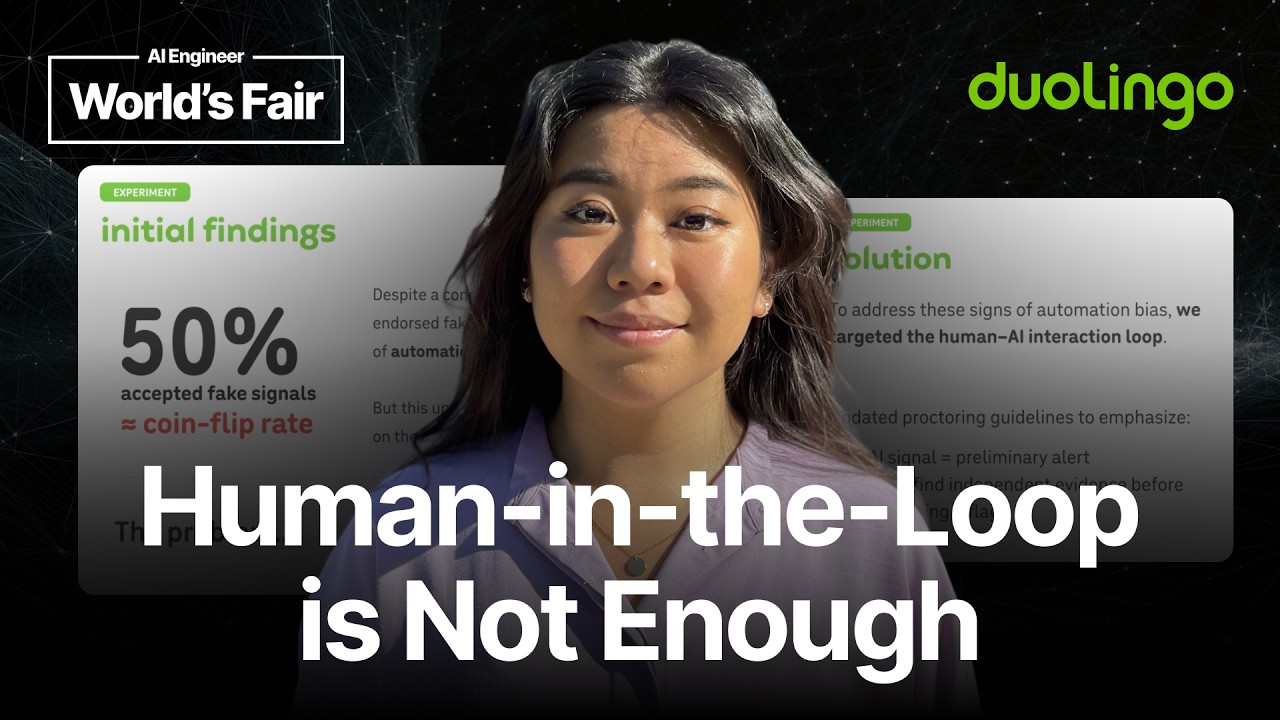




Visual TL;DR
AI Discernment vs. ApprovalCore
Angel Lee's core message for building AI systems
From the article 3 mentionsAngel Ortmann Lee, a software engineer at Duolingo, delivered a compelling presentation titled "Build AI Systems for Discernment, Not Approval." Lee's talk emphasized a critical shift in how we design and interact with AI systems, moving beyond simple approval to fostering genuine discernment.
Automation Bias DangerDriver
Humans blindly trusting AI decisions without critical thought
From the article 5 mentionsThis phenomenon, known as automation bias, was illustrated with examples like using GPS navigation without critical thought or relying on search engine results without verification.
Human-in-the-Loop AIContext
From the articleLee began by defining human-in-the-loop AI as a system where a human actively participates in the operation, supervision, or decision-making of an automated system.
Duolingo English TestCore
Case study of AI application in high-stakes testing
From the articleLee then delved into a case study on the Duolingo English Test (DET), a high-stakes online English proficiency exam accepted by over 6,000 institutions worldwide.
Design for Critical ThinkingContext
Engineering AI to encourage user scrutiny and accountability
From the article 2 mentionsThe core message revolved around the importance of engineering human-AI interactions that promote critical thinking and accountability, especially in high-stakes applications.
Virtuous AI CycleEffect
Positive feedback loop of AI interaction and learning
From the articleThe choice of interaction design determines whether the system operates in a vicious cycle (model makes confident calls, humans rubber-stamp, AI becomes more confident) or a virtuous cycle (interface forces independent judgment, disagreements are logged, model improves where it's wrong).