

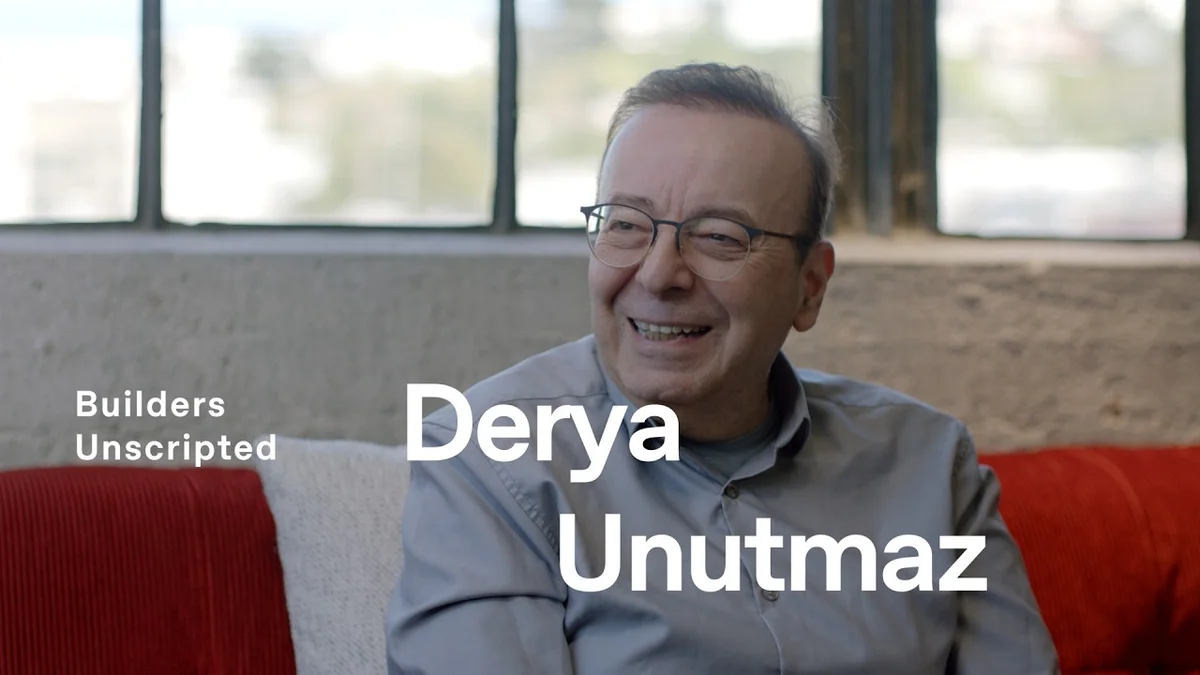
Dr. Derya Unutmaz on AI's Transformative Role in Biology

Dr. Derya Unutmaz, a Professor at The Jackson Laboratory, discusses his use of AI to build advanced applications for biology and his vision for digital twins and future scientific discovery.

10 min read
Dr. Derya Unutmaz on AI's Transformative Role in Biology
OpenAI Youtube

Visual TL;DR. Dr. Derya Unutmaz explores Biology & AI Intersection. Biology & AI Intersection enables AI-Powered Biologist. AI-Powered Biologist leads to Digital Twin Vision. Digital Twin Vision achieves Science 2.0. Biology & AI Intersection requires Embrace Experimentation.

  1. Dr. Derya Unutmaz: professor at Jackson Laboratory, expert in biology, cancer, immunology, and bioengineering
  2. Biology & AI Intersection: leveraging AI to push boundaries of scientific discovery and medical innovation
  3. AI-Powered Biologist: developing practical applications for complex biological systems, like immunology
  4. Digital Twin Vision: ambitious goal to create digital representations of biological entities for research
  5. Science 2.0: transforming future scientific discovery through advanced digital biology approaches
  6. Embrace Experimentation: encouraging curiosity and continuous experimentation in the field of AI biology
Visual TL;DR
Visual TL;DR, startuphub.ai Dr. Derya Unutmaz explores Biology & AI Intersection. Digital Twin Vision achieves Science 2.0 explores achieves Dr. Derya Unutmaz Biology & AI Intersection Digital Twin Vision Science 2.0 From startuphub.ai · The publishers behind this format
Visual TL;DR, startuphub.ai Dr. Derya Unutmaz explores Biology & AI Intersection. Digital Twin Vision achieves Science 2.0 explores achieves Dr. Derya Unutmaz Biology & AIIntersection Digital TwinVision Science 2.0 From startuphub.ai · The publishers behind this format
Visual TL;DR, startuphub.ai Dr. Derya Unutmaz explores Biology & AI Intersection. Digital Twin Vision achieves Science 2.0 explores achieves Dr. Derya Unutmaz professor at Jackson Laboratory, expert inbiology, cancer, immunology, andbioengineering Biology & AI Intersection leveraging AI to push boundaries ofscientific discovery and medicalinnovation Digital Twin Vision ambitious goal to create digitalrepresentations of biological entities forresearch Science 2.0 transforming future scientific discoverythrough advanced digital biologyapproaches From startuphub.ai · The publishers behind this format
Visual TL;DR, startuphub.ai Dr. Derya Unutmaz explores Biology & AI Intersection. Digital Twin Vision achieves Science 2.0 explores achieves Dr. Derya Unutmaz professor atJackson Laboratory,expert in biology,… Biology & AIIntersection leveraging AI topush boundaries ofscientific… Digital TwinVision ambitious goal tocreate digitalrepresentations of… Science 2.0 transforming futurescientificdiscovery through… From startuphub.ai · The publishers behind this format
Visual TL;DR, startuphub.ai Dr. Derya Unutmaz explores Biology & AI Intersection. Biology & AI Intersection enables AI-Powered Biologist. AI-Powered Biologist leads to Digital Twin Vision. Digital Twin Vision achieves Science 2.0. Biology & AI Intersection requires Embrace Experimentation explores enables leads to achieves requires Dr. Derya Unutmaz professor at Jackson Laboratory, expert inbiology, cancer, immunology, andbioengineering Biology & AI Intersection leveraging AI to push boundaries ofscientific discovery and medicalinnovation AI-Powered Biologist developing practical applications forcomplex biological systems, likeimmunology Digital Twin Vision ambitious goal to create digitalrepresentations of biological entities forresearch Science 2.0 transforming future scientific discoverythrough advanced digital biologyapproaches Embrace Experimentation encouraging curiosity and continuousexperimentation in the field of AI biology From startuphub.ai · The publishers behind this format
Visual TL;DR, startuphub.ai Dr. Derya Unutmaz explores Biology & AI Intersection. Biology & AI Intersection enables AI-Powered Biologist. AI-Powered Biologist leads to Digital Twin Vision. Digital Twin Vision achieves Science 2.0. Biology & AI Intersection requires Embrace Experimentation explores enables leads to achieves requires Dr. Derya Unutmaz professor atJackson Laboratory,expert in biology,… Biology & AIIntersection leveraging AI topush boundaries ofscientific… AI-PoweredBiologist developingpracticalapplications for… Digital TwinVision ambitious goal tocreate digitalrepresentations of… Science 2.0 transforming futurescientificdiscovery through… EmbraceExperimentation encouragingcuriosity andcontinuous… From startuphub.ai · The publishers behind this format

In a recent Builders Unscripted episode, Dr. Derya Unutmaz, a distinguished Professor at The Jackson Laboratory, shared his unique perspective on the intersection of medicine, bioscience, and artificial intelligence. Known for his deep expertise in biology, cancer, and immunology, Dr. Unutmaz is an unconventional builder, leveraging AI to push the boundaries of scientific discovery and medical innovation. His conversation with Romain Huet, Head of Developer Experience at OpenAI, explored the genesis of his AI journey, the practical applications he has developed, and his ambitious vision for a future transformed by digital biology.

Who Is Dr. Derya Unutmaz

Dr. Derya Unutmaz is a Professor at The Jackson Laboratory, a prominent biomedical research institution. With a robust background in medicine, bioscience, and bioengineering, Dr. Unutmaz brings a rare depth of knowledge to the field of AI. His work focuses on understanding the complexities of biological systems, particularly in immunology and oncology, and applying advanced computational methods to solve intractable problems. He is a vocal advocate for AI's potential to revolutionize science and healthcare, actively experimenting with cutting-edge models to develop novel research tools and envision future medical paradigms.
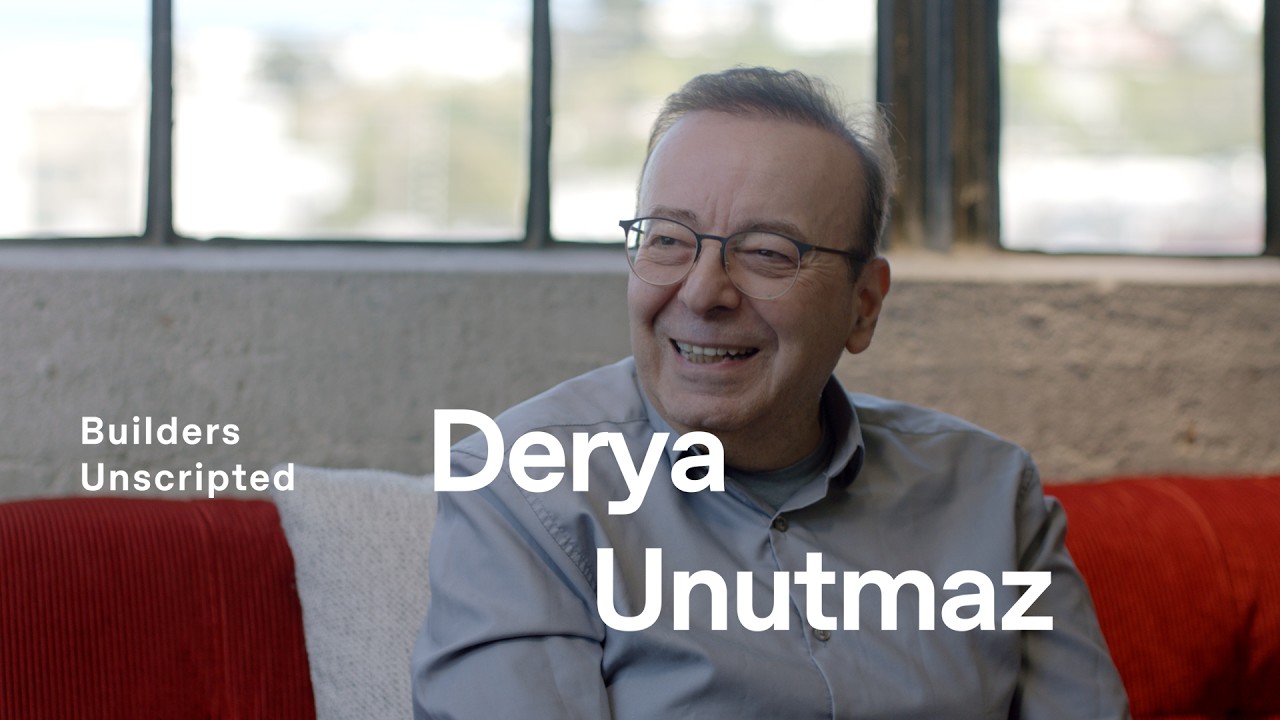
The full discussion can be found on OpenAI Youtube's YouTube channel.

Builders Unscripted: Ep. 5 - Derya Unutmaz - OpenAI Youtube
Builders Unscripted: Ep. 5 - Derya Unutmaz, from OpenAI Youtube

The Inevitable Intersection of Biology and AI

Dr. Unutmaz pinpointed his realization that biology and science would necessitate AI to the period immediately following his graduation from medical school. Confronted by the "complexity of the biological system" and the inability to treat numerous diseases due to the "trillions of different parts and biological systems and billions of reactions that are happening," he found the scale overwhelming. This led him to explore artificial intelligence in the early 1990s, envisioning a future where AI could build models to decipher these intricate systems. The advent of the deep learning revolution, particularly AlphaFold and ChatGPT, ignited his excitement, as these technologies demonstrated the capacity to "process this massive amount of information in a sort of a parallel fashion."

A transformative moment for Dr. Unutmaz arrived in September 2024 when OpenAI approached him to test their first reasoning model, o1-preview. Having been an active proponent of AI's humanity-changing potential on social media, he was eager to engage. He presented the model with a complex immunology question, framed as a "battle royale" scenario between immune cells and tumors, a concept inspired by video games. The model's response was so insightful that it almost made him emotional. "Before that, you know, GPT-4.0, it wouldn't really give you that kind of a deep, insightful response," he noted, marking o1-preview as the moment he realized AI's inevitability for science.

Even prior to this, GPT-4.0 had proven invaluable for mundane tasks like literature searches, knowledge synthesis, and drafting recommendation letters, reducing hours of work to minutes. However, it was the reasoning capabilities of o1-preview and subsequent models like GPT-5.5 Pro that enabled a new level of trust and predictive power, allowing him to ask questions about experimental outcomes with confidence.

A Day in the Life of an AI-Powered Biologist

Dr. Unutmaz describes himself as a "Codex addict," with his daily routine now beginning with coffee and then immediately engaging with Codex. This AI coding assistant allows him to rapidly prototype ideas for simulations, applications, or games, a process that previously would have taken weeks or months of traditional coding. He even humorously mentioned losing sleep due to the excitement of seeing Codex's overnight work and the results of new ideas.

He demonstrated several advanced applications built entirely with Codex, showcasing how AI bridges his deep knowledge in immunology and oncology with practical, day-to-day utility:

  • Flow Cytometry Data Analysis Application: This complex software, previously the domain of specialized commercial tools, was recreated by Dr. Unutmaz using Codex. It visualizes data from thousands of individual cells, labeled with fluorescent markers, as they pass through a laser. Researchers can select specific cell types (e.g., CD4+ or CD8+ T cells), apply gates, and perform statistical analyses to understand cell percentages and functions. The application handles hundreds of thousands of data points with remarkable speed and allows for dynamic changes in contour plots and graphics.
  • T-Cell Receptor Signaling Cascade Simulator: Driven by his vision for "virtual cells" and ultimately a "digital twin" of a human being, Dr. Unutmaz built a simulator for the T-cell receptor, a critical component of immune cells. This receptor's signaling pathway is incredibly complex, influencing outcomes from autoimmune disease to cancer clearance. The simulator allows researchers to adjust ligand affinity, dose, and other signals, predicting which molecules will be activated and the resulting phosphorylation patterns of transcription factors. This tool enables rapid hypothesis testing and exploration of molecular interactions without physical experimentation.
  • Immune Age Simulator and Interactive Atlas: Inspired by an image generated by Image 2.0, Dr. Unutmaz used Codex to transform it into an interactive website. This platform visualizes an "immune atlas" and includes an "immune age simulator," allowing users to explore how immune cells behave based on age. It also provides information on critical molecules like PD-1, a key target in cancer immunotherapy, and demonstrates how blocking it can impact cancer treatment. This tool serves as both a research aid and a powerful educational resource.
  • CRISPR Guide RNA Design Platform (GlaCrispr): Recognizing the complexity of genome engineering, Dr. Unutmaz developed a native macOS application using Swift and Codex. This tool allows users to select any gene, pulls its DNA sequence from databases, and identifies potential CRISPR targets. It ranks these targets based on specificity and other factors, enabling researchers to design custom guide RNAs for genetic editing experiments. The platform also supports creating libraries of CRISPR targets for multiple genes, streamlining complex experimental design.

The Vision for a Digital Twin and Science 2.0

Dr. Unutmaz articulated a grand vision for the "digital twin": a complete biological system of a person, encompassing genetics, metabolites, proteins, the immune system, and the microbiome. This personalized digital replica, powered by AI, would enable predictive medicine, allowing doctors to anticipate disease onset and tailor treatments with unprecedented precision. "The drugs will have nearly 100% effect with 0% side effect," he declared. This future would also drastically accelerate clinical trials, reducing their duration from years to mere days, as AI could simulate experimental outcomes on digital twins.

He emphasized that this exponential advancement in AI would lead to "Science 2.0 or 3.0," fundamentally altering research methodologies. The traditional cycle of weeks-long experiment planning and months-long analysis would be replaced by AI agents generating hypotheses, simulating experiments, analyzing data, and feeding insights back for new hypotheses. Scientists would transition to guiding these agents, while automated labs with robots would execute experiments. Unutmaz believes this will unlock new frontiers in bioengineering, enabling the creation of novel cell types and tissues, and fostering a "golden age" of scientific discovery across all fields, from physics to chemistry and drug discovery.

Embracing Curiosity and Experimentation

Dr. Unutmaz attributes his success with AI to his background in biological research, where "95 to 98% of the experiments you do fail." This constant engagement with failure has instilled in him resilience and a profound sense of curiosity. He urges others to adopt a similar mindset with AI: "Don't be scared. Constantly try, constantly experiment with AI."

He highlighted that the "cost of experimentation is so low" with AI, making it accessible for anyone to ask "what if" questions and rapidly iterate on ideas, whether for scientific applications or business products. Dr. Unutmaz firmly believes that AI represents an "incredibly positive" force that will "really enhance us to a golden age," and he views AI researchers as heroes driving this transformative shift for humanity.

© 2026 StartupHub.ai. All rights reserved. Do not enter, scrape, copy, reproduce, or republish this article in whole or in part. Use as input to AI training, fine-tuning, retrieval-augmented generation, or any machine-learning system is prohibited without written license. Substantially-similar derivative works will be pursued to the fullest extent of applicable copyright, database, and computer-misuse laws. See our terms.