

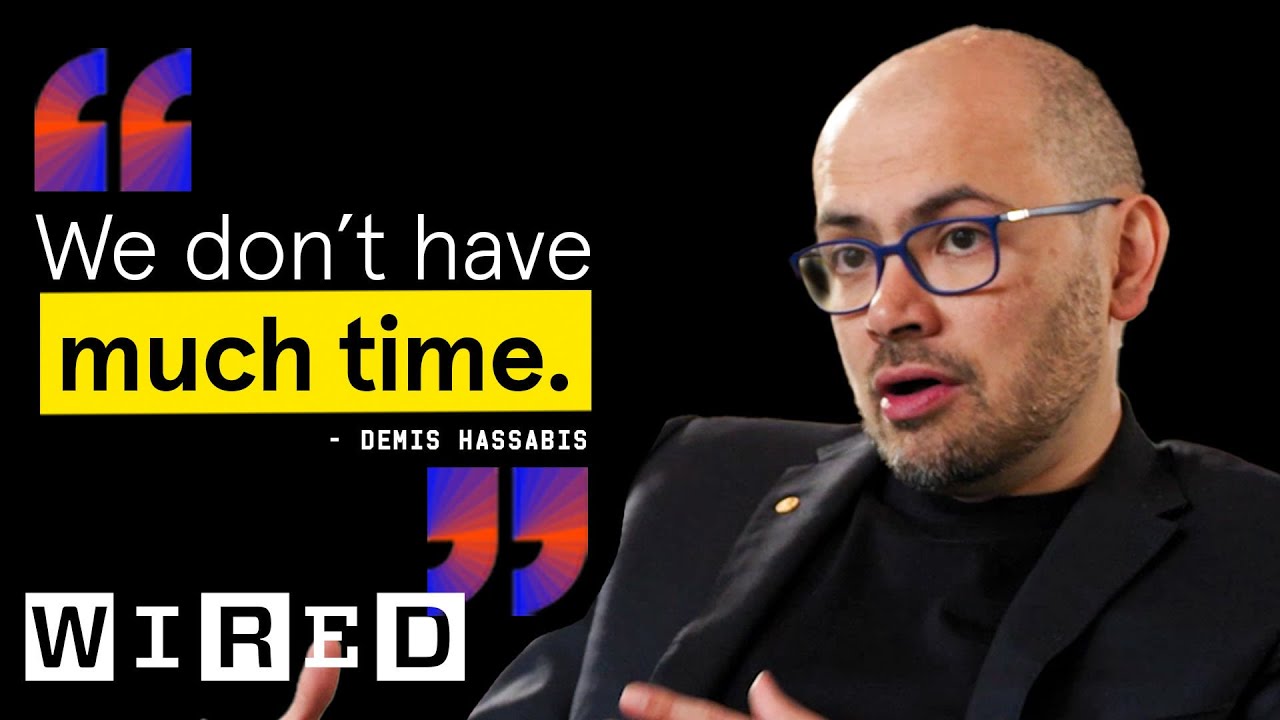
The promise of artificial intelligence, to "solve intelligence and then use intelligence to solve everything else," is a tantalizing vision, yet one fraught with both immense potential and profound peril. Demis Hassabis, CEO of Google DeepMind, recently spoke with Steven Levy, Editor at Large for WIRED, discussing the ambitious pursuit of Artificial General Intelligence (AGI), its projected timeline, current limitations, and the broader societal implications it presents.
Hassabis remains steadfast in his long-held belief regarding AGI's arrival, projecting a "50% chance" of achieving what he defines as AGI within the "next 5 to 10 years." He clarifies that AGI implies a system exhibiting "all the cognitive capabilities we have as humans," distinguishing it from today's impressive yet flawed large language models. While current AI can solve "International Math Olympiad math problems," they still "trip up on high school math or even counting the number of letters in a word." This inconsistency highlights critical missing capabilities in reasoning, planning, and memory, preventing true generalization across diverse domains.
The journey toward AGI is a double-edged sword. On one hand, the potential for human flourishing is immense. Hassabis envisions AI systems accelerating scientific and medical breakthroughs, citing DeepMind's AlphaFold as an example, which has revolutionized protein structure prediction and drug discovery. These systems could unlock "new cures for diseases, new energy sources, incredible things for humanity." Yet, this promise is shadowed by significant worries. Hassabis points to the risks of "bad actors, whether it's individuals or rogue nations, repurposing general-purpose AI technology for harmful ends."
He also stresses the inherent "technical risk of AI itself," questioning whether robust "guardrails" can be built and maintained as systems become more powerful and agentic.
The global race for AI leadership intensifies these concerns. Hassabis notes the pressure from various sources, including national imperatives, and underscores the critical need for "smart regulation that makes sense around these increasingly powerful systems." He advocates for international cooperation, acknowledging the difficulty in achieving it in the current geopolitical climate, but emphasizing that "these systems... are digital systems" and "they're going to affect everyone." The lack of global consensus on safety and values could lead to disparate AI development paths, with potentially divergent outcomes.