

AI Security Tools for Vibe-Coded SaaS Apps: The 20 Picks for 2026
The working stack of security tools competent teams deploy around AI-generated and vibe-coded SaaS apps in 2026, layer by layer.
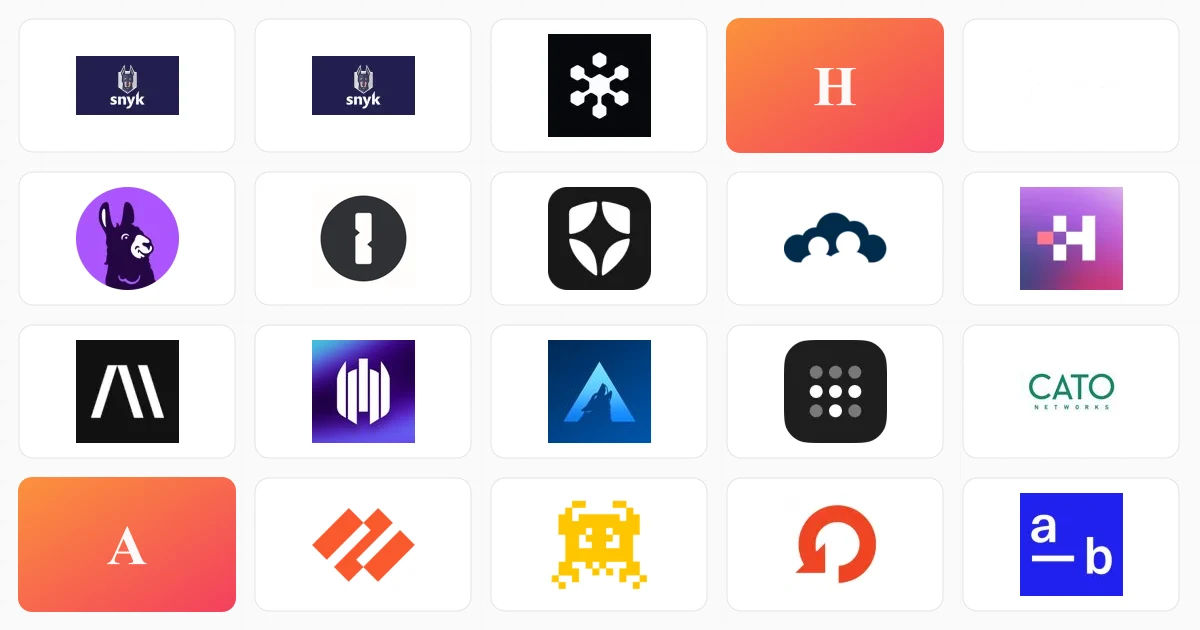
The cohort of people building software has roughly doubled since the AI coding tools went mainstream, and the new entrants are not engineers. A marketing lead spins up an internal CRM in an afternoon. A finance team builds a procurement portal over a weekend. A non-technical founder ships the first version of a SaaS app between meetings. The applications work, ship, and run in production. They also bypass every security review that a normal software organisation would have applied.
What follows is the working stack of tools the actual security teams are deploying around AI-generated and so-called vibe-coded apps in 2026. The order roughly tracks how the problem decomposes: scan the code the AI produced, then the cloud account it deployed into, then the identity layer that gates access, then the threat-detection plane that catches the breach when one of the previous layers misses. Every name pulls from the live StartupHub.ai directory with funding, hiring, and customer signals behind it. The list is not a ranking. It is the order in which a competent CISO would deploy them at a company that did not previously have a CISO.
1. Snyk
The developer-security platform that became the default for catching vulnerabilities the moment a dependency lands.
Snyk scans the actual code that gets generated, the dependencies the AI pulled in, the container, and the IaC config. Teams shipping vibe-coded SaaS rarely audit transitive dependencies, which is exactly where the next supply-chain hit lives. The free tier covers a single developer; the team plan starts where you actually need it.
2. Snyk Code
AI-powered static analysis tuned for finding vulnerabilities in machine-generated code, not just human bugs.
Snyk Code's value spike is that the patterns LLMs lean on (insecure deserialization, raw SQL strings, hardcoded secrets) are exactly the ones a SAST trained on real-world CVEs catches first. Treat it as the second pair of eyes the AI didn't have.
3. Grego AI
European AI-security startup using deep invariant analysis to find vulnerabilities other scanners miss.
Grego sits one layer deeper than pattern-matching SAST. It models program invariants and flags violations, which is the right tool when the AI produced novel control flow no traditional rule set has seen. Early but the technical bet is sound.
4. Harness
The deployment platform that bundles security gates into the pipeline so you can't ship a vibe-coded change without one.
Harness STO (Security Testing Orchestration) lets a non-dev team push code through a pipeline that auto-runs SAST, SCA, secret scanning, and policy checks before the deploy goes live. The platform also handles the GitOps + feature flags so the same team doesn't need to learn Kubernetes.
5. Wiz
Cloud security platform that finds the critical risks across whatever you accidentally provisioned on AWS, Azure, or GCP.
When non-dev teams vibe-code an app, the cloud account they deployed it to is usually wide open: public S3 buckets, over-permissioned IAM roles, exposed databases. Wiz scans the whole account graphically and ranks the toxic combinations that actually matter.
6. Vanta
Compliance automation that catches the gaps a vibe-coded shop will absolutely have on the first SOC 2 audit.
Vanta is what you reach for the moment the first enterprise prospect asks for SOC 2. It plugs into the cloud + identity + endpoint stack, surfaces every control that's not in place, and walks you through fixing each one. The auto-evidence collection is what makes audits survivable.
7. 1Password
The password manager that's still the cheapest credible answer to where you store API keys and tokens.
Vibe-coded apps tend to accumulate keys in .env files committed to GitHub, posted in Slack, or pasted into a Notion doc. 1Password's Secrets Automation product gives developers a CLI to fetch secrets at runtime without ever writing them to disk. Cheap, well-integrated, and the team plan is impulse-buy priced.
8. Auth0
Customer identity done right by people who specialise in it, so your vibe-coded app doesn't ship a broken login flow.
Auth0 handles the parts of auth that get implementations wrong: token refresh, social login, MFA, anomaly detection, breach-password rejection. The free tier covers small apps; the moment a real customer asks for SSO you've already made the right pick.
9. JumpCloud
Identity + device management for SMBs whose internal vibe-coded tools need to authenticate against a directory.
JumpCloud is the right answer when the team needs Active Directory's outcomes but doesn't want Active Directory's pain. Cloud-native, MDM for laptops, SSO into SaaS apps including ones you just built. Particularly useful when a non-dev team's app needs to gate access to the same five people who use the company laptops.
10. Hunters AI
AI-powered SOC platform that automates threat detection, investigation, and response without a SOC team.
Most vibe-coded internal apps eventually get a credential leaked, a token reused, or a webhook abused. Hunters correlates signals across the cloud + identity + endpoint plane and routes the actual incidents to whoever's on call, not the noise.
11. Abnormal AI
Behavior-based security for email and cloud accounts that catches the social-engineering vector AI-shipped apps invite.
When non-dev teams build apps that send notifications, accept uploads, or expose admin endpoints, the easiest way in is a spoofed email to the account owner. Abnormal models normal behavior and flags the messages and account actions that don't fit, including post-compromise activity inside Microsoft 365 and Google Workspace.
12. SentinelOne
Autonomous endpoint protection that does most of the response work without waiting on a human.
Singularity is the platform every distributed-team SaaS ends up on once a laptop with production credentials gets phished. Detection, isolation, rollback, and forensics in one agent. The autonomous-response posture matters when the team doesn't have a security analyst on staff.
13. Arctic Wolf Networks
The leader in security operations, delivering a cloud-native platform with a Concierge Security Team to help organizations detect, respond to, and recover from cyber threats.
14. Tailscale
Mesh networking that replaces the VPN your team would otherwise spend a weekend setting up wrong.
Tailscale is the cleanest way to gate access to an internal vibe-coded app: deploy it on a VM, expose it only over the tailnet, and access is scoped to the company SSO identity. No public-internet exposure means no random scanner finding your admin endpoint. SSH access and webhook tunnels are bundled.
15. CATO Networks
Single-vendor SASE platform that handles the full network-security stack for a distributed workforce.
Cato collapses SD-WAN, ZTNA, FWaaS, and SWG into one cloud-delivered control plane. Worth it for a company past 25 people whose vibe-coded internal apps now need consistent policy enforcement no matter which coffee shop the team is working from.
16. Akamai
The edge platform you push your vibe-coded app behind so the bots never reach origin in the first place.
Bot mitigation, DDoS protection, WAF, and edge caching from infrastructure that's been hardened for two decades. Overkill for a side project, exactly right when the same app starts taking real customer traffic and the first credential-stuffing attempt arrives.
17. Talon
Secure enterprise browser that lets non-dev teams safely access internal apps from any device.
Talon ships a Chromium fork that enforces DLP, copy-paste controls, screenshot blocks, and session recording on the browser itself, not the network. Useful when the team is letting contractors or third parties use a vibe-coded admin panel without giving them a managed laptop.
18. Intruder
Attack-surface management that scans whatever you accidentally exposed to the internet on a recurring schedule.
Intruder watches for new ports, new subdomains, new services. A non-dev team that fired up a Render service and forgot about the admin route will get an alert when the scanner finds it. Cheap, no setup, runs forever in the background.
19. KnowBe4
Security-awareness training that does the unglamorous job of teaching the team not to paste tokens into ChatGPT.
Phishing simulations + short training modules + a leaderboard. The product looks unfashionable until you remember that 80% of breaches start with a human click. For a non-dev team building public-facing apps, this is the cheapest control with the highest payoff.
20. At-Bay
Cyber insurance with active monitoring built in, so the company you bought a policy from is also helping you not file a claim.
At-Bay scans your perimeter as part of underwriting, flags risks you didn't know you had, and prices premiums against actual exposure rather than industry averages. The active-monitoring angle is what makes it worth choosing over a traditional broker for a fast-shipping team.
The pattern that emerges is that the security stack for vibe-coded apps is mostly the security stack for everything else, just deployed earlier in the company life cycle. The tools that were luxury items at fifty engineers are table stakes at five, because the surface area has expanded faster than the team has. Snyk catches what the AI produced, Wiz catches what got deployed, Vanta catches what the auditor will ask about, and Tailscale catches the rest by simply not putting the app on the public internet.
The interesting category to watch is the AI-native security tooling itself. Hunters, Abnormal, Snyk Code, Grego, and Wiz are all leaning hard into their own AI capabilities, building detection systems that match the speed at which AI-generated apps now ship. In a year the question will not be whether to deploy AI security tools against AI-generated apps. It will be which combination of them best covers the surface a particular team is shipping.