

The 20 Best AI Landing Page Builders for SaaS in 2026
The marketing page is now where SaaS gets evaluated before the trial starts. Twenty landing page builders ranked for 2026: Webflow, Wix, Lovable, Framer, Instapage, and the new generative entrants.
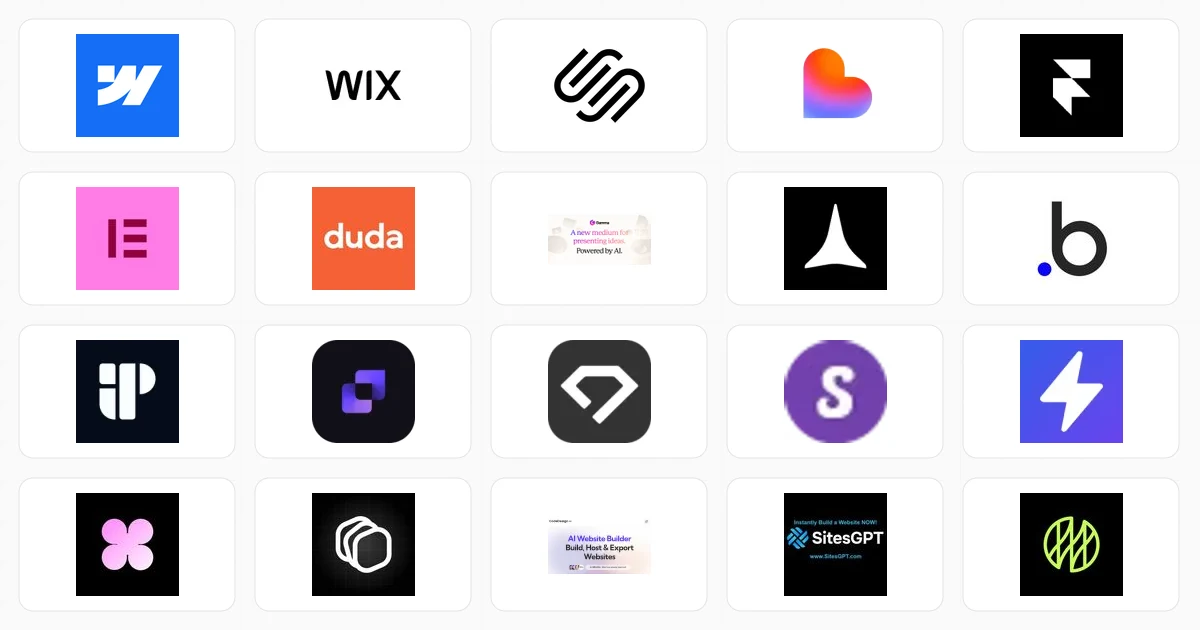
The marketing page is now where SaaS gets evaluated before the trial starts. A buyer arrives from a search result, a comparison ranking or a paid ad, decides in under thirty seconds whether the product is worth ten more minutes, and either books a demo or hits back. The page does the qualifying work the sales team used to do, and the gap between a hand-tuned page and a one-shot generation still shows up in conversion data.
The category split into three tiers in 2026. Drag-and-drop builders (the Wix and Squarespace lane) where speed wins. Designer-developer hybrids (Webflow, Framer) where pixel control and brand depth win. Generative builders (Lovable, Rocket, Orchids) where the marketing page and the app underneath get built in the same session. Which tier fits depends on whether the SaaS in question competes on aesthetics, on conversion math, or on shipping speed.
What follows is a working shortlist for founders, marketers and design leads buying into the category in 2026. Each tool's score is its profile score in the directory, and each card carries an agent readiness grade that estimates how cleanly the product's own marketing site exposes itself to autonomous agents (now a non-trivial slice of qualifying traffic).
1. Webflow
The designer-developer hybrid that pro marketing teams ship on when Wix is too constrained and a custom build is too slow.
The website design and development platform sits in the gap most SaaS land-and-expand teams need to fill, custom interactions and responsive grids without writing markup. Designers stay productive without handing tickets to engineers.
2. Wix
The biggest DIY website builder by user count, now with an AI flow that drafts a usable first page from a 30-second brief.
Wix lets users create professional websites in minutes using AI tooling, which matters for SaaS teams that want a landing page live the same day a feature ships, not the same week.
3. Squarespace
The opinionated all-in-one for brand-led SaaS. Strong typography defaults, integrated email and commerce, less customization than the developer-grade alternatives.
Squarespace's all-in-one platform for building brands and businesses pairs site builder and email infrastructure under one billing line, useful when a small SaaS team wants fewer vendors and a sharper aesthetic floor.
4. Lovable
Probably the loudest name in AI-native site building in 2026. Idea to deployed site in one chat session, with a working stack underneath.
Lovable lets users build apps and websites by chatting with an assistant, which collapses the marketing-page-and-prototype distinction founders have lived with for a decade.
5. Framer
Designers' favorite when Webflow feels too engineering-heavy. Generative features layered on top of a fundamentally design-first canvas.
Framer is a no-code website builder loved by designers, enabling teams to design and publish without the production pipeline a Webflow-class tool demands. The polished-pixel ceiling is higher than any generation-only builder.
6. Elementor
The default WordPress drag-and-drop builder. Still relevant for the surprisingly large slice of SaaS marketing sites that run on WordPress for SEO inheritance.
Elementor is the leading open-source website builder platform for WordPress professionals, which makes it the only option for teams whose blog, gated content and pricing page already share one WP install.
7. Duda
Built for design agencies running fifty-plus client sites. Multi-tenant by default, with white-label and team permissions that other builders treat as afterthoughts.
Duda is the leading web design platform for companies that offer web design services to small and medium businesses, which is a niche the consumer-grade builders explicitly avoid.
8. Gamma
Best known for generated decks, but the same generation engine now ships standalone websites with editorial-grade type and image layout.
Gamma is a design partner for creating presentations, websites, social media, and more. The cross-format coverage is why solo founders use it instead of buying a separate tool per asset type.
9. Rocket
Reimagines software building as plain English in, working product and marketing site out. Heavier on the application side than the landing side, but capable of both.
Rocket is reimagining how the world builds software by enabling users to turn plain-English instructions into working software, which makes the landing page a side effect of building the product itself.
10. Bubble
The biggest no-code platform for actual product builds, which means the marketing site lives in the same workspace as the app. Trade-off, a steeper learning curve than a pure page builder.
Bubble is the leading no-code platform enabling users to visually build and deploy secure web applications, which is why hundreds of profitable SaaS companies run their entire stack here including the marketing surface.
11. Instapage
The category specialist. Built around conversion rate optimization, A/B testing and the ad-to-page funnel that performance marketers actually run.
Instapage is a platform for creating high-converting landing pages and webpages, which is exactly the slice mid-funnel SaaS marketers care about more than CMS flexibility.
12. Leadpages
The pragmatic alternative to Instapage. Cheaper, simpler, and aimed at founders who care about lead capture, not pixel-level layout control.
Leadpages is a lead generation platform that helps businesses create high-converting landing pages, which matters most for SaaS teams running paid acquisition where cost per lead determines the company's pace.
13. Durable
Generate a site from a one-line business description in under a minute. Designed for owner-operators who would otherwise hire a freelancer and wait two weeks.
Durable's website builder for business websites compresses the founder-builds-the-MVP-marketing-page step into the same evening the product idea lands.
14. Strikingly
Mobile-first by construction, which still differentiates against builders that retrofitted responsive design later.
Strikingly is a mobile-first website builder for individuals and small businesses, useful when over sixty percent of inbound traffic to an early-stage SaaS pricing page already arrives from a phone.
15. Acira AI
Generate-to-site in the sub-five-minute lane. Strongest when the founder has a clear product description and wants the page live before lunch.
Acira creates professional websites in minutes from a simple description, which is exactly the brief most early-stage SaaS founders give a freelancer and then wait three weeks for.
16. Orchids
Building in the same one-shot-to-product lane as Lovable and Rocket, with a stronger lean toward consumer-facing visual polish.
Orchids is a platform that allows users to build beautiful apps and websites, which is the visual-polish tier that generated SaaS pages historically lacked.
17. GenPage
The personalization-first answer. Different sales page per account, lead source or buyer persona, generated on the fly from the underlying product.
GenPage is a SaaS platform that creates hyper-personalized sales pages, which only becomes economically interesting once a SaaS team has more than a handful of distinct buyer personas to address.
18. CodeDesign.AI
Code-first design generation. Compelling when the engineering team wants to keep code as the source of truth and treat the marketing page as a deployable artifact.
CodeDesign enables users to rapidly generate and launch sites, which fits SaaS teams that already run their docs and changelog the same way.
19. SitesGPT
Functional, fast, no-frills. The category baseline against which buyers measure whether they need the more expensive Lovable or Framer.
SitesGPT is a website builder that revolutionizes site creation, useful as the cheap-and-cheerful starting point for testing whether generated pages convert at all.
20. Mesha
Built around the ad-and-landing-page joint, not the page in isolation. Useful for SaaS teams whose marketing site exists primarily to convert paid traffic.
Mesha is a platform that automates ad creation, landing page optimization, and the loop between them, which is the part most page builders treat as someone else's problem.
The shortlist above splits cleanly along three lines. The legacy DIY giants (Wix, Squarespace) and the WordPress incumbent (Elementor) still own the volume because most SaaS marketing pages do not need anything more sophisticated than a clean grid, good type, and a working CMS. The designer-developer middle (Webflow, Framer, Duda) keeps winning the design-led teams that treat the marketing site as part of the product. And the generative new entrants (Lovable, Rocket, Orchids, Gamma) keep compressing the time from idea to live page, which is most valuable for the segment of SaaS founders who want a credible landing page the same day they incorporate.
What changes from here is the boundary between page builder and product builder. Lovable and Rocket already build both. Within a year or two, the choice between "landing page builder" and "app builder" will stop making sense for most early-stage SaaS, which is why the dedicated landing-page specialists (Instapage, Leadpages, GenPage) are leaning harder into conversion math and per-account personalization rather than competing on raw page-creation speed. The category survives, but it stops being a separate purchase for the founders building from zero in 2026.
Frequently asked questions
What is the best landing page builder for a SaaS startup in 2026?
For an early-stage SaaS where the marketing page and the product are still co-evolving, Lovable, Rocket and Orchids are the strongest picks because they collapse the page-and-app build into one workflow. For a more mature SaaS where the marketing site is brand-led and design-heavy, Webflow and Framer remain the standard. Instapage is the right answer when the page exists primarily to convert paid traffic.
Are generated landing pages good for SEO?
The page itself is fine. Google has been explicit that the bar is helpful, original content, not the production method. The risk is not the authorship, it is the boilerplate output that thin briefs produce: identical headlines, generic feature blocks, no internal linking, no schema. SaaS teams that win with these tools still hand-tune the title tag, the H1, the meta description and the JSON-LD product schema before shipping.
How much should a SaaS company spend on landing page tooling?
For seed-stage SaaS, anywhere from zero (Durable, SitesGPT, free tiers of Wix or Lovable) to thirty dollars a month. For series A and beyond where conversion math drives growth, Webflow plus Instapage plus an analytics stack lands in the two hundred to six hundred dollars a month range. The tool cost is rounding error against the cost of bad pages, which is why most SaaS teams over-invest in tooling once they pass a hundred trial sign-ups a week.