


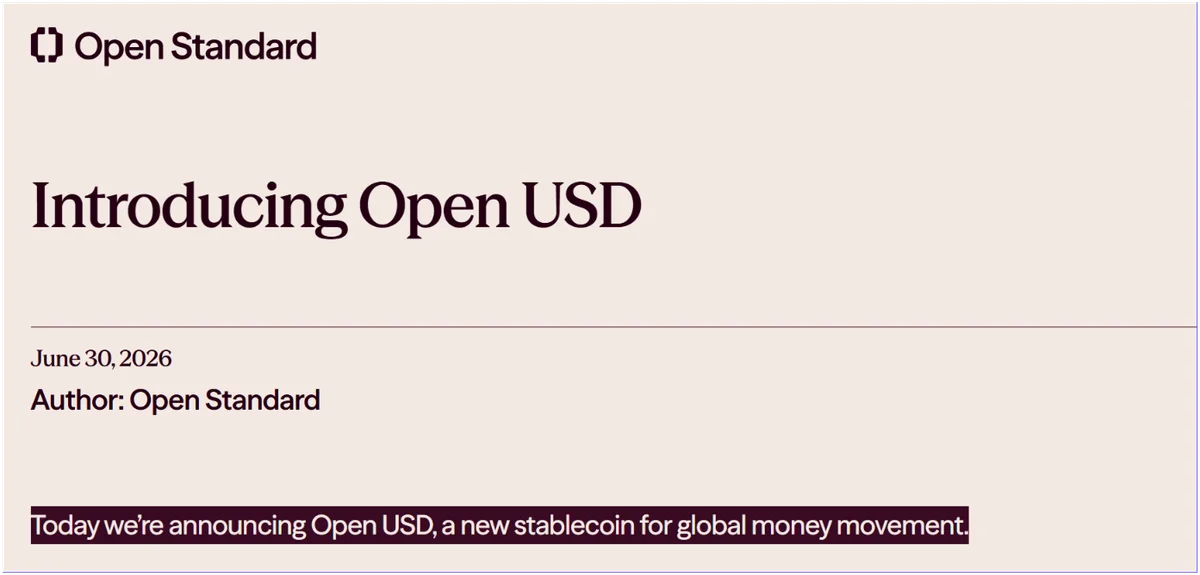
A consortium of over 140 companies, including giants like Visa, Mastercard, Google, and Stripe, has unveiled Open USD (OUSD), a new stablecoin designed to address the inherent limitations of existing digital currencies for large-scale global transactions. Announced by Open Standard, an independent company, OUSD seeks to redefine how businesses leverage stablecoins for money movement.
The Problem with Current Stablecoins
While stablecoins are rapidly gaining traction for their speed and programmability, their widespread adoption by businesses faces significant hurdles. Prohibitively expensive minting and redemption fees, limited revenue sharing from underlying reserves, and a lack of developer influence over issuer roadmaps currently constrain their utility for high-volume operations.
Open USD introduces a model built for industrial scale.
Open USD's Core Principles
The Open USD stablecoin is built on three foundational principles. First, it prioritizes scale, allowing businesses to mint and redeem OUSD with no fees or volume limits. Second, partners earn by default, receiving all earnings from OUSD’s reserves, minus a small management fee. Finally, governance is collaborative, with Open Standard operating OUSD under a board composed of its partners, ensuring collective interest guides decisions.
Zach Abrams, Founding CEO of Open Standard, emphasizes OUSD's design for the internet economy, shaped by the businesses driving its growth. This collaborative approach aims to create a shared, low-cost, high-throughput asset.