

Amazon's Data Centers Use 7x Less Water

Amazon's data centers are over 7x more water-efficient than the industry average, utilizing free air cooling and reclaimed water.

6 min read
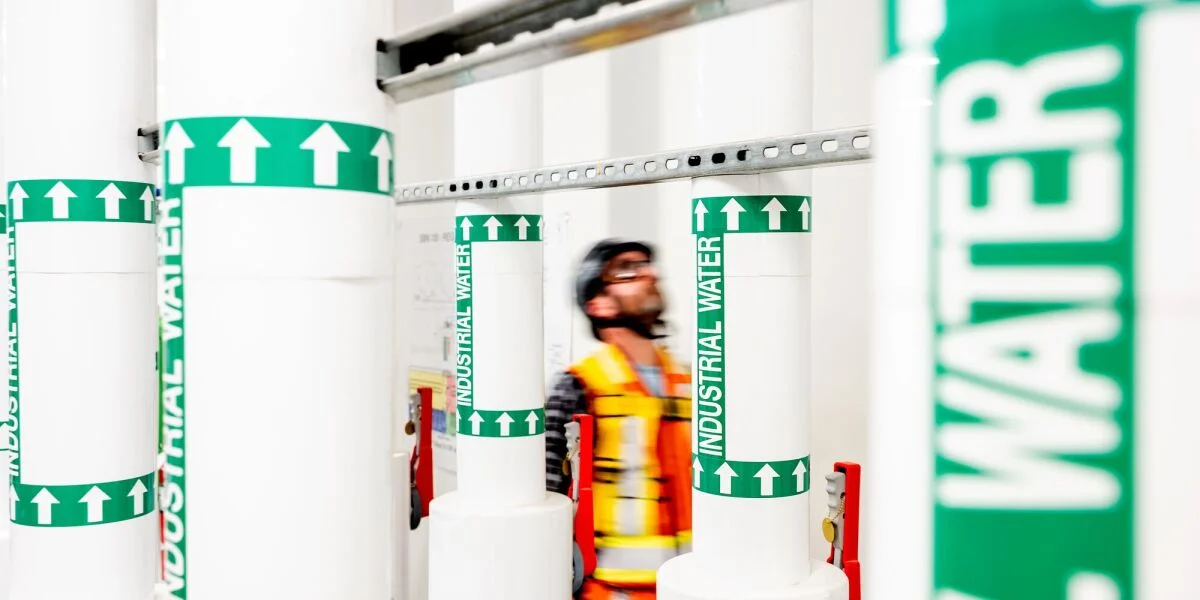
Abstract visualization of water flowing through data center cooling systems.
Innovative cooling solutions drive Amazon's water efficiency.· Amazon News

Amazon is significantly outperforming the industry in water efficiency for its data centers, reporting a 52% improvement since 2021. The tech giant's operations now use just 0.12 liters of water per kilowatt-hour, a stark contrast to the industry average of 0.84 L/kWh, according to their sustainability report.

Visual TL;DR. Industry Water Use compared to Amazon's Water Efficiency. Amazon's Water Efficiency achieved by Dual-Cooling Strategy. Dual-Cooling Strategy includes Free Air Cooling. Dual-Cooling Strategy and Evaporative Cooling. Amazon's Water Efficiency leading to Improved Efficiency.

  1. Industry Water Use: data centers use 0.84 liters per kilowatt-hour on average
  2. Amazon's Water Efficiency: data centers use 0.12 liters per kilowatt-hour, 7x less
  3. Dual-Cooling Strategy: combines free air cooling with evaporative cooling methods
  4. Free Air Cooling: uses ambient air to cool servers, no water needed
  5. Evaporative Cooling: sprays water to cool air when ambient air is too warm
  6. Improved Efficiency: 52% improvement in water efficiency since 2021
Visual TL;DR
Visual TL;DR — startuphub.ai Industry Water Use compared to Amazon's Water Efficiency. Amazon's Water Efficiency achieved by Dual-Cooling Strategy. Dual-Cooling Strategy includes Free Air Cooling compared to achieved by includes Industry Water Use Amazon's Water Efficiency Dual-Cooling Strategy Free Air Cooling From startuphub.ai · The publishers behind this format
Visual TL;DR — startuphub.ai Industry Water Use compared to Amazon's Water Efficiency. Amazon's Water Efficiency achieved by Dual-Cooling Strategy. Dual-Cooling Strategy includes Free Air Cooling compared to achieved by includes Industry WaterUse Amazon's WaterEfficiency Dual-CoolingStrategy Free Air Cooling From startuphub.ai · The publishers behind this format
Visual TL;DR — startuphub.ai Industry Water Use compared to Amazon's Water Efficiency. Amazon's Water Efficiency achieved by Dual-Cooling Strategy. Dual-Cooling Strategy includes Free Air Cooling compared to achieved by includes Industry Water Use data centers use 0.84 liters perkilowatt-hour on average Amazon's Water Efficiency data centers use 0.12 liters perkilowatt-hour, 7x less Dual-Cooling Strategy combines free air cooling with evaporativecooling methods Free Air Cooling uses ambient air to cool servers, no waterneeded From startuphub.ai · The publishers behind this format
Visual TL;DR — startuphub.ai Industry Water Use compared to Amazon's Water Efficiency. Amazon's Water Efficiency achieved by Dual-Cooling Strategy. Dual-Cooling Strategy includes Free Air Cooling compared to achieved by includes Industry WaterUse data centers use0.84 liters perkilowatt-hour on… Amazon's WaterEfficiency data centers use0.12 liters perkilowatt-hour, 7x… Dual-CoolingStrategy combines free aircooling withevaporative cooling… Free Air Cooling uses ambient air tocool servers, nowater needed From startuphub.ai · The publishers behind this format
Visual TL;DR — startuphub.ai Industry Water Use compared to Amazon's Water Efficiency. Amazon's Water Efficiency achieved by Dual-Cooling Strategy. Dual-Cooling Strategy includes Free Air Cooling. Dual-Cooling Strategy and Evaporative Cooling. Amazon's Water Efficiency leading to Improved Efficiency compared to achieved by includes and leading to Industry Water Use data centers use 0.84 liters perkilowatt-hour on average Amazon's Water Efficiency data centers use 0.12 liters perkilowatt-hour, 7x less Dual-Cooling Strategy combines free air cooling with evaporativecooling methods Free Air Cooling uses ambient air to cool servers, no waterneeded Evaporative Cooling sprays water to cool air when ambient airis too warm Improved Efficiency 52% improvement in water efficiency since2021 From startuphub.ai · The publishers behind this format
Visual TL;DR — startuphub.ai Industry Water Use compared to Amazon's Water Efficiency. Amazon's Water Efficiency achieved by Dual-Cooling Strategy. Dual-Cooling Strategy includes Free Air Cooling. Dual-Cooling Strategy and Evaporative Cooling. Amazon's Water Efficiency leading to Improved Efficiency compared to achieved by includes and leading to Industry WaterUse data centers use0.84 liters perkilowatt-hour on… Amazon's WaterEfficiency data centers use0.12 liters perkilowatt-hour, 7x… Dual-CoolingStrategy combines free aircooling withevaporative cooling… Free Air Cooling uses ambient air tocool servers, nowater needed EvaporativeCooling sprays water tocool air whenambient air is too… ImprovedEfficiency 52% improvement inwater efficiencysince 2021 From startuphub.ai · The publishers behind this format

This enhanced efficiency is largely due to a dual-cooling strategy. For approximately 90% of the year, data centers utilize "free air cooling," drawing in ambient air to cool servers without water consumption, akin to opening windows on a cool day. This approach is becoming increasingly sophisticated, with some exploring advanced methods like those discussed in Claude's Corner: Inviscid AI, Real-Time CFD for Data Centers Is Suddenly Plausible.

Related startups

During the hottest periods, when outside air is too warm and humid, Amazon employs evaporative cooling. This process involves spraying water onto an absorbent medium, where evaporation cools the air by 5 to 10 degrees. This method is preferred over traditional chillers, which consume significantly more electricity during peak demand times, as detailed in discussions around Microsoft Confronts AI Infrastructure Backlash with New Data Center Pledges and Microsoft's Azure AI superfactory.

Amazon is also raising the operating temperature thresholds for its servers, enabling them to tolerate more heat and further reducing water usage. This strategy has proven effective, with failure rates remaining constant even at higher temperatures.

The company is pushing towards a goal of being water positive by 2030, meaning it will replenish more water than it consumes. In 2025, Amazon returned approximately 3 gallons for every 4 it used, and has committed to over 50 water projects expected to return more than 5.8 billion gallons annually.

Furthermore, Amazon leads in using reclaimed water, wastewater from treatment plants, across its facilities. They currently operate 26 buildings using 100% reclaimed water, with plans for 130 more globally, aiding communities in developing their own reclaimed water programs.

These initiatives underscore a broader trend in data center sustainability efforts as demand for computing power, particularly for AI, continues to skyrocket.

© 2026 StartupHub.ai. All rights reserved. Do not enter, scrape, copy, reproduce, or republish this article in whole or in part. Use as input to AI training, fine-tuning, retrieval-augmented generation, or any machine-learning system is prohibited without written license. Substantially-similar derivative works will be pursued to the fullest extent of applicable copyright, database, and computer-misuse laws. See our terms.