

AI Agent Swarms Rethink Model Economics

Cursor's new AI agent swarm architecture dramatically cuts costs and boosts efficiency by pairing smart planners with cheaper workers, reshaping AI deployment economics.

8 min read
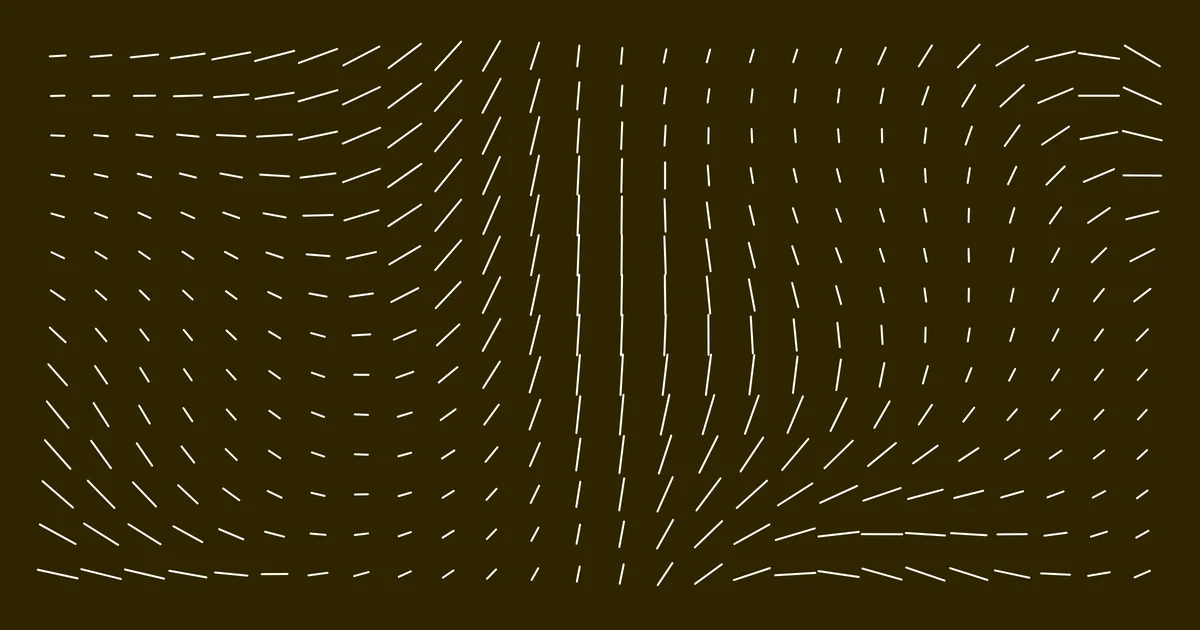
Abstract visualization of interconnected AI agents forming a complex network structure.
Interconnected AI agents forming a complex network, representing advanced coordination and task decomposition.· Cursor Blog

Visual TL;DR. Traditional AI Agents solves limitations AI Agent Swarms. AI Agent Swarms uses Tree Task Decomposition. Tree Task Decomposition enables Context Management. Tree Task Decomposition leads to Reduced Costs. Tree Task Decomposition drives Increased Efficiency. Reduced Costs contributes to Rethink Model Economics. Increased Efficiency contributes to Rethink Model Economics. AI Agent Swarms validated by SQLite Benchmark.

  1. Traditional AI Agents: single agents struggle with large tasks, losing focus and context overload
  2. AI Agent Swarms: new architecture pairs smart planners with cheaper workers for complex projects
  3. Tree Task Decomposition: planners delegate work to workers, mirroring organizational principles for scaling
  4. Context Management: planners focus on strategy, workers on narrow execution, preventing overload
  5. Reduced Costs: dramatically cuts costs by using less expensive worker agents for execution
  6. Increased Efficiency: boosts efficiency across diverse applications from software to synthetic data
  7. Rethink Model Economics: fundamentally alters the economics of deploying advanced AI capabilities
  8. SQLite Benchmark: promising results from experiments demonstrate practical viability and performance
Visual TL;DR
Visual TL;DR, startuphub.ai AI Agent Swarms uses Tree Task Decomposition. Tree Task Decomposition leads to Reduced Costs. Tree Task Decomposition drives Increased Efficiency. Reduced Costs contributes to Rethink Model Economics. Increased Efficiency contributes to Rethink Model Economics uses leads to drives contributes to contributes to AI Agent Swarms Tree Task Decomposition Reduced Costs Increased Efficiency Rethink Model Economics From startuphub.ai · The publishers behind this format
Visual TL;DR, startuphub.ai AI Agent Swarms uses Tree Task Decomposition. Tree Task Decomposition leads to Reduced Costs. Tree Task Decomposition drives Increased Efficiency. Reduced Costs contributes to Rethink Model Economics. Increased Efficiency contributes to Rethink Model Economics uses leads to drives contributes to contributes to AI Agent Swarms Tree TaskDecomposition Reduced Costs IncreasedEfficiency Rethink ModelEconomics From startuphub.ai · The publishers behind this format
Visual TL;DR, startuphub.ai AI Agent Swarms uses Tree Task Decomposition. Tree Task Decomposition leads to Reduced Costs. Tree Task Decomposition drives Increased Efficiency. Reduced Costs contributes to Rethink Model Economics. Increased Efficiency contributes to Rethink Model Economics uses leads to drives contributes to contributes to AI Agent Swarms new architecture pairs smart planners withcheaper workers for complex projects Tree Task Decomposition planners delegate work to workers,mirroring organizational principles forscaling Reduced Costs dramatically cuts costs by using lessexpensive worker agents for execution Increased Efficiency boosts efficiency across diverseapplications from software to syntheticdata Rethink Model Economics fundamentally alters the economics ofdeploying advanced AI capabilities From startuphub.ai · The publishers behind this format
Visual TL;DR, startuphub.ai AI Agent Swarms uses Tree Task Decomposition. Tree Task Decomposition leads to Reduced Costs. Tree Task Decomposition drives Increased Efficiency. Reduced Costs contributes to Rethink Model Economics. Increased Efficiency contributes to Rethink Model Economics uses leads to drives contributes to contributes to AI Agent Swarms new architecturepairs smartplanners with… Tree TaskDecomposition planners delegatework to workers,mirroring… Reduced Costs dramatically cutscosts by using lessexpensive worker… IncreasedEfficiency boosts efficiencyacross diverseapplications from… Rethink ModelEconomics fundamentallyalters theeconomics of… From startuphub.ai · The publishers behind this format
Visual TL;DR, startuphub.ai Traditional AI Agents solves limitations AI Agent Swarms. AI Agent Swarms uses Tree Task Decomposition. Tree Task Decomposition enables Context Management. Tree Task Decomposition leads to Reduced Costs. Tree Task Decomposition drives Increased Efficiency. Reduced Costs contributes to Rethink Model Economics. Increased Efficiency contributes to Rethink Model Economics. AI Agent Swarms validated by SQLite Benchmark solves limitations uses enables leads to drives contributes to contributes to validated by Traditional AI Agents single agents struggle with large tasks,losing focus and context overload AI Agent Swarms new architecture pairs smart planners withcheaper workers for complex projects Tree Task Decomposition planners delegate work to workers,mirroring organizational principles forscaling Context Management planners focus on strategy, workers onnarrow execution, preventing overload Reduced Costs dramatically cuts costs by using lessexpensive worker agents for execution Increased Efficiency boosts efficiency across diverseapplications from software to syntheticdata Rethink Model Economics fundamentally alters the economics ofdeploying advanced AI capabilities SQLite Benchmark promising results from experimentsdemonstrate practical viability andperformance From startuphub.ai · The publishers behind this format
Visual TL;DR, startuphub.ai Traditional AI Agents solves limitations AI Agent Swarms. AI Agent Swarms uses Tree Task Decomposition. Tree Task Decomposition enables Context Management. Tree Task Decomposition leads to Reduced Costs. Tree Task Decomposition drives Increased Efficiency. Reduced Costs contributes to Rethink Model Economics. Increased Efficiency contributes to Rethink Model Economics. AI Agent Swarms validated by SQLite Benchmark solves limitations uses enables leads to drives contributes to contributes to validated by Traditional AIAgents single agentsstruggle with largetasks, losing focus… AI Agent Swarms new architecturepairs smartplanners with… Tree TaskDecomposition planners delegatework to workers,mirroring… ContextManagement planners focus onstrategy, workerson narrow… Reduced Costs dramatically cutscosts by using lessexpensive worker… IncreasedEfficiency boosts efficiencyacross diverseapplications from… Rethink ModelEconomics fundamentallyalters theeconomics of… SQLite Benchmark promising resultsfrom experimentsdemonstrate… From startuphub.ai · The publishers behind this format

Cursor's latest research reveals a significant leap in AI agent swarm capabilities, fundamentally altering the economics of deploying advanced AI. By engineering agent swarms for deliberate task execution rather than empirical discovery, the company has demonstrated a more efficient path to tackling complex projects.

The core innovation lies in a tree-like decomposition of tasks, where powerful 'Planner' agents delegate work to less expensive 'Worker' agents. This structure mirrors organizational principles, allowing compute and context to scale precisely with task complexity. This approach has proven effective across diverse applications, from building software to generating synthetic data.

The Tree for Memory and Efficiency

Unlike single agents that can lose focus on large tasks, the swarm's division of labor prevents context overload. Planners remain focused on high-level strategy, while workers dedicate their context to narrow execution, a key factor in scaling performance.

A New Version Control System for AI

To manage the high-volume output of agent swarms, Cursor developed a custom version control system capable of handling 1,000 commits per second. This high-throughput system is crucial for preventing the coordination failures that plague human teams at scale.

Failure Modes at Machine Speed

At such speeds, AI teams encounter unique failure modes. Cursor identified and addressed issues like 'split-brain' design, planner contention, merge conflicts, 'megafiles,' and 'ossification' through novel prompting, shared design documents, impartial resolution agents, and incentivized code modification.

Review Lenses and Stigmergy

Stacked 'review lenses,' employing multiple agents with different perspectives, improve error correction. Furthermore, the concept of stigmergy, where agents shape their environment (like a 'Field Guide'), institutionalizes knowledge for future agents, reducing surprise and shortening task completion times.

SQLite Experiment: A Promising Benchmark

An experiment to build SQLite from its documentation in Rust using the new swarm yielded promising results. Compared to previous attempts, the new swarm achieved significantly higher success rates on a held-out SQL test suite within the same time and model budget.

Model Mixes Drive Cost Efficiency

Testing various model configurations highlighted the impact of model economics AI. Hybrid approaches, pairing a high-capability planner (like Opus 4.8) with a cost-effective worker (like Composer 2.5), achieved comparable quality to using a single frontier model throughout, but at a fraction of the cost. For instance, a GPT-5.5-only run cost $10,565, while an Opus/Composer hybrid cost $1,339 for similar results.

This strategy leverages expensive frontier models only for critical decision-making moments, allowing cheaper models to execute detailed instructions efficiently.

© 2026 StartupHub.ai. All rights reserved. Do not enter, scrape, copy, reproduce, or republish this article in whole or in part. Use as input to AI training, fine-tuning, retrieval-augmented generation, or any machine-learning system is prohibited without written license. Substantially-similar derivative works will be pursued to the fullest extent of applicable copyright, database, and computer-misuse laws. See our terms.