


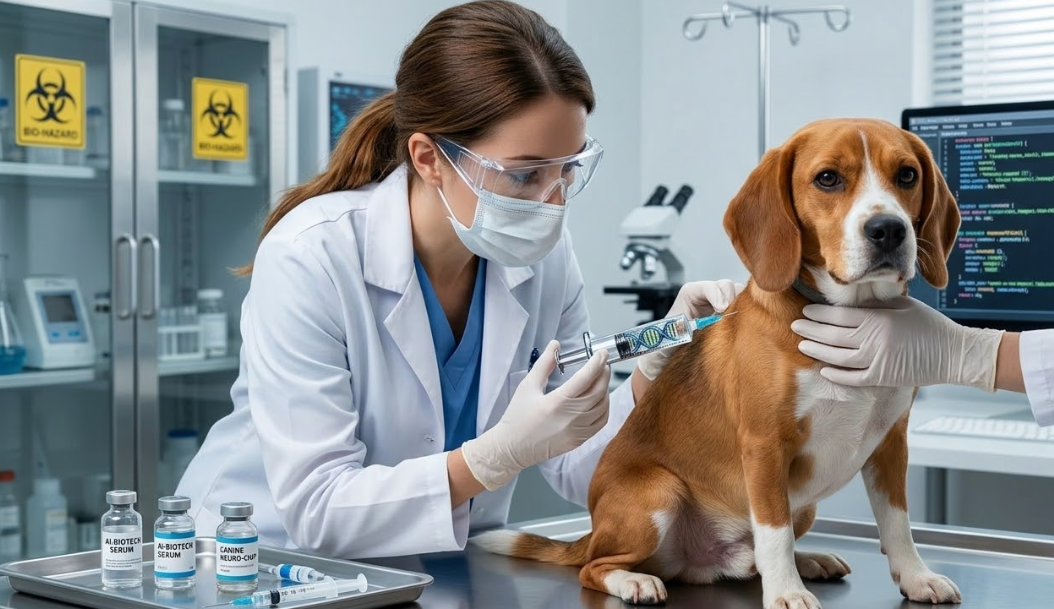
When conventional veterinary medicine failed Paul Conyngham’s dog Rosie, the Australian tech entrepreneur turned to a radical solution: building a custom mRNA cancer vaccine with the help of AI. Rosie, a Staffordshire-Shar Pei cross, was diagnosed with aggressive mast cell tumors that had become unresponsive to standard treatments.
The Data Problem
Conyngham, a machine learning specialist, viewed Rosie’s cancer not as a biological dead end, but as a data problem. He aimed to design a personalized neoantigen vaccine, a complex immunotherapy approach.
This involves sequencing both healthy and tumor DNA, identifying unique mutations (neoantigens), and then training the immune system to target them.
AI as a Research Assistant
Conyngham leveraged large language models (LLMs) as advanced research assistants, exploring experimental oncology. This led him to the concept of personalized cancer vaccines.
He commissioned genomic sequencing of Rosie’s DNA and tumors to identify the specific genetic 'bugs' driving the cancer. This provided the crucial blueprint for his AI-driven approach.