

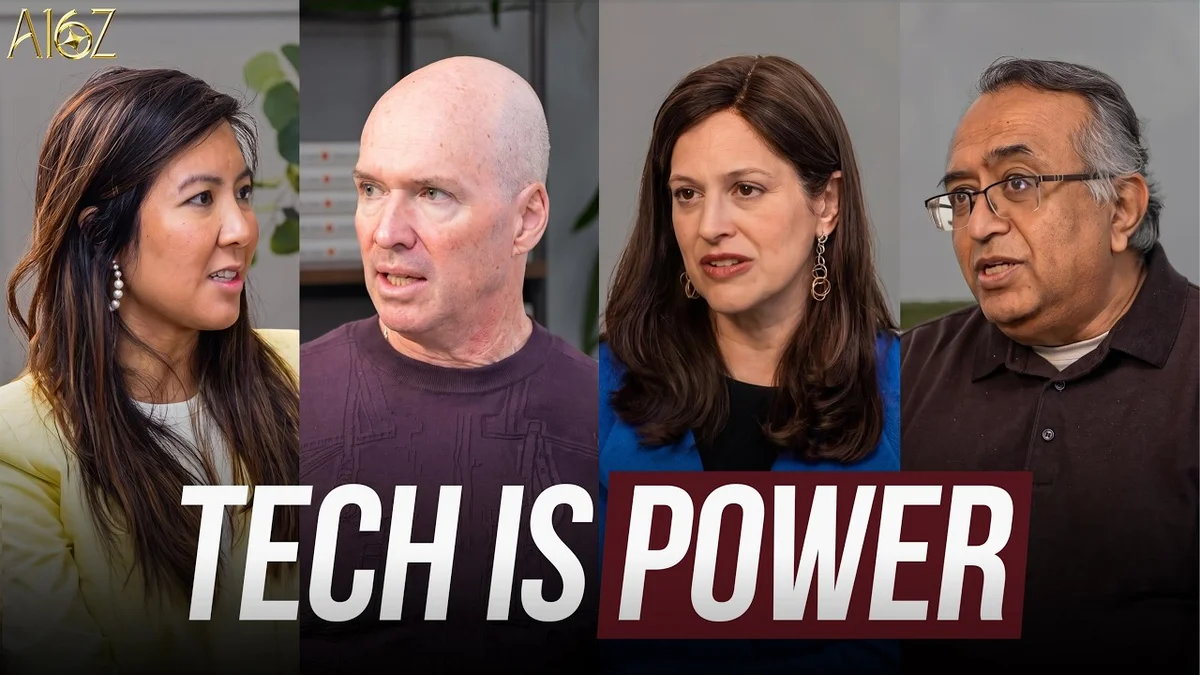
a16z Explores American Tech's Global Leadership Role

a16z partners discuss why American tech, especially AI, must lead globally, the challenges of international expansion, and the importance of building trust and value across diverse markets.

Four people sitting around a round table with microphones, discussing technology.
a16z
Visual TL;DR
Global Tech Leadership ImperativeDriver
American tech, especially AI, must lead globally
From the article 7 mentionsIn a recent discussion on The a16z Show, venture capital firm Andreessen Horowitz (a16z) partners Ben Horowitz, Ann Neuberger, and Jen Kha explored the critical imperative for American technology, particularly in the realm of artificial intelligence, to lead on a global scale.
Local to Global ReachContext
transitioning from local success to global reach
From the articleShe explained that successful global expansion requires more than just exporting a product or business model; it necessitates deep understanding and adaptation to local market conditions, regulatory frameworks, and cultural values.
Navigating Diverse MarketsContext
challenges of international expansion and varied values
From the article 2 mentionsShe noted that the firm's growth has been driven by a commitment to understanding and engaging with diverse markets and regulatory environments.
AI and Global CompetitionCore
AI's role in technological and geopolitical competition
From the article 9+ mentionsThe partners also touched upon the evolving nature of global economic competition.
Building Trust and ValueContext
importance of building trust and value across markets
From the articleBuilding trust and understanding local needs are paramount for successful international ventures.
US as Innovation BeaconEffect
U.S. position as a beacon of innovation globally
From the article 3 mentionsHe articulated a core belief within the firm: that American innovation, particularly in AI, must aim to lead the world.
Economic ProsperityOutcome
From the article 4 mentionsThis leadership, he argued, is crucial for not only economic prosperity but also for shaping the global technological and geopolitical landscape according to American values and interests.
Contents(5)

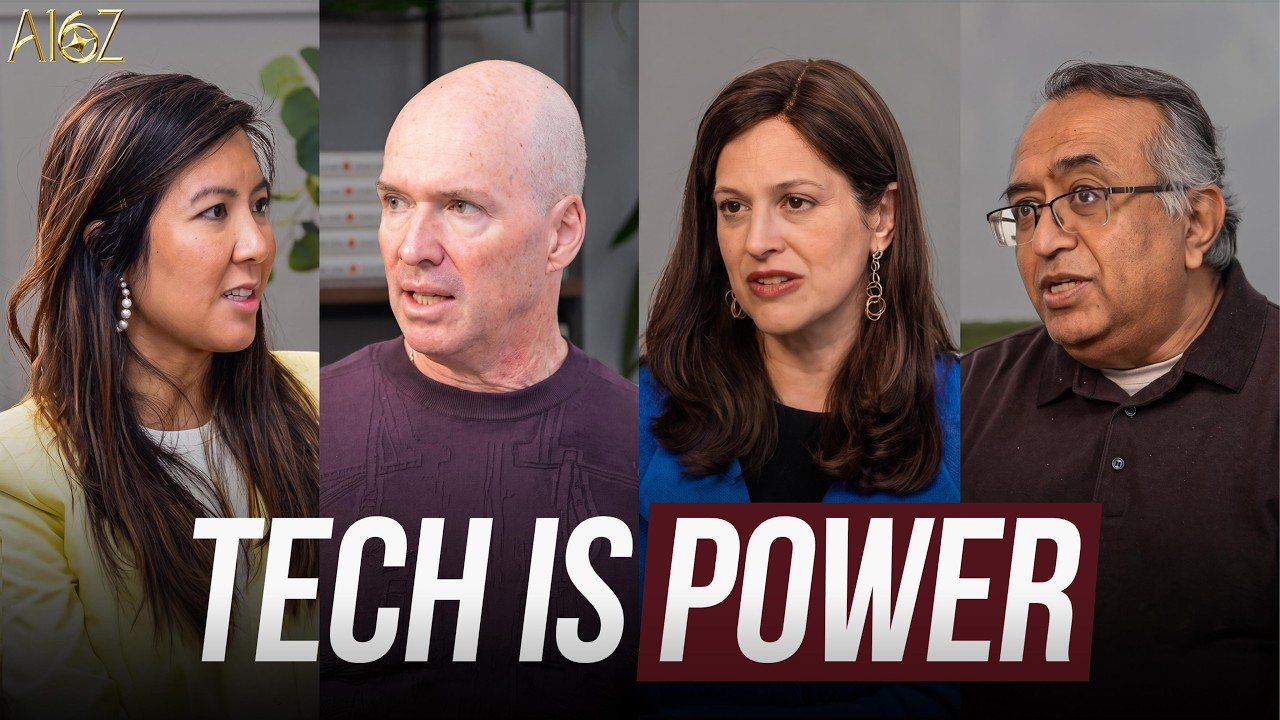
In a recent discussion on The a16z Show, venture capital firm Andreessen Horowitz (a16z) partners Ben Horowitz, Ann Neuberger, and Jen Kha explored the critical imperative for American technology, particularly in the realm of artificial intelligence, to lead on a global scale. The conversation, titled "a16z Goes Global: Why American Tech Must Lead the World," highlighted the intricate relationship between technological advancement, economic competitiveness, and geopolitical influence.

a16z Explores American Tech's Global Leadership Role - a16z
a16z Explores American Tech's Global Leadership Role, a16z

The Global Imperative for American Tech Leadership

Ben Horowitz, co-founder of a16z, set the stage by emphasizing that for American startups and the broader tech industry, a global perspective is not merely an option but a necessity. He articulated a core belief within the firm: that American innovation, particularly in AI, must aim to lead the world. This leadership, he argued, is crucial for not only economic prosperity but also for shaping the global technological and geopolitical landscape according to American values and interests.

Horowitz elaborated on the idea that companies originating from the U.S. have a unique opportunity and responsibility to set the standard for technological development and deployment worldwide. This involves not just creating advanced technologies but also ensuring they are developed and used in a way that benefits society and upholds democratic principles.

Ann Neuberger, General Partner & Head of Global Affairs at a16z, and Jen Kha, Managing Partner, Global Partnerships at a16z, brought their expertise to bear on the practicalities of global expansion. Neuberger highlighted how the firm's strategy has evolved from a purely Silicon Valley-centric approach to a more globally integrated one. She noted that the firm's growth has been driven by a commitment to understanding and engaging with diverse markets and regulatory environments.

Kha emphasized the challenge of replicating the success of Silicon Valley in other regions. She explained that successful global expansion requires more than just exporting a product or business model; it necessitates deep understanding and adaptation to local market conditions, regulatory frameworks, and cultural values. "What we see is that companies are increasingly having to think about how to create local versions of what they're doing," Kha stated, underscoring the need for localization and cultural sensitivity.

The Role of AI and Technology in Global Competition

The discussion frequently circled back to artificial intelligence as a key battleground for global technological leadership. Horowitz pointed out that AI models, while powerful, are not neutral; they are imbued with the values and data from their creators and environments. This makes the origin and development of AI crucial, especially when considering its potential impact on everything from economic systems to national security.

The partners also touched upon the evolving nature of global economic competition. They observed that while the U.S. has historically led in many technological sectors, other nations are rapidly advancing, creating a more complex and competitive global environment. This dynamic underscores the urgency for American companies to innovate aggressively and to think globally from the outset.

From Local Success to Global Reach

Kha elaborated on the practical steps companies take to achieve global scale, noting that many successful U.S. startups initially focus on mastering their domestic market before expanding. However, she highlighted a shift: increasingly, companies are considering their global strategy from day one. This involves building products and platforms that can be adapted to different regions and understanding how to navigate international regulatory landscapes.

The conversation also touched upon the importance of partnerships with governments and other stakeholders in foreign countries. Building trust and understanding local needs are paramount for successful international ventures. The firm's global strategy, as outlined by its partners, involves not only investing in promising startups but also actively helping them to navigate the complexities of the global market.

The U.S. as a Beacon of Innovation

Horowitz reiterated the belief that the United States holds a unique position as a global leader in innovation, particularly in AI and other critical technologies. He stressed that this leadership is not guaranteed and requires continuous effort and investment. The firm's commitment to "going global" is a reflection of this belief, aiming to support companies that can not only succeed in the U.S. but also make a significant impact on the world stage.

The overarching message from the discussion was clear: American tech companies have a vital role to play in shaping the future of global technology and innovation. By embracing a global mindset, understanding diverse markets, and focusing on building scalable, adaptable products, these companies can continue to drive progress and maintain U.S. leadership in a rapidly evolving world.

© 2026 StartupHub.ai. All rights reserved. You may not republish this article in full without a license. Search engines and AI research tools may crawl and summarize for reference. Bulk reproduction or model training requires a license. See our terms.
Daniel Singer

Written by

Daniel Singer

Editor, StartupHub.ai

Daniel Singer is the editor of StartupHub.ai, a technology expert and thought leader on AI and its applications across sectors, from fintech and healthcare to developer tooling and consumer software. He writes and tests the tools covered here thoroughly and regularly, and built StartupHub.ai to give founders, operators and buyers a clearer read on what they are actually being sold.