


A new analysis challenges the reliability of the Gaza Mortality Survey, raising significant concerns about its reported population-level death estimates. The survey, published in The Lancet Global Health, claimed a population-representative sample to extrapolate 393 reported violent deaths to 75,200 at the population level.
Sampling Integrity Questioned
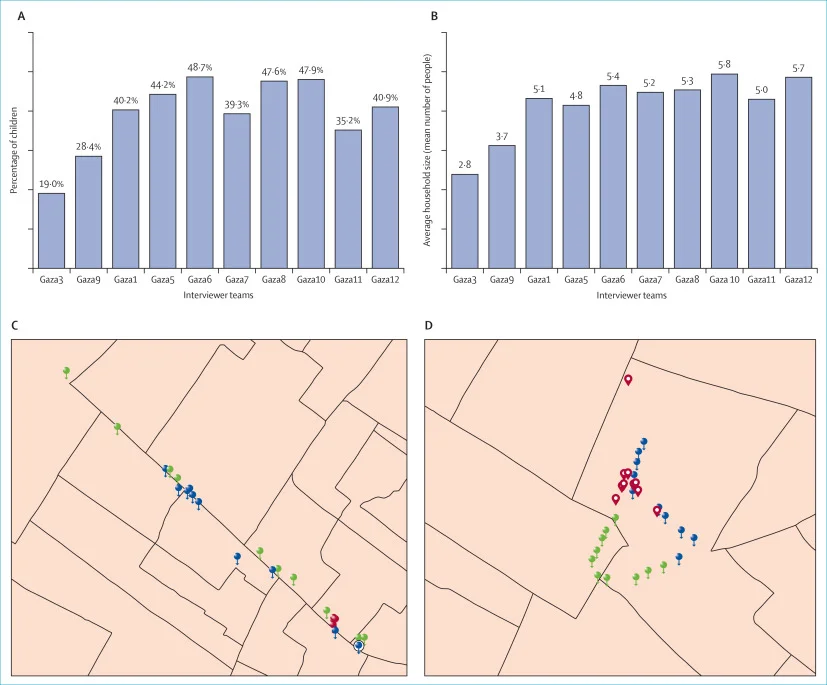
Independent re-analysis of the publicly released microdata reveals multiple deviations from the declared protocol. Sergio DellaPergola and Mark Zlochin's findings highlight substantial interviewer-level outliers that compromise the sample's representativeness.
Specifically, two interviewer teams, Gaza9 and Gaza3, recorded data that diverged materially from the rest of the sample. Team Gaza9 alone accounted for a quarter of all violent deaths from just 8% of the total sample.
Excluding Gaza9's data reduced the central violent-death estimate from 75,200 to 64,100. Further excluding Gaza3's data, which also showed elevated mortality and demographic differences, lowered the estimate by another 5,000 deaths, totaling a 16,000-death reduction. Such sensitivity to just two teams is inconsistent with a properly implemented population-representative design.
Quality Control Failures and GPS Discrepancies
The survey's real-time monitoring and quality-control procedures, designed to detect anomalies, failed to identify these critical issues during fieldwork. The concentration of violent deaths and demographic structural differences in the Gaza9 and Gaza3 data went unflagged.