

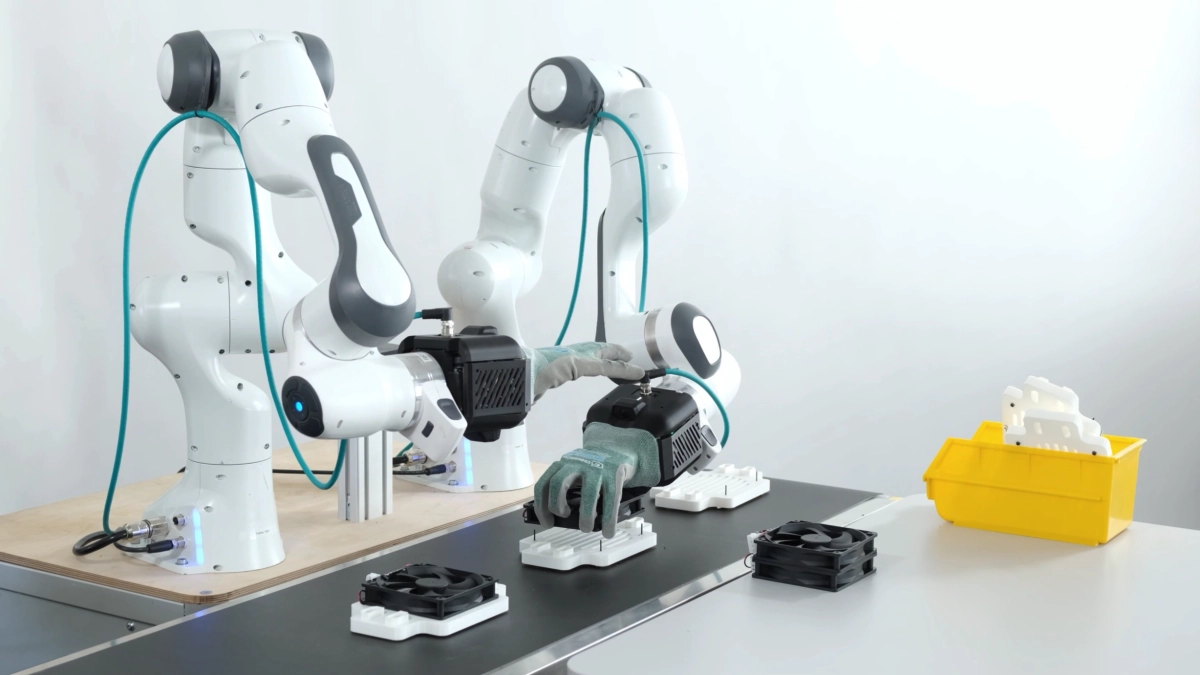
While the tech world remains captivated by the promise of full-body humanoid robots, one Swiss startup is making a pragmatic, $16 million bet that the real revolution in automation is all in the hands. Zurich-based mimic just closed a heavily oversubscribed seed round to scale its "frontier physical AI," which powers dexterous robotic hands designed to tackle the complex factory tasks that have stumped traditional automation for decades.
The funding, led by Elaia and Speedinvest, brings mimic’s total raised to over $20 million. The company is positioning itself as a leading European player in a field largely dominated by high-profile, capital-intensive efforts in the US and China. But instead of building a complete bipedal robot, mimic is focusing on the most critical component for industrial work: human-like dexterity.
On factory floors and in logistics centers, millions of tasks involving intricate assembly, delicate handling, or component insertion still require a human touch. Traditional robots are powerful but clumsy, locked into repetitive motions and requiring expensive, custom programming for every new task. The dream of a general-purpose humanoid that can just walk up and start working remains distant, hampered by high costs, safety concerns, and still-limited capabilities.
mimic argues that for most industrial scenarios, the legs are irrelevant. “Humanoids are exciting, but there aren’t many industrial scenarios where the full-body form factor truly adds value,” says Stephan-Daniel Gravert, mimic’s co-founder and CPO. “Our approach pairs AI-driven dexterous robotic hands with proven, off-the-shelf robot arms to deliver the same capabilities in a way that is much simpler, more reliable and rapidly deployable.”
This strategy allows mimic to bypass the immense engineering challenges of locomotion and balance, focusing its resources on solving the manipulation problem. The new capital is earmarked to accelerate the development of its core AI foundation model and its proprietary robotic hands, as well as to expand deployments with its existing pilot customers, which it says include Fortune 500 manufacturers and global automotive brands.