



In a recent "AI Ascent" fireside chat, Waymo's CEO Dmitri Dolgov shared insights into the company's journey and the future of autonomous driving. Dolgov, a pivotal figure in the development of self-driving technology, has been instrumental in steering Waymo from its early research days at Google to its current status as a leader in the field.
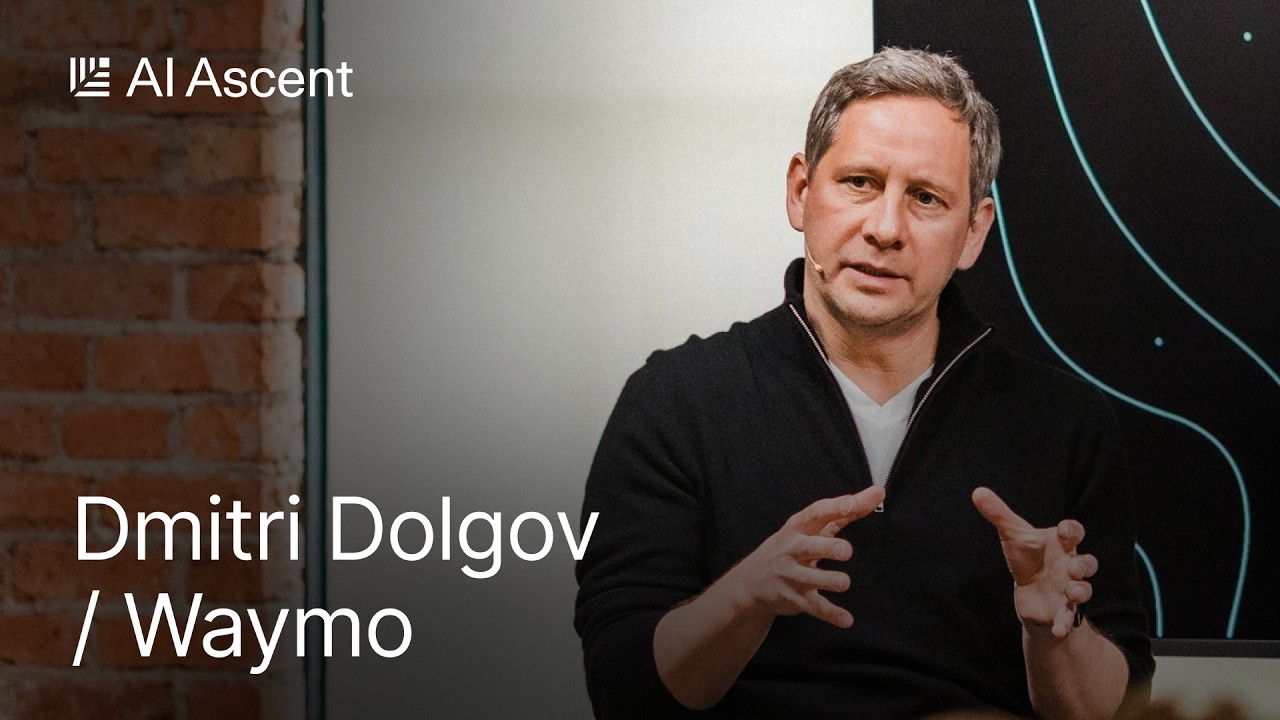
Dmitri Dolgov: A Pioneer in Autonomous Driving
Dmitri Dolgov's background is deeply rooted in the technical challenges of building self-driving systems. Born in the Soviet Union and raised in the United States, Dolgov pursued a strong academic path in physics and mathematics, earning a Ph.D. in Physics from Moscow State University and later a Ph.D. in AI from Stanford University. His early exposure to the DARPA Grand Challenge in 2005, a competition that spurred significant advancements in autonomous vehicle technology, was a formative experience. This early involvement set the stage for his long-standing commitment to the field, first at Google's self-driving car project and now as CEO of Waymo.
From Research to Real-World Deployment
Dolgov detailed Waymo's ambitious goals, which began with a simple yet profound objective: to make transportation safer and more accessible. He highlighted the immense challenges faced in achieving this vision, particularly in the early days of the project. The company's approach has always been characterized by a commitment to rigorous testing and a deep understanding of the complexities of real-world driving. Dolgov emphasized that the journey has been one of continuous learning and adaptation, with the technology evolving significantly over the years.
Waymo's approach to scaling its technology is multifaceted. Dolgov explained that the company has focused on building a robust and reliable system that can operate safely in diverse environments. This involves not only advanced AI and machine learning but also sophisticated hardware and rigorous testing protocols. The company's early focus on building a fully autonomous system, rather than relying on human drivers for fallback, has been a defining characteristic of its strategy.
The Importance of Safety and Public Trust
A recurring theme in Dolgov's discussion was the paramount importance of safety. He stressed that for autonomous vehicles to be widely adopted, they must be demonstrably safer than human drivers. This requires not only sophisticated technology but also a clear and transparent approach to safety validation and public communication. Building public trust is seen as a critical component of Waymo's mission.