Theo Browne: AI's 'Skeuomorphic Phase' and the Future of Development

Theo Browne at AI Engineer World's Fair discusses AI's 'skeuomorphic phase,' urging developers to embrace bigger, 'stupid' ideas to unlock true innovation.

5 min read
Theo Browne on stage at AI Engineer World's Fair
AI Engineer
Visual TL;DR
Early iPhone AppsDriver
compass app looked exactly like its physical counterpart
From the articleBrowne began by drawing a compelling analogy to the early days of the iPhone.
Theo Browne's ChallengeCore
From the articleTheo Browne, founder of t3.gg, took the stage at the AI Engineer World's Fair to challenge the current development mindset in AI.
AI's Skeuomorphic PhaseContext
From the article 2 mentionsHe posited that the industry is stuck in a 'skeuomorphic phase,' a term borrowed from design that describes the tendency to mimic real-world objects and interfaces in digital formats.
Holding Back InnovationDriver
From the articleBrowne argued that this adherence to familiar patterns, while comfortable, is holding back the potential of AI development.
Evolve and InnovateOutcome
need to move past current comfortable development mindset
From the articleBrowne’s core message was a call to action: it's time to move beyond replicating the past and to truly innovate with AI.
Embrace 'Stupid' IdeasDriver
encourages developers to think bigger and unconventionally
From the articleBrowne challenged the audience to consider why developers often shy away from ideas that initially seem impractical or 'stupid.' He drew a parallel to the development of programming languages, where early choices, like why certain files could or could not be committed to version control, were based on limitations and assumptions of the time.
Unlock True InnovationEffect
moving beyond replication to abstract, efficient digital-native designs
From the articleBy embracing new approaches and shedding the limitations of old thinking, Browne believes the industry can unlock the true potential of AI.
Theo Browne, founder of t3.gg, took the stage at the AI Engineer World's Fair to challenge the current development mindset in AI. He posited that the industry is stuck in a 'skeuomorphic phase,' a term borrowed from design that describes the tendency to mimic real-world objects and interfaces in digital formats. Browne argued that this adherence to familiar patterns, while comfortable, is holding back the potential of AI development.

Theo Browne: AI's 'Skeuomorphic Phase' and the Future of Development - AI Engineer
Theo Browne: AI's 'Skeuomorphic Phase' and the Future of Development — from AI Engineer

The Skeuomorphic Trap in AI

Browne began by drawing a compelling analogy to the early days of the iPhone. He recalled how initial apps, like the compass, were designed to look exactly like their physical counterparts. This skeuomorphic approach, he explained, was a way to ease users into a new digital paradigm by making it relatable. However, as technology evolved, apps moved beyond mere replication to embrace more abstract and efficient digital-native designs.

Applying this to AI, Browne suggested that developers are currently building AI tools and interfaces that mimic existing software and workflows. He highlighted how many AI applications are essentially trying to replicate older functionalities, like command-line interfaces or traditional software development processes, but with AI bolted on. This, he contends, is a missed opportunity to truly rethink what's possible.

Beyond Familiarity: Embracing the 'Stupid' Idea

Browne challenged the audience to consider why developers often shy away from ideas that initially seem impractical or 'stupid.' He drew a parallel to the development of programming languages, where early choices, like why certain files could or could not be committed to version control, were based on limitations and assumptions of the time. He argued that much like the early limitations of computing, current AI development is often constrained by human biases and a fear of the unknown.

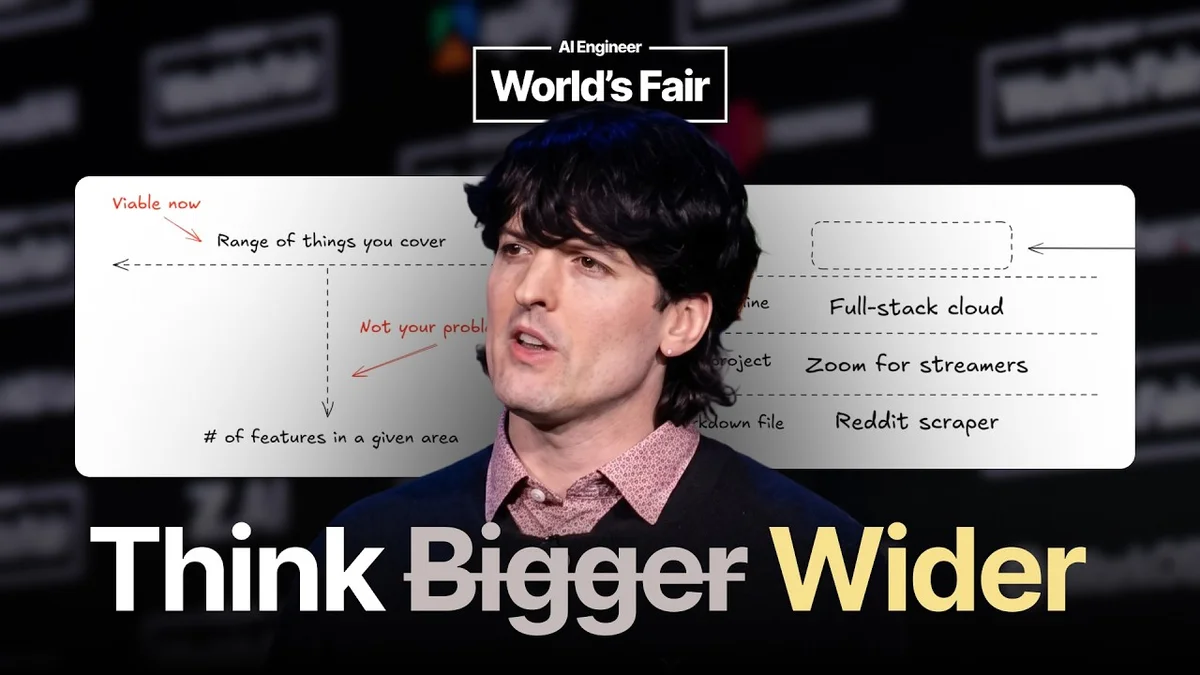
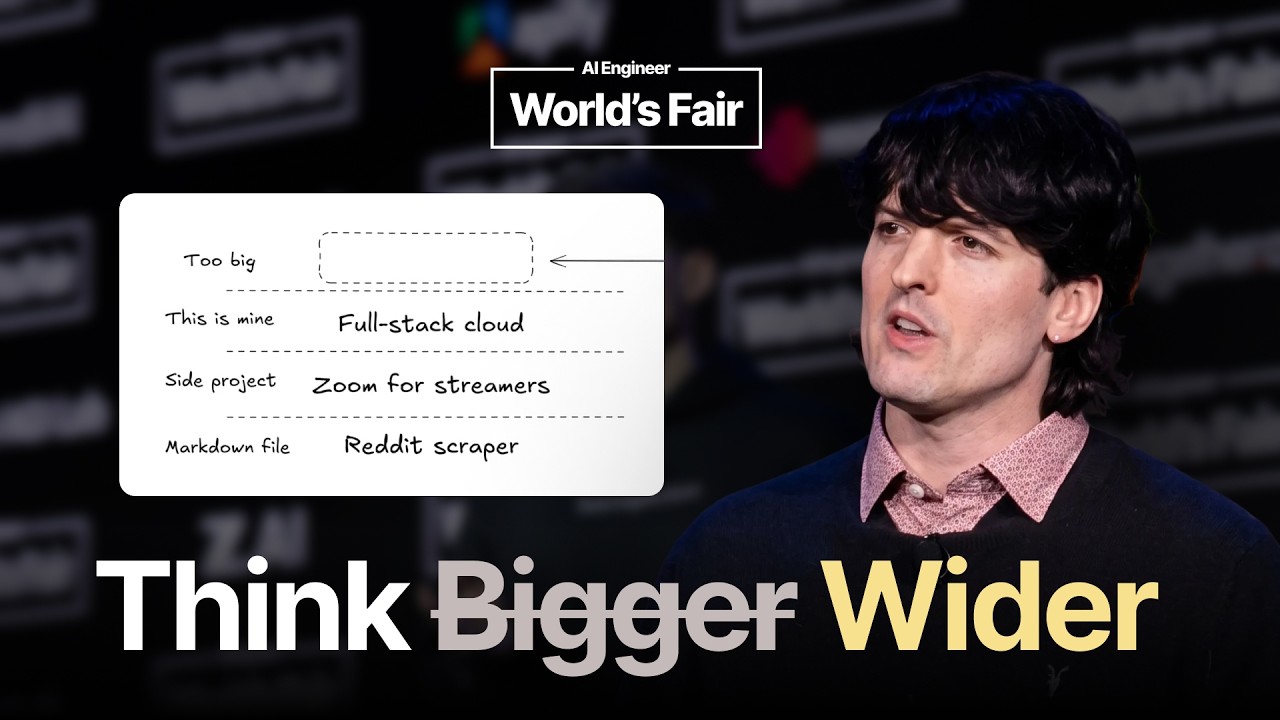
He presented a tiered approach to AI projects, categorizing them from 'side project' to 'startup' to 'too big.' Browne suggested that the most impactful AI advancements often come from ideas that initially seem too ambitious or even nonsensical. He urged developers to push beyond their comfort zones and embrace the potential of building systems that might not immediately make sense based on current paradigms. The key, he stressed, is to think wider and deeper about the capabilities of these new technologies.

The Need to Evolve and Innovate

Browne’s core message was a call to action: it's time to move beyond replicating the past and to truly innovate with AI. He emphasized that the rapid progress in AI models, such as the progression from Sonnet 3.5 to Opus 4.5 and Mythos 5, signifies a shift towards more capable and versatile systems. These advancements, he believes, should be met not with attempts to fit them into old frameworks but with a fundamental rethinking of how software is built and how users interact with it.

By embracing new approaches and shedding the limitations of old thinking, Browne believes the industry can unlock the true potential of AI. His talk served as a powerful reminder that groundbreaking innovation often starts with ideas that feel a little bit foolish, pushing the boundaries of what we currently understand.

© 2026 StartupHub.ai. All rights reserved. Do not enter, scrape, copy, reproduce, or republish this article in whole or in part. Use as input to AI training, fine-tuning, retrieval-augmented generation, or any machine-learning system is prohibited without written license. Substantially-similar derivative works will be pursued to the fullest extent of applicable copyright, database, and computer-misuse laws. See our terms.

