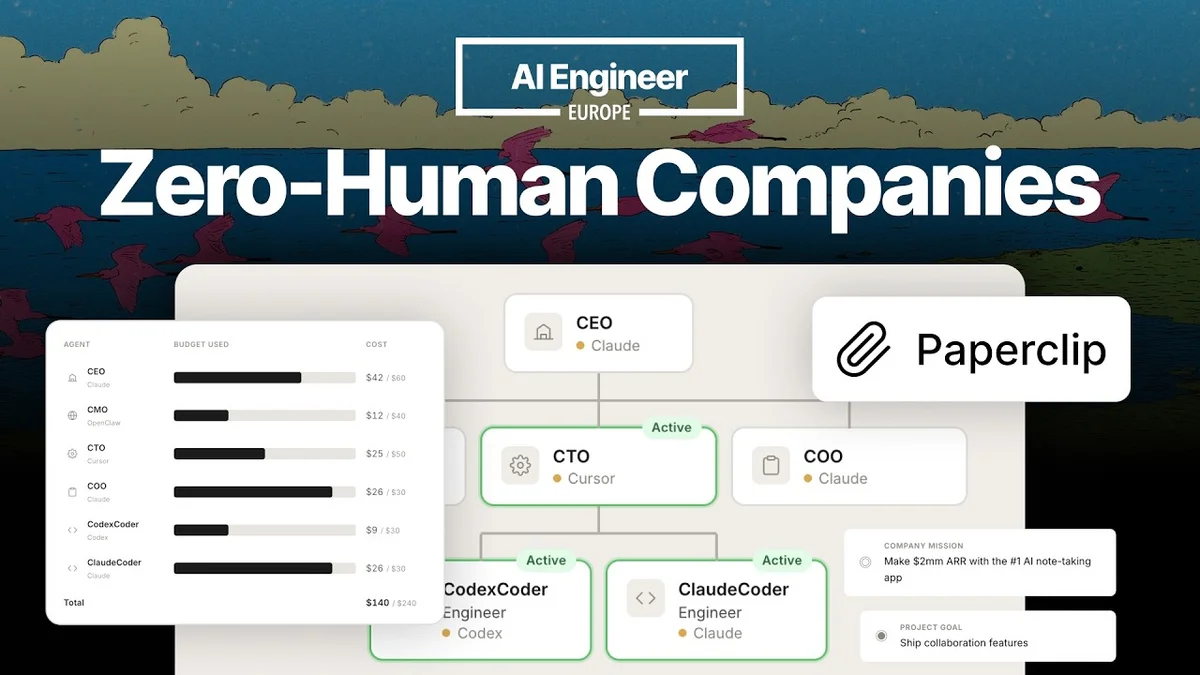
In a recent demonstration, Paperclip CEO Doda showcased the platform's potential for ushering in an era of "zero-human companies." Paperclip is an open-source orchestration tool designed to manage AI agents, allowing users to create and delegate tasks within a structured organizational framework.
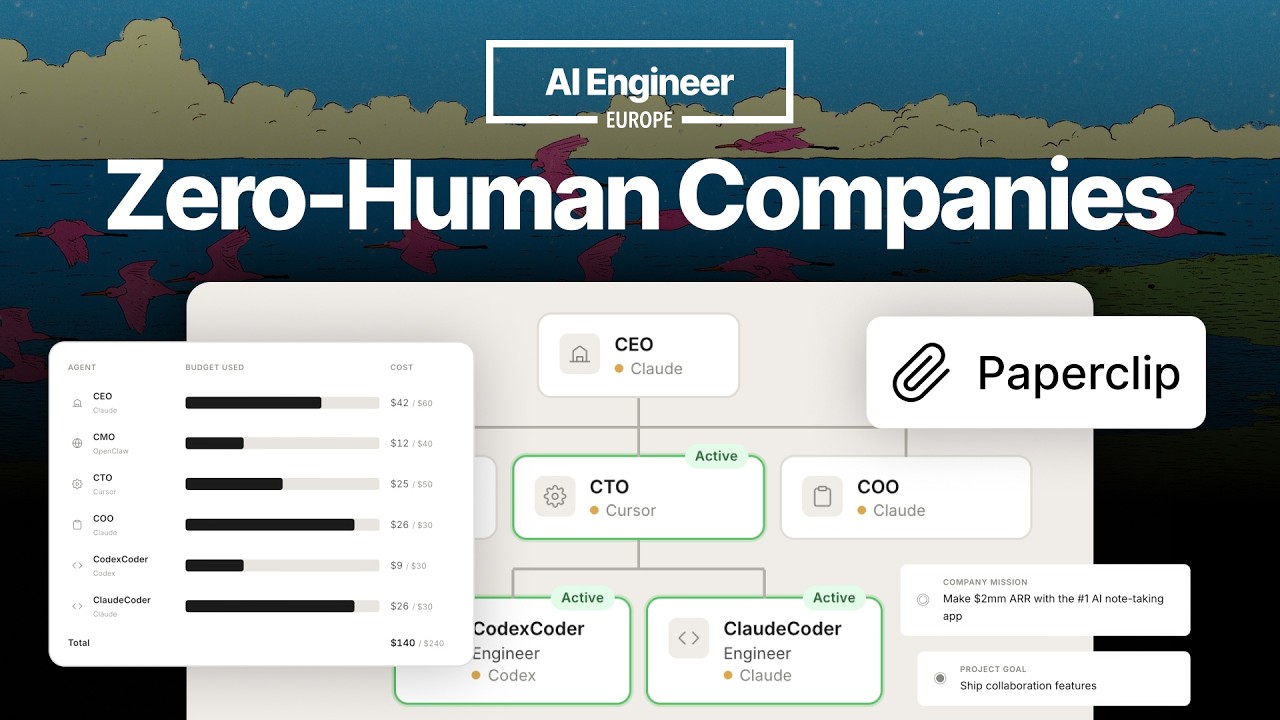
Paperclip's Vision for Autonomous Business
Doda explained that Paperclip aims to empower users to define an organization's structure using AI agents. These agents can be assigned specific roles and tasks, mirroring a traditional company hierarchy. The platform supports a variety of LLM adapters, including Claude and Codex, with plans to integrate more models like Gemini and others. This flexibility allows users to choose the most suitable AI for each role.
Building and Managing AI Teams
The demonstration highlighted how users can create a company within Paperclip, define its mission, and then populate it with AI agents acting as employees. These agents can be configured with specific skills and workflows. For instance, the CEO agent, powered by a local Claude model, was shown managing tasks such as hiring engineers and developing a hiring plan. The platform tracks agent performance, costs, and task progress, providing a dashboard view of the organization's operations.
Key Features and Future Development
Paperclip's feature set includes the ability to create detailed organizational charts, manage agent tasks, and monitor performance metrics. The platform also offers "routines" for automating recurring work definitions. Key features highlighted in the roadmap include a plugin system, enhanced agent management, improved budgeting tools, and the development of a desktop application. Notably, Paperclip is also working on enabling multiple human users and cloud deployments, aiming to make the platform more robust and scalable.
The Power of Agent Orchestration
Doda emphasized that Paperclip is not just about individual AI capabilities but about orchestrating these agents to work together towards a common goal. By providing a structured environment for AI collaboration, Paperclip seeks to unlock new levels of automation and efficiency for businesses. The platform's open-source nature and focus on customizability allow users to tailor the system to their specific needs, whether they are building a small startup or managing a large enterprise.
Paperclip's Growth and Community
The demonstration also touched upon Paperclip's rapid growth, citing its achievement of over 50,000 GitHub stars. This strong community adoption underscores the demand for tools that facilitate the creation and management of AI-powered autonomous systems. The platform's commitment to continuous development and community feedback suggests a promising future for Paperclip in shaping the future of work.