


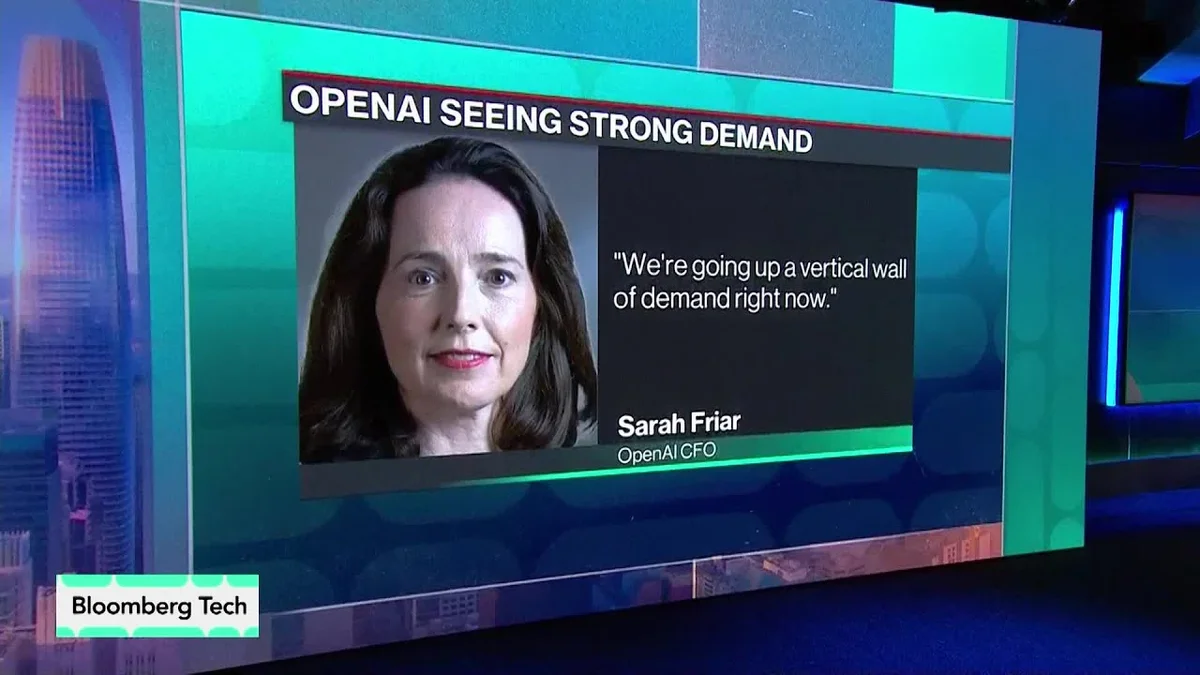
In a recent Bloomberg Tech segment, OpenAI's Chief Financial Officer, Sarah Friar, offered a stark assessment of the company's current operational climate: an overwhelming 'vertical wall of demand' for artificial intelligence compute. Friar, a seasoned financial executive with prior roles at companies like Block, Inc. (formerly Square) and Snowflake, brings a deep understanding of scaling high-growth technology ventures. Her insights into OpenAI's trajectory underscore the immense pressure and opportunity facing leading AI development firms.
Friar's perspective comes at a pivotal moment for OpenAI, a company that has rapidly ascended to the forefront of generative AI with products like ChatGPT and DALL-E. The rapid adoption of these tools has created unprecedented demand for the computational resources required to train and operate them. This demand, Friar suggests, is not merely a surge but a continuous, steep incline.
The full discussion can be found on Bloomberg Technology's YouTube channel.
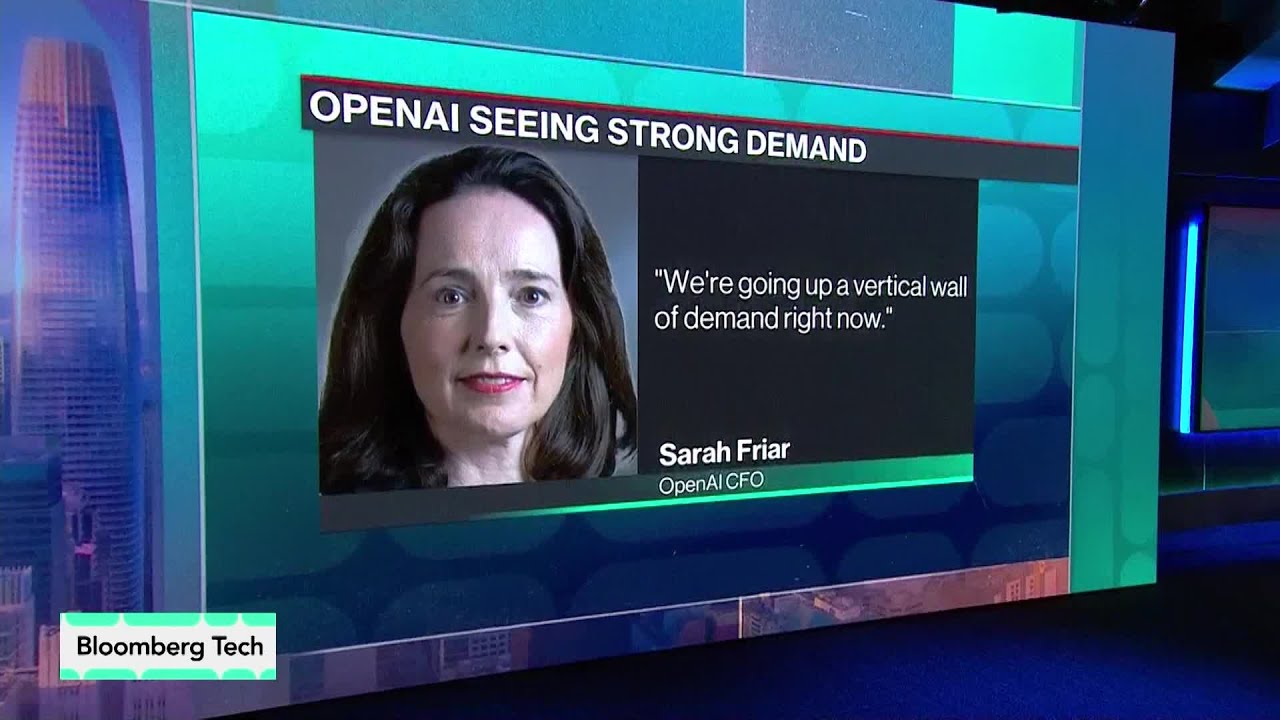
Sarah Friar: Driving Growth at AI's Frontier
Sarah Friar's tenure as CFO at OpenAI positions her as a key figure in managing the financial and operational complexities of one of the world's most influential AI research labs. Her background includes significant experience in scaling technology companies, navigating the challenges of rapid growth, and setting ambitious financial targets. At OpenAI, her role is critical in translating ambitious AI development goals into tangible business outcomes, ensuring the company has the resources to innovate while meeting market demand.
'Stretch Goals' and a 'Vertical Wall of Demand'
Friar revealed that OpenAI sets extremely high internal benchmarks. She stated, "Every company I've ever been inside of...always has stretch goals." This philosophy extends to their financial objectives, suggesting that the company consistently aims beyond readily achievable targets to drive maximum performance. However, Friar also candidly admitted that even these ambitious goals might be constrained by external factors. "And if you don't have those stretch goals, I feel like, actually, you're not doing your job as a CFO."