Prasanna Sankar told AI Engineer the failure point for parallel coding agents is the merge, not the model. His demo was Vorflux 2.0, a set of always on Autobots. They run remote on cloud machines instead of a laptop and keep every PR rebased to stay mergeable with master.
That single default explains the whole system.
Sankar, a three time YC founder, said his prior company Rippling is worth more than $10 billion. He said Vorflux had raised around $15 million as of the talk. He said the shift started with Opus 4.5, when agents moved from IDE autocomplete to working alone in the terminal.
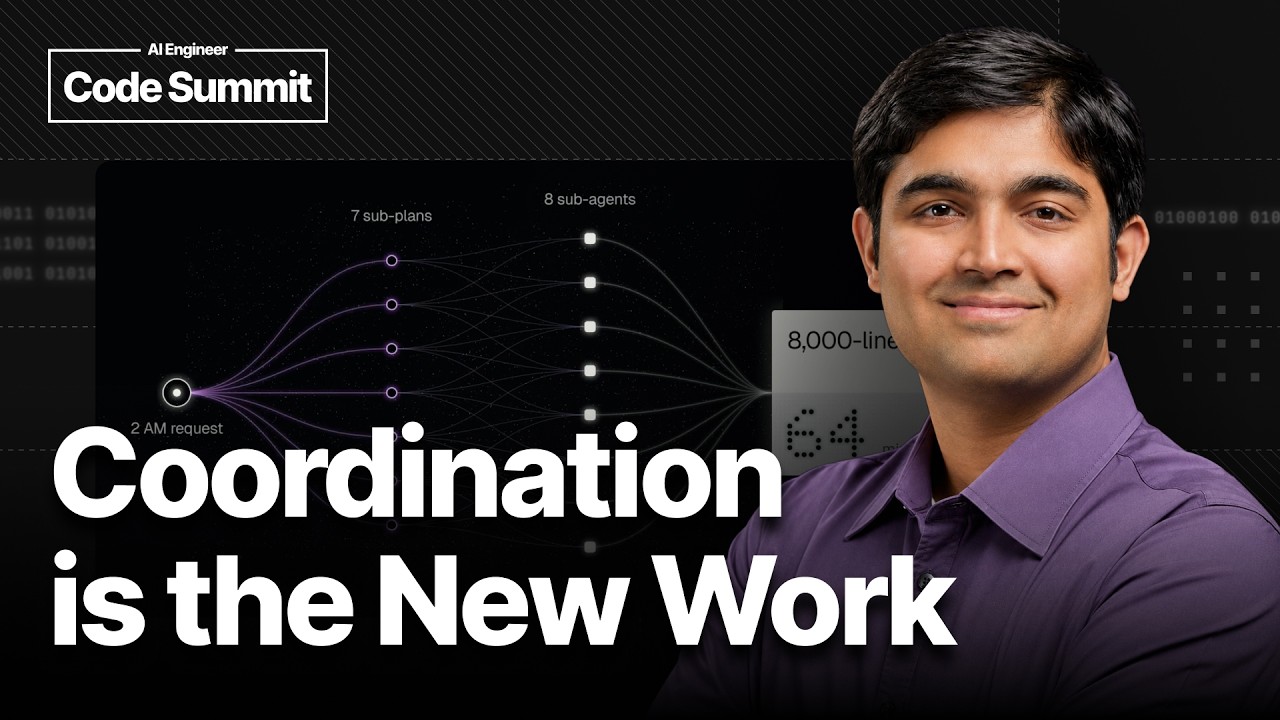
It clones the laptop on a raw EC2 box, wiring ports, secrets, auth and seed data, because Sankar said cloud agents that run blind cannot truly replace local testing. Planning uses parallel explore subagents to build a plan of plans, then splits dependent work across subagents for execution. Each change gets browser and end to end tests on that same box, with a recording and a staging link. Reviews run in the harness, and Sankar said you can build with Claude and get GPT to review.
Vorflux 2.0 moves the bottleneck to starting work, Sankar said, with Autobots that take a goal and a home channel and listen on webhooks. He said desktop coding allowed 3 to 5 parallel tasks while cloud agents allowed 20 to 30, but past 10 his own context broke. The directory ships opinionated bots, including an on call bot that triages Sentry and PagerDuty alerts before an engineer is looped in, a CI bot and a project manager bot that posts progress and blockers. In his example, a bot read a customer call transcript, found the bug at the screen share timestamp, asked to fix it, tagged the owner, landed the PR and drafted the follow up.
Sankar admitted the naive version fails, with a flood of PRs, all day pings and a token bill that bursts while an agent runs for hours on work nobody wanted. Public listings tracked by Bitget describe Vorflux as initiated by Vorflux AI as an experiment in using tokens to drive autonomous software engineering agents, which fits his token heavy setup. His fix is a new hire rule, Sankar said, with check ins, budgets and visible work, aimed at his north star of a zero employee company. In practice you will live in approvals, with an owner and a budget for every bot, or the merge queue will own you.