
Dmitry Buykin, an engineer on Maersk order and approval software, used AI Engineer to show a maintenance method built after a full rewrite failed and the mess grew back.
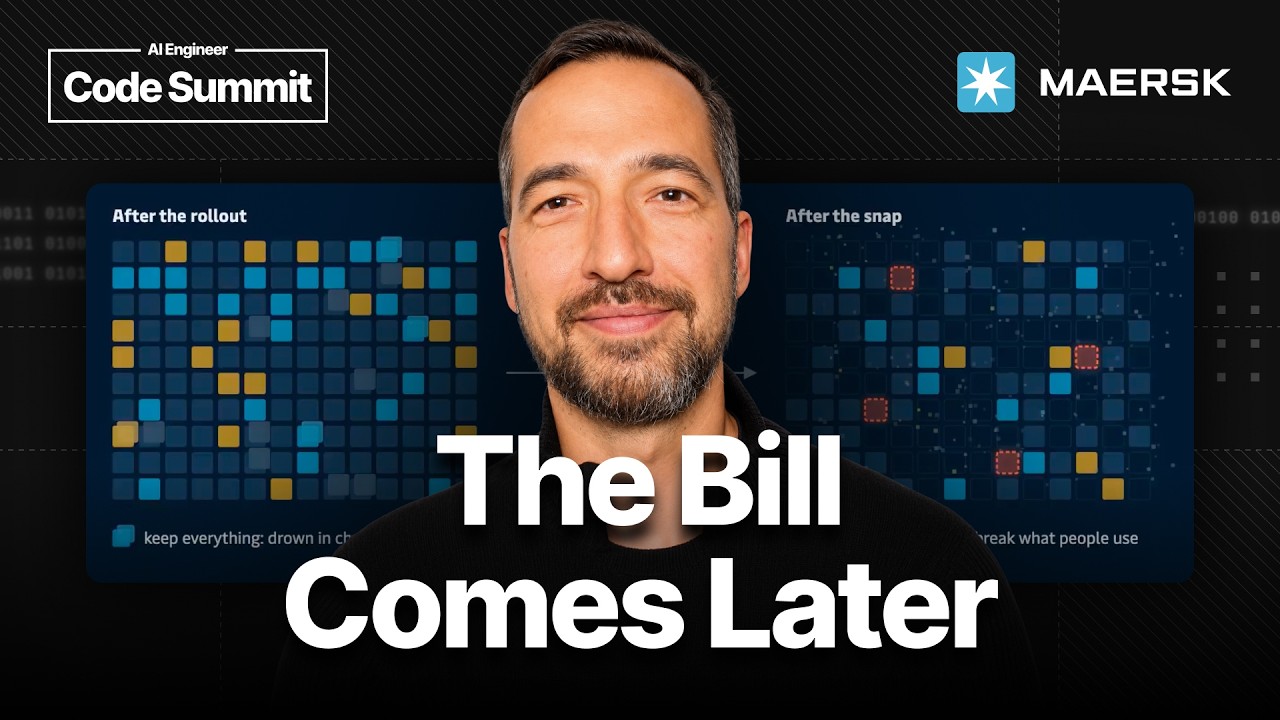
Nine-tenths of agent time on a change goes to checking it, Buykin said, not writing it.
That checking load also ate a larger share of his own week, Buykin said, which is why he treats verification speed as the limit. The system in question covers about 10,000 instruction scenarios across 110 countries, Buykin said, with roughly three quarters of it in prose instructions by his estimate rather than code.
A second count frames the triage. A new check replayed over several thousand past sessions would have fired on less than 1%, Buykin said, so that is where he reads closely. A separate ledger review found most batch items looked covered but only about a quarter could really be closed, Buykin said, largely because agents quietly skipped work when context filled.
The numbers do not show incident rates, review hours saved, or cost in dollars, and there is no attacker or patch here. A before and after count of escapes or human review time would change the read.
Buykin keeps 10 to 20 feedback loops open at once, Buykin said, with frozen real tasks replayed old versus new and every check required to fail once on purpose. How small can the unchecked share stay when agents write every day?





