


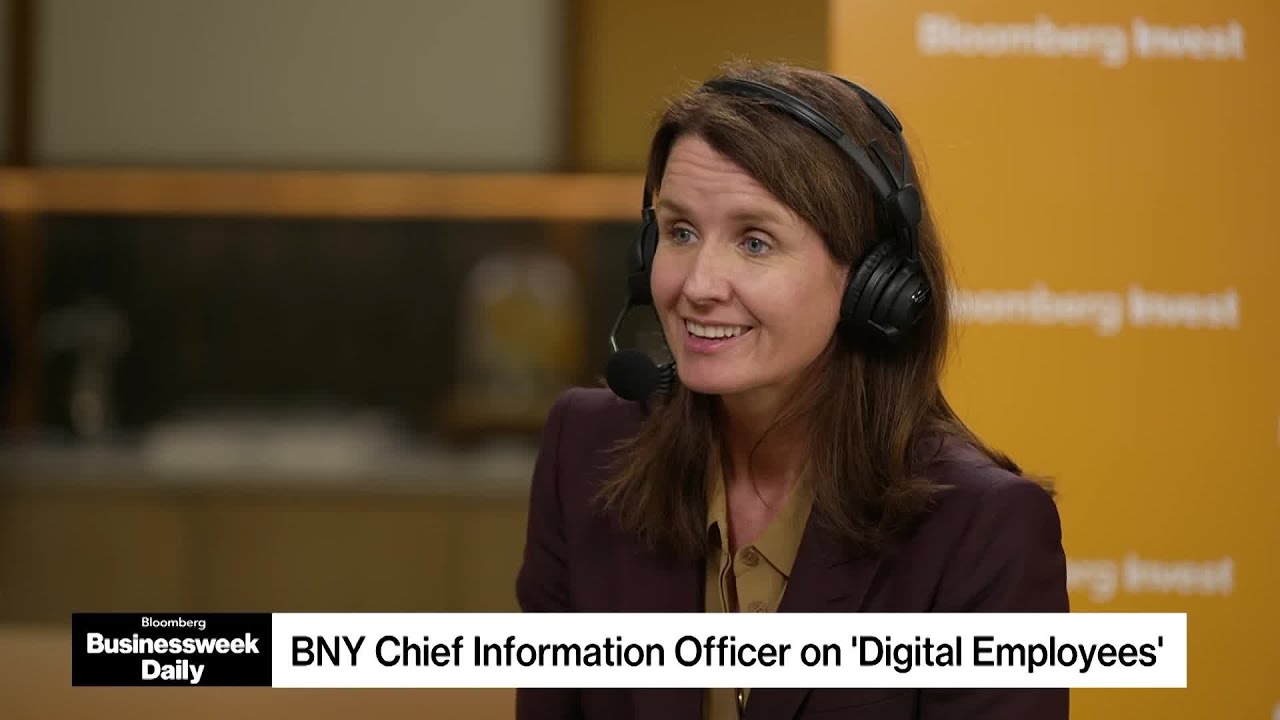
Leigh-Ann Russell, Chief Information Officer at BNY Mellon, shared insights into the financial services giant's strategic adoption of artificial intelligence during a Bloomberg Businessweek Live event. Russell detailed how BNY Mellon is leveraging AI to enhance efficiency and empower its workforce, emphasizing a human-centric approach to technological integration.
Leigh-Ann Russell: A Leader in Financial Technology
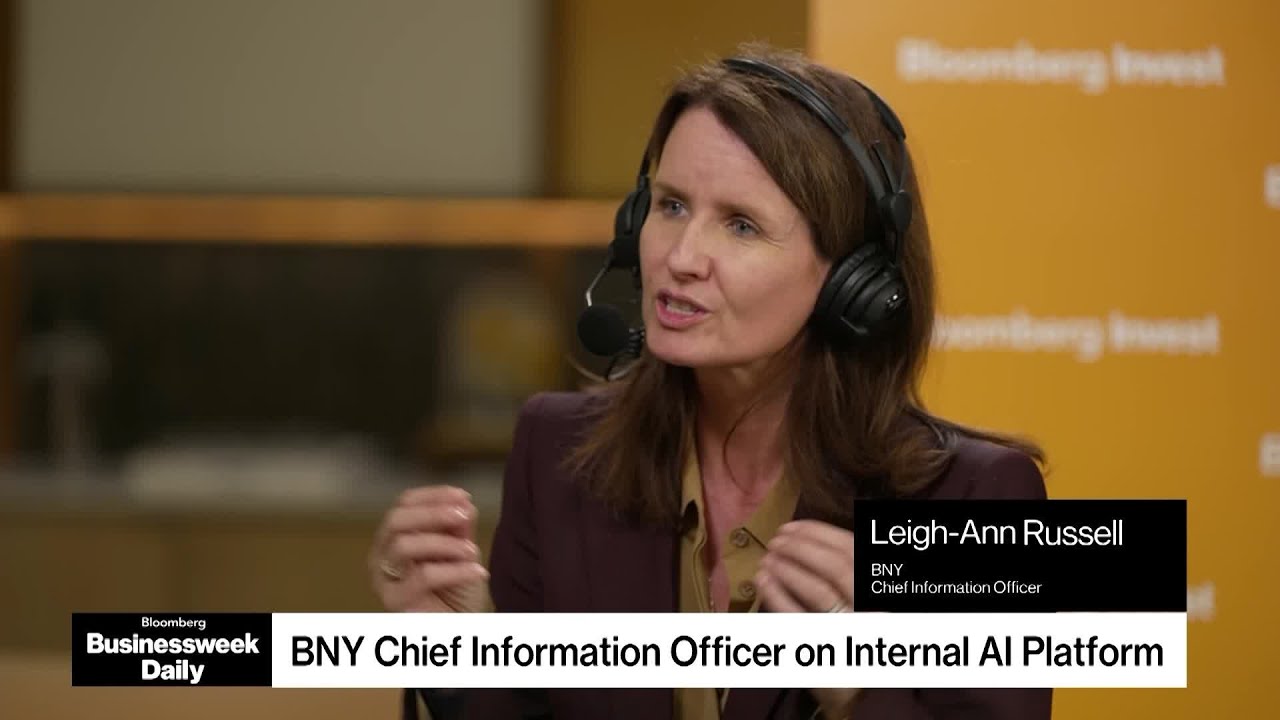
Leigh-Ann Russell serves as the Chief Information Officer for BNY Mellon, a prominent financial services company with a history spanning over 200 years and managing trillions in assets. In her role, Russell is instrumental in shaping the company's technology strategy, with a particular focus on cybersecurity and resilience. Her leadership in integrating advanced technologies, including AI, is crucial for BNY Mellon's continued evolution in the rapidly changing financial landscape.
BNY Mellon's Internal AI Platform: Eliza
Russell highlighted the development of BNY Mellon's proprietary AI platform, named 'Eliza,' after Eliza Hamilton, wife of Alexander Hamilton and a philanthropist. This platform is designed to be model-agnostic and multi-agent, allowing it to interact with various systems and clients. Eliza plays a pivotal role in automating tasks and improving workflows across the organization. Russell explained that the platform can streamline processes such as Know Your Customer (KYC) and customer onboarding, reducing the time taken from weeks to mere minutes. This efficiency gain is a significant benefit for both the company and its clients.
The full discussion can be found on Bloomberg Podcast's YouTube channel.
Upskilling the Workforce for the AI Era
A key focus for BNY Mellon under Russell's leadership has been the upskilling of its employees to effectively utilize AI technologies. The company set an ambitious goal to train 65% of its workforce in AI by the end of 2025, and by mid-year 2024, they had already achieved 99% adoption. Russell described this as a significant accomplishment, stating, "We had a goal of 65% by the middle of last year, we met 99% by June." This high level of engagement ensures that employees are equipped to leverage AI as a tool to enhance their capabilities rather than viewing it as a threat to their roles.