Anthropic's Cat Wu & Thariq Shihipar on AI in Software Dev

Anthropic's Cat Wu and Thariq Shihipar discuss the evolution of Claude Code and the impact of Claude Tag on software development, emphasizing increased efficiency and collaboration.

7 min read
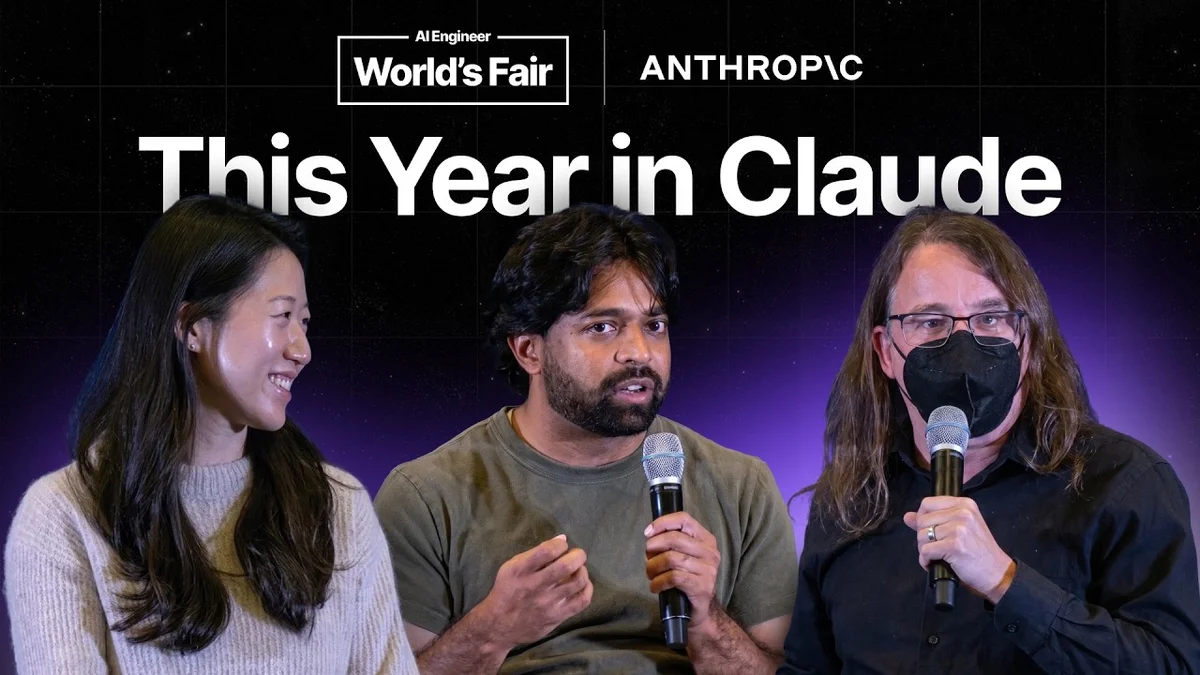
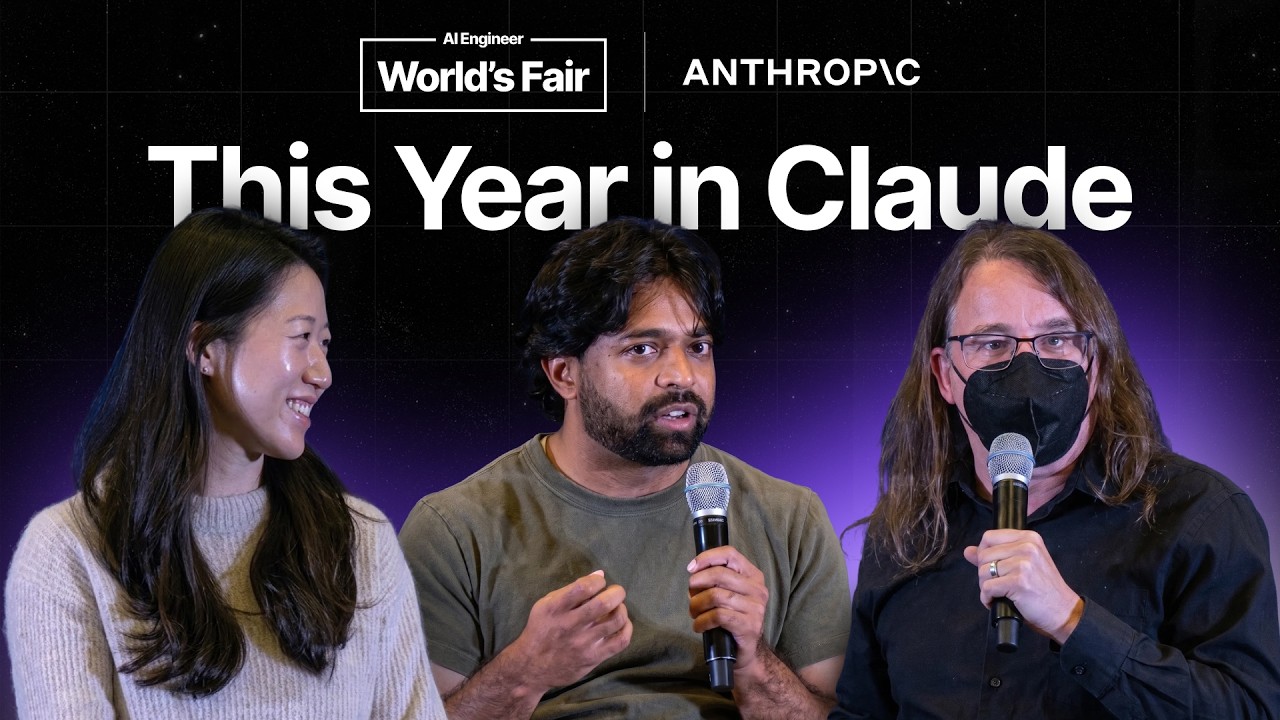
Cat Wu and Thariq Shihipar from Anthropic in conversation with Simon Willison
Cat Wu and Thariq Shihipar from Anthropic discuss the impact of AI coding agents on software development workflows.· AI Engineer
Visual TL;DR
Anthropic's AICore
From the article 4 mentionsIn a recent fireside chat, Cat Wu and Thariq Shihipar from Anthropic sat down with Simon Willison to discuss the profound impact of their AI coding agents, Claude Code and Claude Tag, on software development workflows.
Claude Code EvolvesContext
moved from meticulous monitoring to delegating menial implementation tasks
From the article 4 mentionsShihipar noted that Claude Code, launched just over a year ago, has seen significant advancements.
Claude TagCore
collaborative layer fostering more efficient software development workflows
From the article 8 mentionsThe discussion then moved to Claude Tag, Anthropic's newest AI agent designed for team collaboration within tools like Slack.
Increased EfficiencyEffect
engineers focus on higher-level strategic thinking and user experience design
From the articleAddressing the sense of loss some professionals feel as AI takes on more tasks, Shihipar emphasized the need for increased ambition.
Enhanced CollaborationEffect
automating complex tasks and fostering more collaborative engineering environments
From the articleThe discussion then moved to Claude Tag, Anthropic's newest AI agent designed for team collaboration within tools like Slack.
Transforming Dev WorkOutcome
profound impact on software development workflows by automating tasks
From the articleThey highlighted the rapid evolution of these tools, emphasizing how they are transforming the day-to-day work of engineers by automating complex tasks and fostering more collaborative environments.
Future AmbitionsOutcome
building trust and iteration for the human element in AI development
From the article 2 mentionsBoth speakers expressed excitement for future models that can serve as true "interaction design thought partners," pushing the boundaries of what's possible in AI-driven product development.
Contents(5)

In a recent fireside chat, Cat Wu and Thariq Shihipar from Anthropic sat down with Simon Willison to discuss the profound impact of their AI coding agents, Claude Code and Claude Tag, on software development workflows. They highlighted the rapid evolution of these tools, emphasizing how they are transforming the day-to-day work of engineers by automating complex tasks and fostering more collaborative environments.

Anthropic's Cat Wu & Thariq Shihipar on AI in Software Dev - AI Engineer
Anthropic's Cat Wu & Thariq Shihipar on AI in Software Dev, from AI Engineer

The Evolution of Claude Code

Shihipar noted that Claude Code, launched just over a year ago, has seen significant advancements. Initially, users had to meticulously monitor every action of the AI, carefully reviewing permission prompts. "Now, with every model generation," Shihipar stated, "we feel like we've all gotten a chance to just take a step back, delegate a lot more of the like menial implementation to Claude." This shift has allowed teams to focus on higher-level strategic thinking, such as designing optimal user experiences, as Claude Code handles the bulk of implementation.

The introduction of Fable, Anthropic's latest model, represents a further leap. Wu described Fable as enabling "oneshot a ton of features," significantly accelerating the development process. Both speakers emphasized that the quality of output from these models is exceptionally high, enabling engineers to meet stringent brand and quality demands more efficiently.

Shifting Engineering Skillsets

The conversation also touched upon how AI agents are reshaping the required skillset for software engineers. Shihipar observed a significant shift from traditional, lengthy product development cycles involving extensive documentation and cross-functional alignment. "Things are like completely turned the opposite way," he explained. "For a lot of engineers, the push I would give to a lot of folks in the room is to develop more of your business sense and product sense on what is it that we should build?" This is because the accelerated timeline, from months to potentially a week, necessitates a greater emphasis on strategic decision-making and identifying high-value features.

A key takeaway was that the traditional aversion to rewrites is now outdated. Shihipar argued, "I think that like what people I think undercount is like a codebase is a spec and maybe it's the only copy of the spec that you have." With robust test suites, rewrites are now seen as a valuable tool for ensuring code quality and adaptability.

Claude Tag: The Collaborative Layer

The discussion then moved to Claude Tag, Anthropic's newest AI agent designed for team collaboration within tools like Slack. Wu explained that Claude Tag is "multiplayer by default" and "proactive instead of reactive." Users can instruct Claude Tag to monitor channels for specific events, such as bug reports, and automatically create PRs, even tagging relevant engineers.

A significant feature of Claude Tag is its team memory, allowing it to remember user preferences within a channel for consistent and personalized interactions. "Internally we see Claude Tag as the evolution of Claude Code," Wu stated, noting that their internal version of Claude Tag successfully merges 65% of their product engineering team's PRs.

Beyond coding, Claude Tag is proving valuable for non-technical users as well, acting as a sophisticated search engine for company knowledge and metrics. Wu shared examples of marketing teams using it to understand feature behavior and generate reports.

Building Trust and Iteration

The conversation highlighted Anthropic's focus on building trust in their models through extensive evaluation and iterative development. Shihipar mentioned the process of running extensive eval sets to ensure new models are "drop-in replacements" that are "strictly better" than previous versions. This includes rigorous testing against adversarial scenarios and prompt injections.

Regarding system prompts, they noted a significant reduction in length for newer models like Fable and Opus 4.8, moving away from over-constraining the AI with examples and towards providing more context and flexibility. This allows the models to be more creative and adapt to user instructions more effectively.

The Human Element and Future Ambitions

Addressing the sense of loss some professionals feel as AI takes on more tasks, Shihipar emphasized the need for increased ambition. "If you're only trying to do the same work you were doing before LLMs and now it's like a prompt, it it is like I think kind of a sad feeling," he said. The solution, he suggested, is to embrace AI as a tool to tackle bigger, more complex challenges, thereby elevating one's own craft.

Wu echoed this sentiment from a product management perspective, describing the role as a blend of engineering and design, focusing on identifying and automating gaps between great ideas and customer delivery.

When asked what AI still struggles with, Wu pointed to design and UX taste, noting that while models can follow detailed specs, achieving true delight and innovative interaction patterns remains a frontier. Both speakers expressed excitement for future models that can serve as true "interaction design thought partners," pushing the boundaries of what's possible in AI-driven product development.


© 2026 StartupHub.ai. All rights reserved. Do not enter, scrape, copy, reproduce, or republish this article in whole or in part. Use as input to AI training, fine-tuning, retrieval-augmented generation, or any machine-learning system is prohibited without written license. Substantially-similar derivative works will be pursued to the fullest extent of applicable copyright, database, and computer-misuse laws. See our terms.