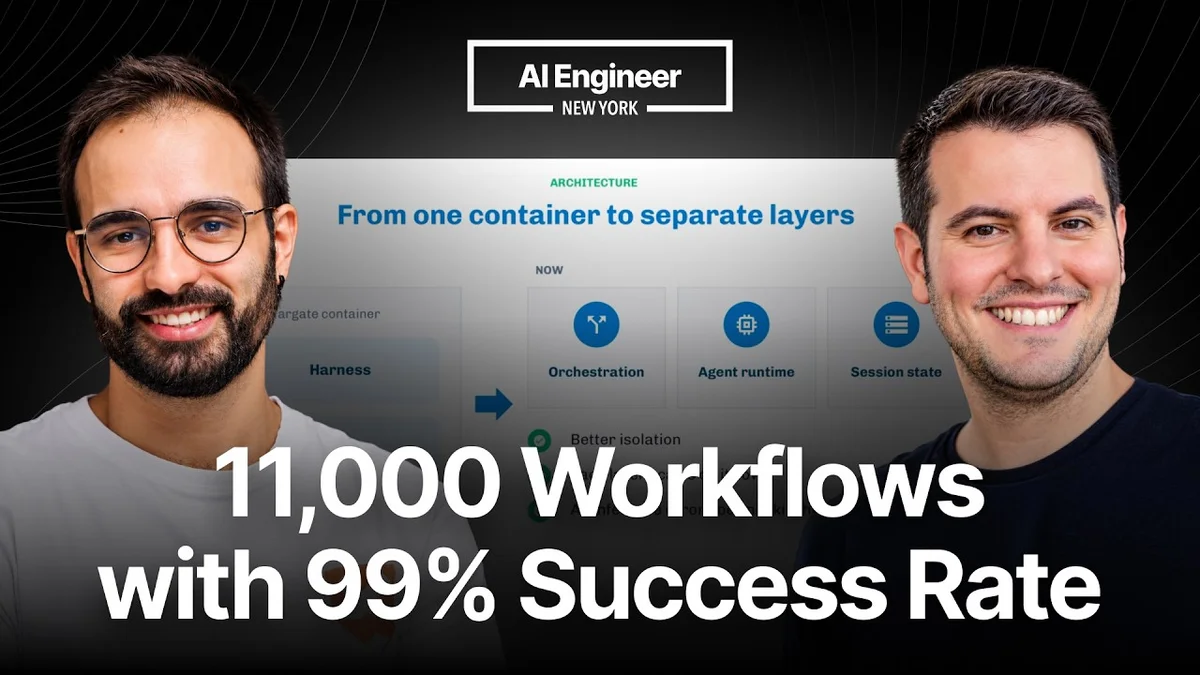
Eduardo Simon and Javier Casal, who lead Flywire's AI platform experience team, introduced Orbit to AI Engineer as a workflow engine that pairs deterministic code with narrowly scoped LLM steps inside Victoria, Flywire's GitLab and AWS based internal platform that must keep PCI DSS and SOC 2 payment data from leaving its control boundary.
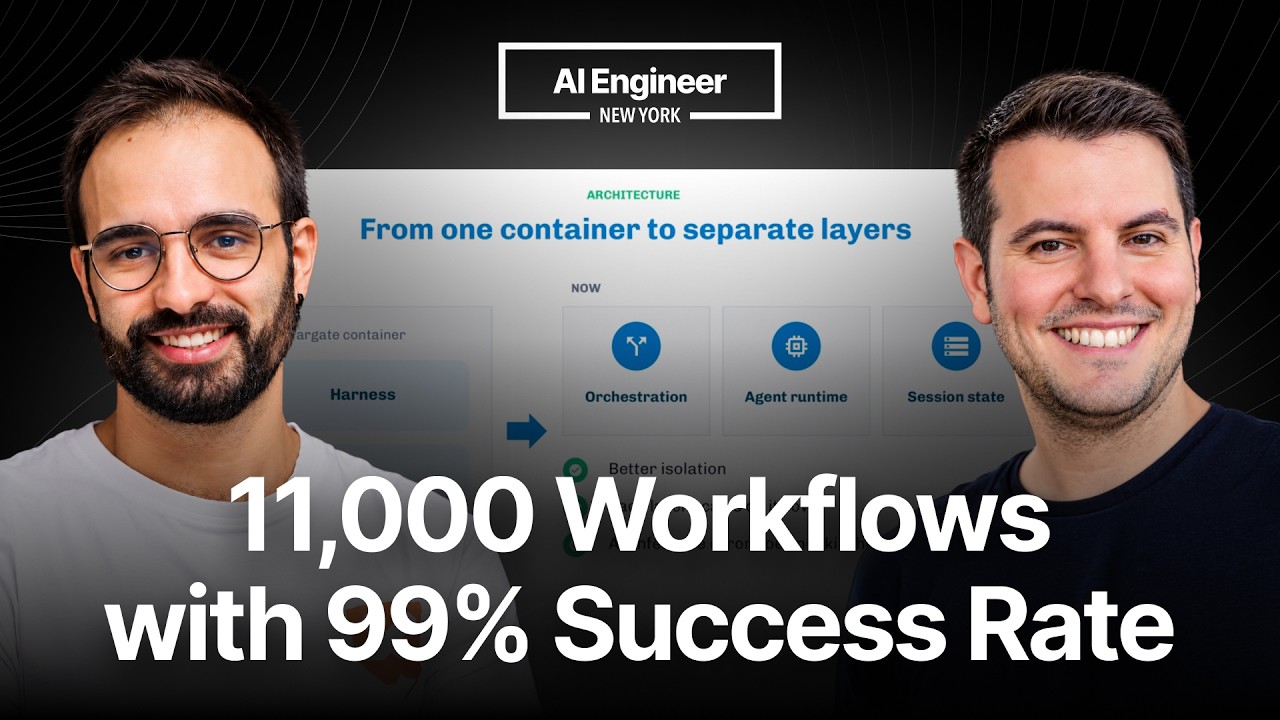
Casal said every agent is a YAML file reviewed as code and triggered by GitLab webhooks, internal API calls or schedules, with deterministic fetch and classify steps surrounding a read-only model step that must return strict JSON and is limited by declared network, tool, skill and MCP allowlists.
The pair told AI Engineer that Orbit handled more than 11,000 executions at 99 percent success in the past 30 days, including over 9,700 code-review runs averaging under three minutes per merge request, a result that BigGo Finance separately framed as validation for building rather than buying.
That scale depends on guardrails the team admitted are still partial, including timeouts, rate limits and locks to drop duplicate runs and a move from a single Fargate container to split orchestration and Lambda microVMs that still lacks full sandboxing, Docker-in-Docker and package managers like Bundler or Maven for heavy builds.
Security therefore rests on declared least privilege and schema validation rather than strong isolation, so an attacker would need local access as a workflow author, a compromised skill from the shared Claude Agent SDK marketplace or a misconfigured MCP tool to reach beyond the allowlist, and remote exploitation without that foothold was not demonstrated.