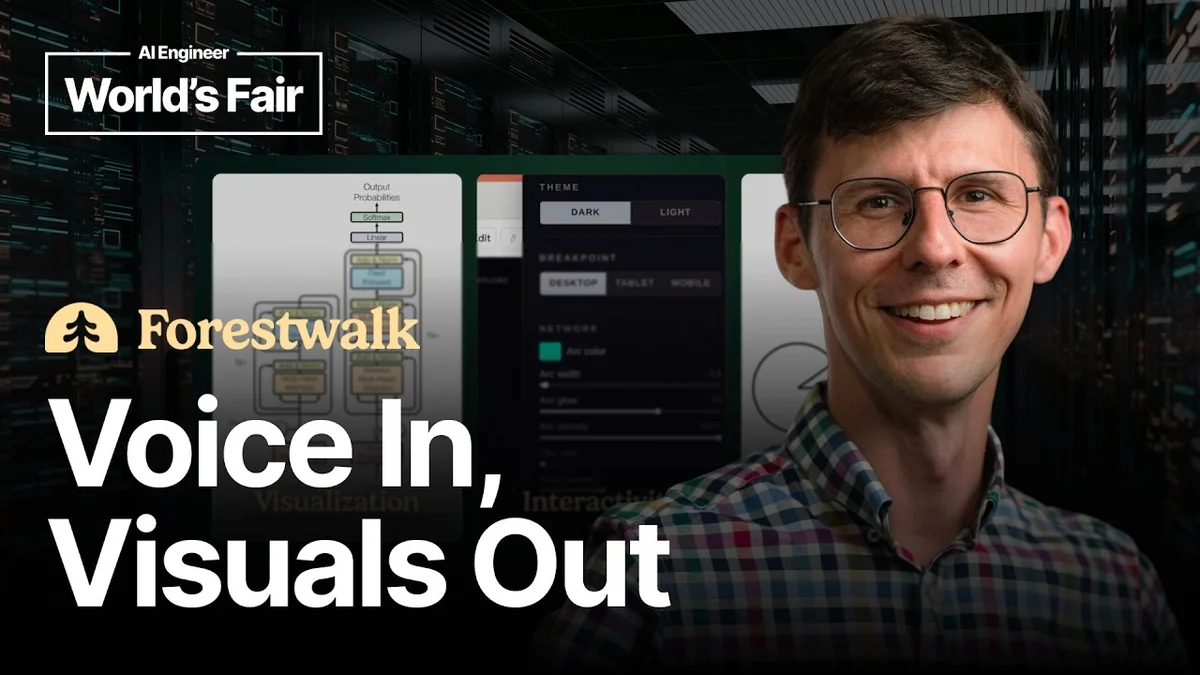
Allen Pike on AI: Voice In, Visuals Out

Allen Pike of Forestwalk Labs explores the 'Voice In, Visuals Out' paradigm for AI, discussing the agony and ecstasy of latency and the key pillars for building responsive AI.

8 min read
Presentation slide with the title 'Voice In, Visuals Out: The Agony and the Ecstasy' and speaker name 'Allen Pike, Forestwalk Labs'.
Allen Pike presents 'Voice In, Visuals Out: The Agony and the Ecstasy'.· AI Engineer

Allen Pike of Forestwalk Labs discusses the critical balance between input and output modalities for effective AI interaction in his presentation titled "Voice In, Visuals Out: The Agony and the Ecstasy." Pike asserts that audio is the most natural and preferred method for humans to input information to AI systems, while visual outputs are preferred for receiving information from them.

Allen Pike on AI: Voice In, Visuals Out - AI Engineer
Allen Pike on AI: Voice In, Visuals Out — from AI Engineer

Visual TL;DR. Voice In, Visuals Out focuses on Human Input Preference. Voice In, Visuals Out focuses on AI Output Preference. Human Input Preference impacts Latency Agony/Ecstasy. AI Output Preference impacts Latency Agony/Ecstasy. Latency Agony/Ecstasy requires Low Latency Pillars. Human Input Preference enables Natural AI Interaction. AI Output Preference enables Natural AI Interaction. AI Output Preference includes Rich Visual Content.

Related startups

  1. Voice In, Visuals Out: AI interaction paradigm: audio input, visual output
  2. Human Input Preference: voice is natural, conveys more info per time
  3. AI Output Preference: visuals are easier for humans to process and understand
  4. Latency Agony/Ecstasy: responsiveness is key to user experience, good or bad
  5. Low Latency Pillars: building blocks for fast, responsive AI systems
  6. Natural AI Interaction: seamless communication for more effective AI use
  7. Rich Visual Content: AI generating charts, graphs, and other visual data
Visual TL;DR
Visual TL;DR, startuphub.ai Voice In, Visuals Out focuses on Human Input Preference. Voice In, Visuals Out focuses on AI Output Preference. Human Input Preference impacts Latency Agony/Ecstasy. AI Output Preference impacts Latency Agony/Ecstasy. Human Input Preference enables Natural AI Interaction. AI Output Preference enables Natural AI Interaction focuses on focuses on impacts impacts enables enables Voice In, Visuals Out Human Input Preference AI Output Preference Latency Agony/Ecstasy Natural AI Interaction From startuphub.ai · The publishers behind this format
Visual TL;DR, startuphub.ai Voice In, Visuals Out focuses on Human Input Preference. Voice In, Visuals Out focuses on AI Output Preference. Human Input Preference impacts Latency Agony/Ecstasy. AI Output Preference impacts Latency Agony/Ecstasy. Human Input Preference enables Natural AI Interaction. AI Output Preference enables Natural AI Interaction focuses on focuses on impacts impacts enables enables Voice In, VisualsOut Human InputPreference AI OutputPreference LatencyAgony/Ecstasy Natural AIInteraction From startuphub.ai · The publishers behind this format
Visual TL;DR, startuphub.ai Voice In, Visuals Out focuses on Human Input Preference. Voice In, Visuals Out focuses on AI Output Preference. Human Input Preference impacts Latency Agony/Ecstasy. AI Output Preference impacts Latency Agony/Ecstasy. Human Input Preference enables Natural AI Interaction. AI Output Preference enables Natural AI Interaction focuses on focuses on impacts impacts enables enables Voice In, Visuals Out AI interaction paradigm: audio input,visual output Human Input Preference voice is natural, conveys more info pertime AI Output Preference visuals are easier for humans to processand understand Latency Agony/Ecstasy responsiveness is key to user experience,good or bad Natural AI Interaction seamless communication for more effectiveAI use From startuphub.ai · The publishers behind this format
Visual TL;DR, startuphub.ai Voice In, Visuals Out focuses on Human Input Preference. Voice In, Visuals Out focuses on AI Output Preference. Human Input Preference impacts Latency Agony/Ecstasy. AI Output Preference impacts Latency Agony/Ecstasy. Human Input Preference enables Natural AI Interaction. AI Output Preference enables Natural AI Interaction focuses on focuses on impacts impacts enables enables Voice In, VisualsOut AI interactionparadigm: audioinput, visual… Human InputPreference voice is natural,conveys more infoper time AI OutputPreference visuals are easierfor humans toprocess and… LatencyAgony/Ecstasy responsiveness iskey to userexperience, good or… Natural AIInteraction seamlesscommunication formore effective AI… From startuphub.ai · The publishers behind this format
Visual TL;DR, startuphub.ai Voice In, Visuals Out focuses on Human Input Preference. Voice In, Visuals Out focuses on AI Output Preference. Human Input Preference impacts Latency Agony/Ecstasy. AI Output Preference impacts Latency Agony/Ecstasy. Latency Agony/Ecstasy requires Low Latency Pillars. Human Input Preference enables Natural AI Interaction. AI Output Preference enables Natural AI Interaction. AI Output Preference includes Rich Visual Content focuses on focuses on impacts impacts requires enables enables includes Voice In, Visuals Out AI interaction paradigm: audio input,visual output Human Input Preference voice is natural, conveys more info pertime AI Output Preference visuals are easier for humans to processand understand Latency Agony/Ecstasy responsiveness is key to user experience,good or bad Low Latency Pillars building blocks for fast, responsive AIsystems Natural AI Interaction seamless communication for more effectiveAI use Rich Visual Content AI generating charts, graphs, and othervisual data From startuphub.ai · The publishers behind this format
Visual TL;DR, startuphub.ai Voice In, Visuals Out focuses on Human Input Preference. Voice In, Visuals Out focuses on AI Output Preference. Human Input Preference impacts Latency Agony/Ecstasy. AI Output Preference impacts Latency Agony/Ecstasy. Latency Agony/Ecstasy requires Low Latency Pillars. Human Input Preference enables Natural AI Interaction. AI Output Preference enables Natural AI Interaction. AI Output Preference includes Rich Visual Content focuses on focuses on impacts impacts requires enables enables includes Voice In, VisualsOut AI interactionparadigm: audioinput, visual… Human InputPreference voice is natural,conveys more infoper time AI OutputPreference visuals are easierfor humans toprocess and… LatencyAgony/Ecstasy responsiveness iskey to userexperience, good or… Low LatencyPillars building blocks forfast, responsive AIsystems Natural AIInteraction seamlesscommunication formore effective AI… Rich VisualContent AI generatingcharts, graphs, andother visual data From startuphub.ai · The publishers behind this format

The Human-AI Communication Interface

Pike highlights a fundamental human preference for voice as an input method to AI, citing that humans can convey significantly more information per unit of time through speech compared to typing. This natural inclination toward audio input is a key consideration for developing user-friendly AI applications.

Conversely, Pike points out that visual output is crucial for AI interactions. He illustrates this with the example of AI models that can generate rich visual content, such as charts and graphs, which are more readily understood and processed by humans than purely textual or auditory responses.

The "Agony and Ecstasy" of Latency

A significant portion of Pike's talk focuses on the concept of "latency" in AI interactions, framing it as both a source of frustration (agony) and a potential for seamless user experiences (ecstasy). He elaborates on the human tolerance for different types of latency. For instance, a response within 100 milliseconds feels instantaneous to a user, creating a sense of seamless interaction.

However, as latency increases, the user experience degrades. Pike notes that responses exceeding 200 milliseconds can start to feel sluggish, and anything over 1000 milliseconds (one second) can lead to users losing their train of thought or becoming disengaged. This sensitivity to latency underscores the need for efficient AI models and infrastructure.

Pike illustrates this with a timeline, showing that while getting a response within 100ms is ideal for instantaneous feel, achieving a response within 200ms is still considered "seamless voice." However, he points out the challenge of maintaining this low latency when the AI needs to perform complex tasks, such as processing speech-to-text (STT) and then running inference on a larger model. The "first token" latency, the time until the AI begins its output, is a critical metric.
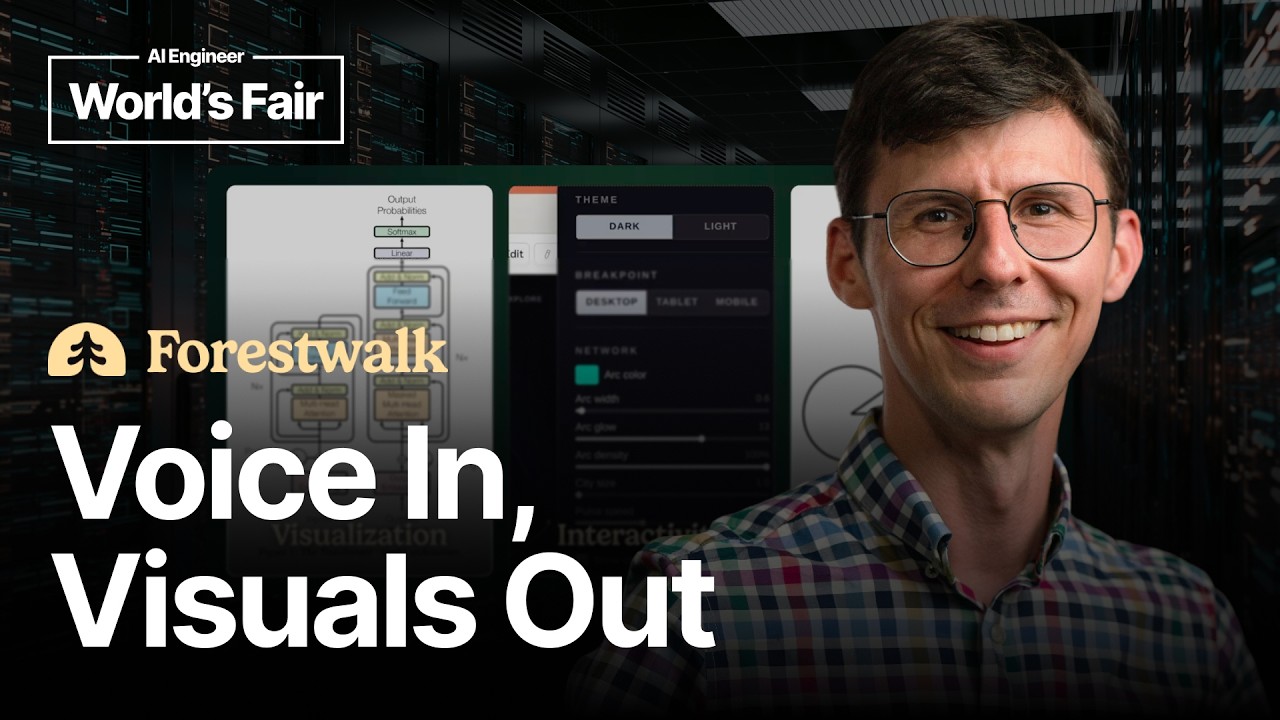
Pillars of Low Latency AI

To achieve low-latency AI interactions, Pike identifies three key pillars:

  • Fast Models: The AI models themselves must be efficient and capable of processing information and generating outputs rapidly. This often involves using smaller, more optimized models or techniques to speed up inference.
  • Short Intervals: The system should be designed to send and receive information in short, frequent intervals, allowing for continuous interaction rather than waiting for complete inputs or outputs.
  • Stable Cache: Implementing effective caching mechanisms is crucial to store and quickly retrieve previously processed information, reducing redundant computations and speeding up responses.

Pike emphasizes that these pillars are interconnected and essential for creating AI experiences that feel natural and responsive. He references the development of AI agents that can perform tasks in real-time, such as the agents Forestwalk Labs has been building, which aim to achieve these low-latency interactions.

The presentation concludes with a call to action, encouraging the audience to "Go build something great," highlighting the ongoing opportunities and challenges in developing effective AI systems.

© 2026 StartupHub.ai. All rights reserved. Do not enter, scrape, copy, reproduce, or republish this article in whole or in part. Use as input to AI training, fine-tuning, retrieval-augmented generation, or any machine-learning system is prohibited without written license. Substantially-similar derivative works will be pursued to the fullest extent of applicable copyright, database, and computer-misuse laws. See our terms.