
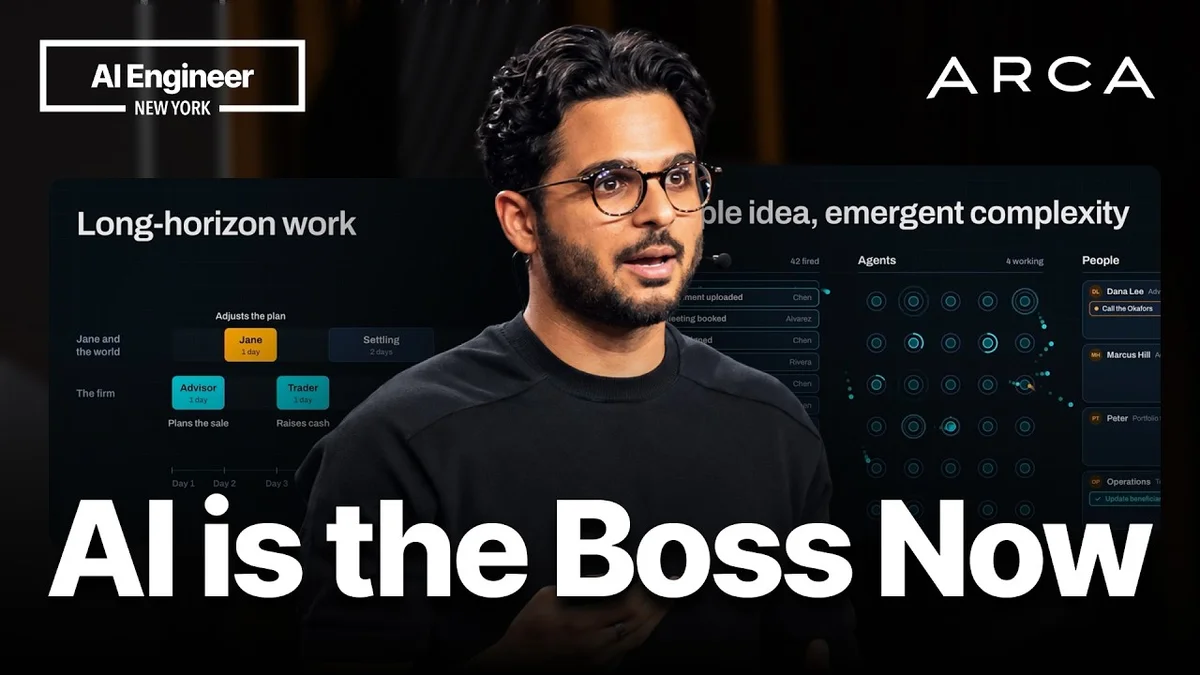
Aman Singh, who leads AI at Arca and is not the St. Louis gastroenterologist of the same name, told AI Engineer his firm gives long-horizon agents the signals, harness and memory to run a client tax outcome end to end without humans in the critical path.
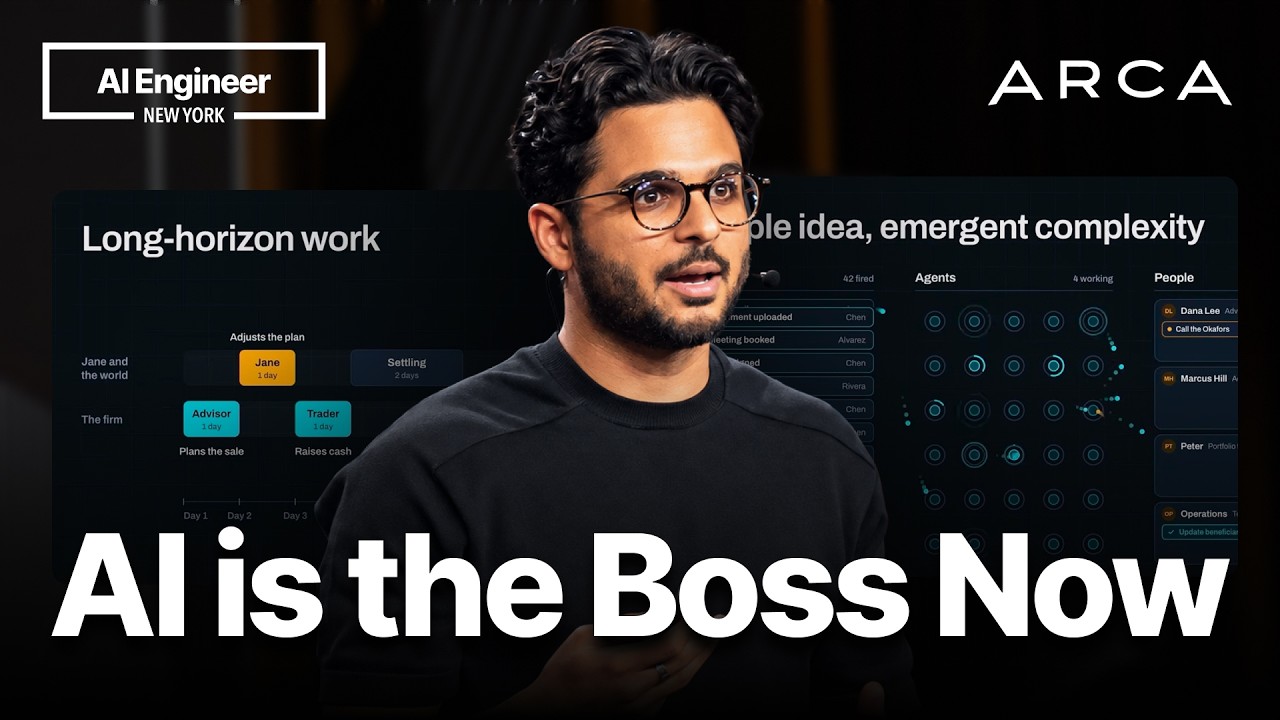
He walked through Jane, a wealthy client facing a $100,000 bill on April 15, where a traditional advisor does the tax-optimal analysis, a trader liquidates positions over days, custody settles, and ops triggers an ACH that itself takes days to land.
Singh said Arca compresses that stop-start 10-day relay by letting background agents read every email, call, document, meeting note, custodian event and market move, keep deep client memory like never touching Jane's Apple position from eight months ago, and register interest in future signals such as Jane's reply or the ACH landing.
Over the last six months Singh said the team closed context gaps, tightened task precision so the right person is pulled at the right time, and taught agents to wake on a schedule when a signal never lands while standardizing how work happens inside the firm so operational context can be encoded.
That creates emergent complexity Singh acknowledged, with hundreds of signals routing between background agents, chat spaces where multiple people question a plan, and human approvals still gating execution, which is where persistence and permissioning tend to break if memory drifts or a signal is misrouted.
He closed with the thesis that an AI native firm steers the business by steering its agents, pointing to a new January goal to prepare every client's tax situation proactively and push one-click approval emails without waiting for Jane to ask, and said Arca is hiring to build it.


