

AI Race Fuels Fears of Crowded Trading

Brian Belski of Humilis Investments discusses how the AI race is fueling fears of crowded trading and how investors should navigate the widening gap between software and semiconductor stocks.

4 min read
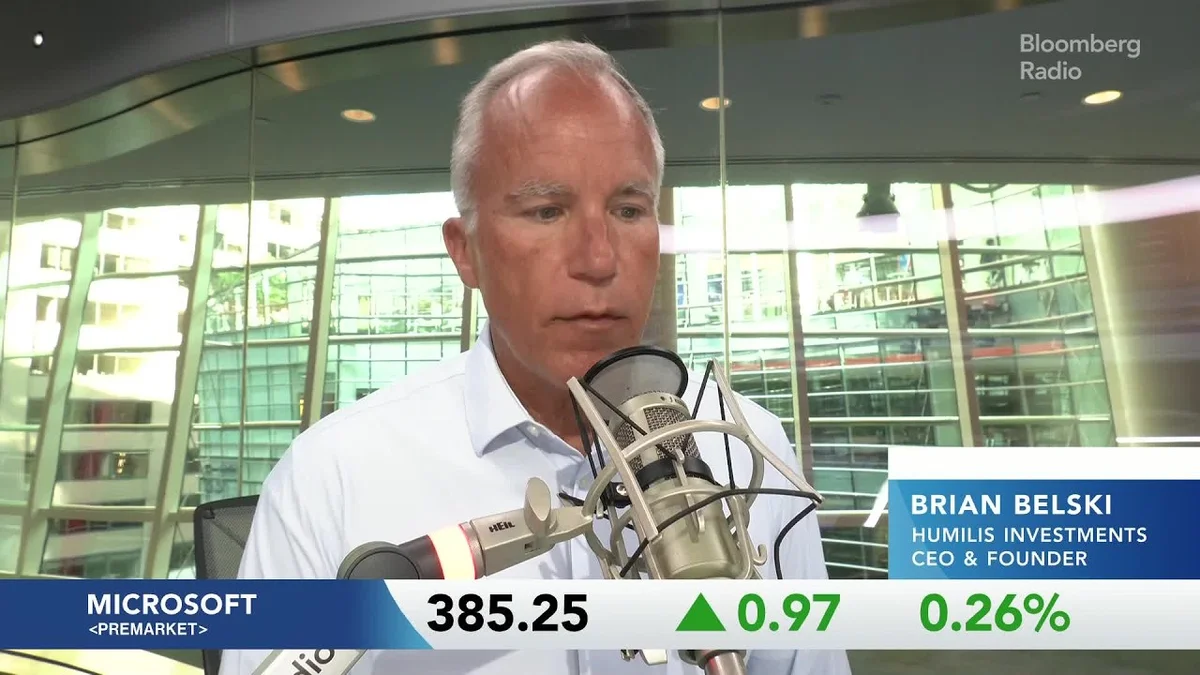
Two men in a broadcast studio discussing financial markets, with stock tickers displayed.
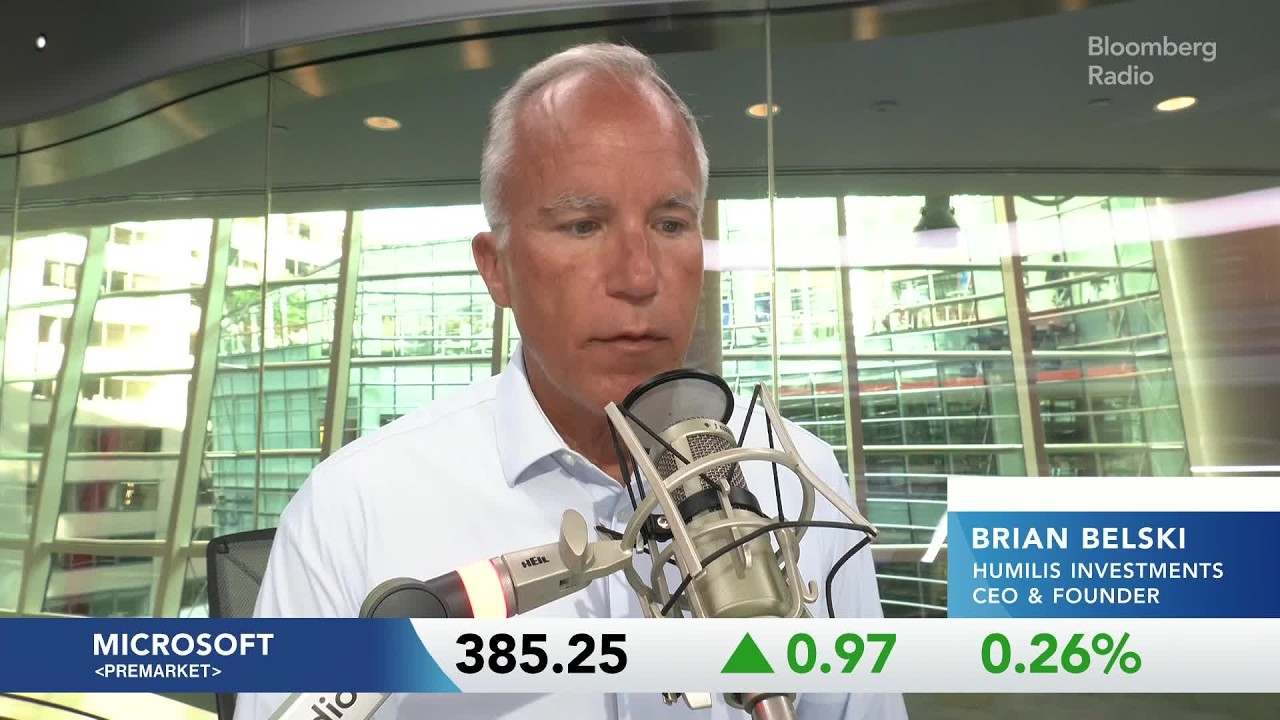
Brian Belski discusses market trends on Bloomberg Radio.· Bloomberg Podcast

The relentless pursuit of artificial intelligence is casting a long shadow over financial markets, fueling anxieties about an increasingly crowded trading environment. As AI capabilities expand and integrate into various sectors, the market is grappling with new dynamics, particularly in the tech and semiconductor industries. This video delves into the implications of this AI race, exploring how companies are adapting and what it means for investors navigating this rapidly evolving landscape.

Brian Belski on Microsoft's AI-Driven Growth

Brian Belski, CEO & Founder of Humilis Investments, discusses the robust financial performance of Microsoft (NASDAQ:MSFT), attributing its success to its strategic integration of AI technologies. Belski highlights Microsoft's ability to monetize these advancements, noting that the company has proven its resilience and capacity for growth over the years.

Related startups

He points out that while many software companies are struggling, Microsoft has managed to maintain strong performance by embracing AI. Belski believes that Microsoft's management has a clear vision for the future, which is reflected in its sustained financial health and its ability to adapt to market trends.

The full discussion can be found on Bloomberg Podcast's YouTube channel.
AI Race Fuels New Fears of Crowded Trading - Bloomberg Podcast
AI Race Fuels New Fears of Crowded Trading, from Bloomberg Podcast

The Widening Software and Semiconductor Divide

The conversation shifts to the broader market, where Belski observes a significant divergence between software and semiconductor stocks. He notes that the spread between these two sectors is at its widest margin since 2001. This widening gap is largely driven by the immense demand for AI-related hardware and infrastructure, which benefits semiconductor companies.

Conversely, while software companies are also investing in AI, the market appears to be differentiating between those that can effectively integrate and monetize these technologies and those that are still finding their footing. Belski suggests that some software companies are being left behind as the market increasingly favors those with tangible AI-driven revenue streams.

Rebalancing Portfolios in the Age of AI

Belski advises investors to consider rebalancing their portfolios in light of these market shifts. He emphasizes the importance of avoiding over-concentration in any single sector or company, even those experiencing rapid growth due to AI. The strategy should involve a diversified approach that captures the upside potential of AI while mitigating risks.

He illustrates this with an example of how, in the past, companies that doubled their value in a short period often led to portfolio imbalances. Investors, he suggests, need to be disciplined in their approach, trimming winning positions to reinvest in areas that offer more stable or contrarian opportunities.

The AI Capex Boom and Investor Sentiment

The discussion touches upon the significant capital expenditure (capex) boom driven by AI, particularly in the semiconductor industry. Belski notes that companies like Micron Technology, Inc. (NASDAQ:MU), a key player in memory and storage solutions for AI, are benefiting from this trend.

He believes that the AI capex boom has further to run, indicating continued strong demand for the underlying technologies. However, he also cautions that investors should not simply chase performance without considering the underlying fundamentals. The market's focus on AI has created a situation where many companies are being valued on future potential rather than current earnings, leading to crowded trades and potential volatility.

Belski shares his firm's strategy of investing in companies with strong balance sheets, consistent cash flow, and a clear path to monetizing AI, even if they are not the flashiest performers. He contrasts this with the sentiment around some smaller, less established AI-focused companies, suggesting that a pragmatic approach is essential.

The Importance of Diversification and Long-Term Vision

In conclusion, Belski stresses the importance of a long-term perspective and diversification when investing in the AI era. He highlights that while the AI race is creating significant opportunities, it also presents challenges for investors who may be tempted by speculative plays. By focusing on companies with solid fundamentals and a clear strategy for leveraging AI, investors can better position themselves for sustained success in this transformative market.

© 2026 StartupHub.ai. All rights reserved. Do not enter, scrape, copy, reproduce, or republish this article in whole or in part. Use as input to AI training, fine-tuning, retrieval-augmented generation, or any machine-learning system is prohibited without written license. Substantially-similar derivative works will be pursued to the fullest extent of applicable copyright, database, and computer-misuse laws. See our terms.