


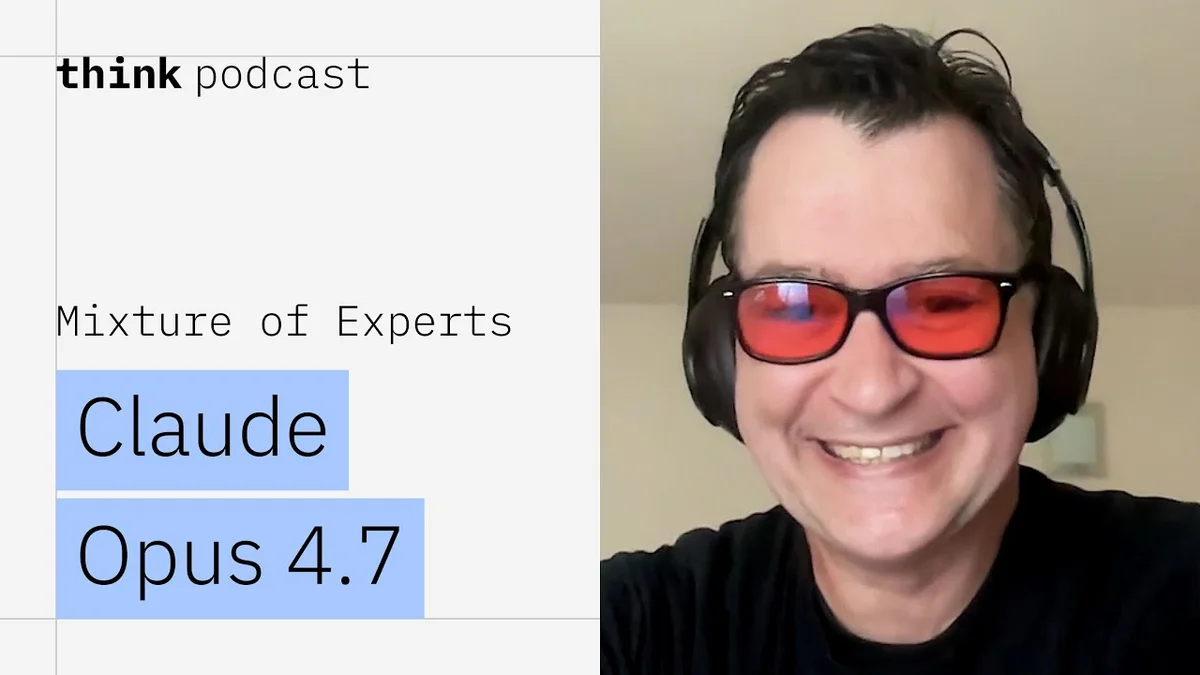
The integration of Artificial Intelligence into the workplace continues to accelerate, reshaping how businesses operate and how employees perform their daily tasks. A recent discussion featuring IBM Distinguished Engineer Chris Hay and IBM Tech News Writer Aili McConnon on the "Mixture of Experts" podcast shed light on current trends and future directions in AI adoption. The conversation highlighted key developments in AI models, hardware integration, and the evolving landscape of AI's impact on the workforce.
Expert Insights on AI Adoption
Chris Hay, a Distinguished Engineer at IBM, shared his hands-on experience with recent AI advancements, particularly focusing on the capabilities of Anthropic's Claude models. He noted the significant improvements in Claude 4.7 compared to its predecessor, 4.6, especially in handling complex, long-running tasks and reducing instances of AI hallucinations. Hay emphasized the importance of AI models that can maintain context and accuracy over extended interactions, a crucial factor for practical workplace applications.
Aili McConnon, an IBM Tech News Writer, brought a broader perspective on AI adoption trends, referencing a recent Gallup poll. The poll indicated that approximately 50% of employed Americans have used AI tools at least a few times annually, with frequent users reporting significant productivity gains. This suggests a growing acceptance and integration of AI across various industries, driven by tangible benefits in efficiency and task completion.
The full discussion can be found on IBM's YouTube channel.
Apple's AI Hardware Ambitions
The discussion also touched upon the potential impact of AI-driven hardware, with a specific mention of Apple's rumored AI smart glasses. While details remain speculative, the concept of integrating AI capabilities directly into wearable technology signifies a shift towards more ambient and seamless AI interaction. This move aligns with the broader trend of making AI more accessible and integrated into daily workflows, blurring the lines between digital assistance and natural human interaction.