

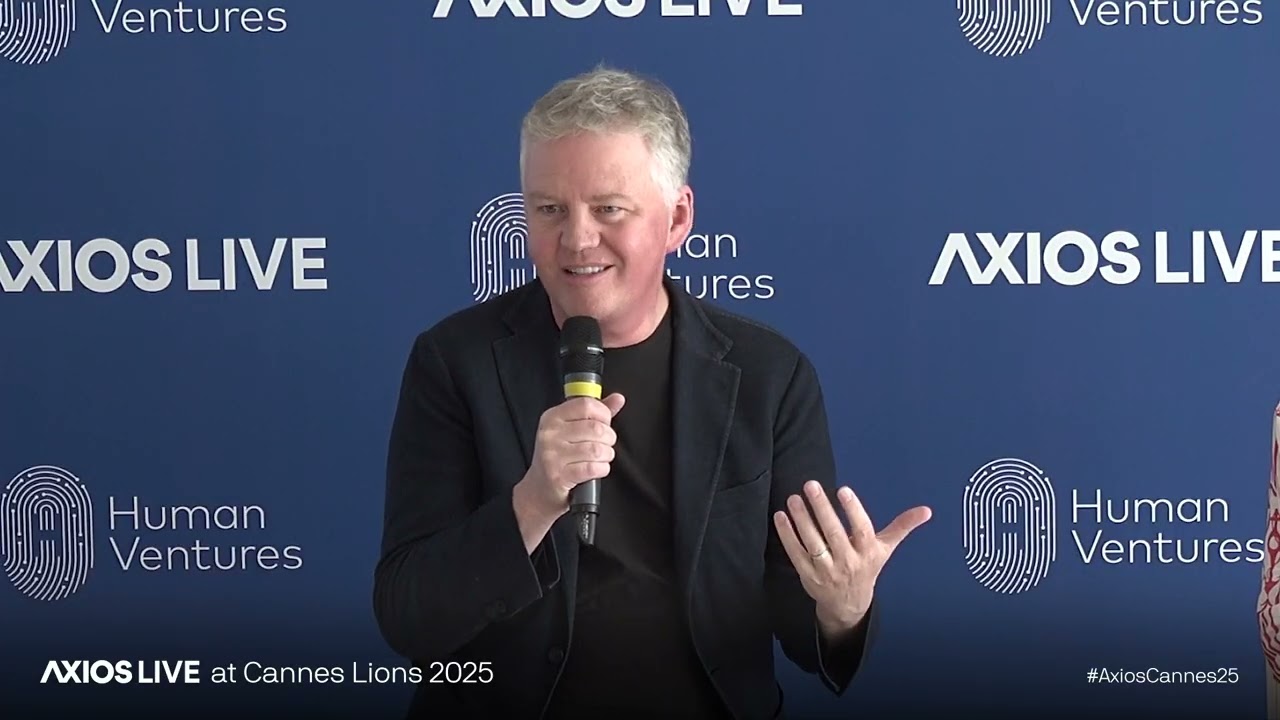
"If you believe that the business model of original content creation is driving visitors to that content, I just have a really bad story for you." Cloudflare CEO Matthew Prince did not mince words at Axios Live at Cannes Lions 2025, delivering a stark warning about the transformative, and potentially destructive, impact of artificial intelligence on the internet as we know it. Prince, speaking with Joanna Stern, laid out a sobering data-driven analysis of how the relationship between content creators and dominant platforms like Google has fundamentally shifted, exacerbated by the rapid ascent of generative AI.
His core argument centers on the diminishing returns for content producers. For every page Google scraped a decade ago, it sent one visitor for every two pages. Today, that ratio has plummeted.
"Over the last ten years, for every six pages that Google scrapes, they now send you one visitor," Prince stated, highlighting a threefold increase in difficulty for publishers. This trend has accelerated dramatically in the past six months, directly correlating with the rise of AI Overview features. For queries to Google, 75% now receive an answer directly on the search page, eliminating the need to click through to original sources. For OpenAI, this ratio stood at 1500:1 six months ago, and for Anthropic, a staggering 60,000:1 today. "People trust the AI more over the last six months, which means they're not reading original content."
This shift, Prince contends, undermines the very incentives that fuel content creation. The traditional business models of the web, subscriptions, advertising, and even the pursuit of fame or "ego hit", are being eroded. "All three of those things are going away and they're going away fast," he warned.
The solution, according to Prince, lies in re-establishing "scarcity." He noted that even OpenAI CEO Sam Altman acknowledges the need to compensate content creators, recognizing that original content is the "fuel" for these AI systems. However, the current landscape allows many AI companies to consume content freely, undermining fair compensation. "You can't have a market if you don't have scarcity."