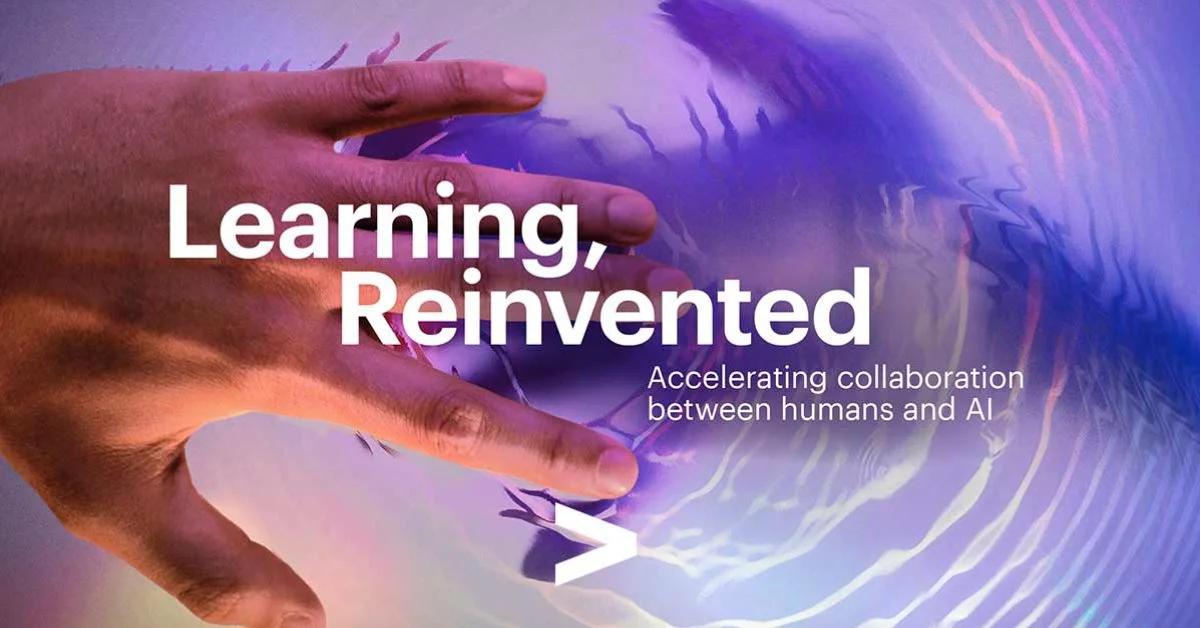
AI Needs Humans: The Co-Learning Imperative

Organizations must pivot to human-AI co-learning, embedding AI into workflows to boost engagement, skills, and innovation.

A diverse team of professionals collaborating around a holographic interface displaying AI data.
The synergy between humans and AI is redefining productivity and innovation.· Accenture Insights (AI & Tech)
Visual TL;DR
Leadership & Culture LagDriver
From the articleHowever, most companies lag, failing to integrate this new skilling paradigm into their leadership, culture, and practices.
Executive AnticipationDriver
From the article 2 mentionsThe numbers paint a stark picture: 84% of executives anticipate regular human-AI interaction within three years, yet only 26% of workers are trained for it.
AI Integration GapDriver
From the article 2 mentionsAccenture's latest research highlights an urgent gap: only 11% of organizations are truly ready for effective human AI collaboration, a crucial element for unlocking AI's full potential.
Human-AI Co-LearningContext
humans and AI adapt in tandem, a new skilling paradigm
From the article 4 mentionsThis co-learning model, where humans and AI adapt in tandem, is proving to be a powerful engine for higher engagement, faster innovation, and improved productivity.
Embedded WorkflowsContext
From the article 3 mentionsGlobal research across 14,000 workers and 1,100 executives reveals a seismic shift away from traditional training towards continuous co-learning embedded directly into daily workflows.
Enhance ResilienceEffect
From the articleThis dynamic collaboration boosts creativity and enhances workforce resilience.
Boost EngagementEffect
higher engagement, faster innovation, and improved productivity
From the article 4 mentionsThis dynamic collaboration boosts creativity and enhances workforce resilience.
Future of WorkOutcome
From the article 3 mentionsThe future of work hinges not on AI replacing humans, but on them learning together.

The future of work hinges not on AI replacing humans, but on them learning together. Accenture's latest research highlights an urgent gap: only 11% of organizations are truly ready for effective human AI collaboration, a crucial element for unlocking AI's full potential. This co-learning model, where humans and AI adapt in tandem, is proving to be a powerful engine for higher engagement, faster innovation, and improved productivity.

Global research across 14,000 workers and 1,100 executives reveals a seismic shift away from traditional training towards continuous co-learning embedded directly into daily workflows. This dynamic collaboration boosts creativity and enhances workforce resilience. However, most companies lag, failing to integrate this new skilling paradigm into their leadership, culture, and practices.

The Co-Learning Opportunity

The numbers paint a stark picture: 84% of executives anticipate regular human-AI interaction within three years, yet only 26% of workers are trained for it. Employee satisfaction with current AI tools hovers at a low 35%. Organizations that are getting it right, however, are reaping rewards: 5X higher workforce engagement, 4X faster skill development, 4X greater likelihood of innovation, and a 1.4X increase in year-on-year profitability.

Four Pillars for Human-AI Synergy

Accenture identifies four critical conditions for organizations to accelerate this essential partnership:

1. Lead with Curiosity and Creativity

Visionary leaders frame AI as a creative enabler, not just an efficiency tool. This perspective boosts employee confidence in adapting to AI by 20%. Clear communication and visible advocacy are vital to bridge the gap where many leaders struggle to translate this vision into practice, leaving employees uncertain.

2. Incorporate Learning as Part of the Job

Time constraints are the biggest hurdle to upskilling. Embedding modular, real-time learning directly into workflows transforms skilling from a separate task into a continuous experience. AI-driven coaching can significantly increase training completion rates and skill acquisition, making growth accessible within daily work.

3. Hardwire Trust

Trust is foundational. Clear governance, accountability, and transparent AI explainability empower employees. Yet, 53% of workers remain unsure who is accountable for AI errors, underscoring a critical need for ethical communication and clear accountability frameworks.

4. Make Gen AI Work the Way People Work

AI adoption falters when tools don't align with natural work patterns. Only 35% of employees are satisfied with current employer-provided gen AI tools. Prioritizing human-centered design ensures tools intuitively integrate into existing workflows, boosting adoption and creating a sustained competitive advantage.

Success stories abound, from a global pharma leader integrating AI assistants in R&D to a biopharma company enabling oncology researchers to extract faster insights. These examples demonstrate the tangible benefits of embracing human-AI collaboration, turning challenges into opportunities for growth and innovation.

© 2026 StartupHub.ai. All rights reserved. You may not republish this article in full without a license. Search engines and AI research tools may crawl and summarize for reference. Bulk reproduction or model training requires a license. See our terms.
Daniel Singer

Written by

Daniel Singer

Editor, StartupHub.ai

Daniel Singer is the editor of StartupHub.ai, a technology expert and thought leader on AI and its applications across sectors, from fintech and healthcare to developer tooling and consumer software. He writes and tests the tools covered here thoroughly and regularly, and built StartupHub.ai to give founders, operators and buyers a clearer read on what they are actually being sold.

More from Daniel Singer

