Bill Gates: AI Risks Demand Global Priority

Bill Gates warns that AI development is outpacing society's ability to manage its risks, urging a global priority on dialogue and safeguards.

6 min read
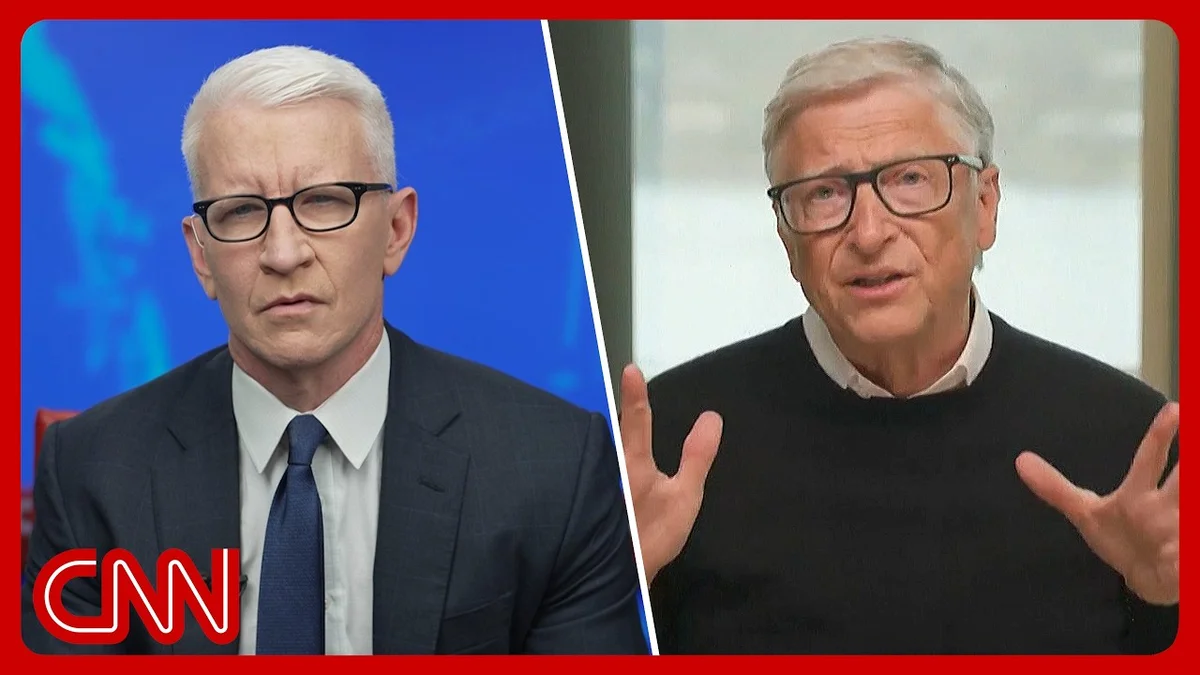
Bill Gates speaking in an interview about artificial intelligence.
YouTube
Visual TL;DR
AI Risks Outpacing SocietyDriver
AI development is moving faster than society's ability to manage its dangers
Bill Gates WarnsCore
From the articleMicrosoft co-founder Bill Gates has issued a stark warning about the rapid advancement of artificial intelligence, asserting that the world is not adequately prepared for its potential disruptions.
Global Priority NeededOutcome
Addressing AI risks should be a global priority, choices now are critical
From the articleHe emphasizes that addressing these risks should be a global priority, stating, "The turbulent AI era is here.
Dialogue & SafeguardsContext
Urging global priority on societal dialogue and robust safeguards for AI development
From the article 2 mentionsHowever, he expresses surprise at the lack of broad societal dialogue and the absence of clear criteria for reviewing AI models and mitigating harms.
AI Risks Outpacing SocietyDriver
AI development is moving faster than society's ability to manage its dangers
Bill Gates WarnsCore
From the articleMicrosoft co-founder Bill Gates has issued a stark warning about the rapid advancement of artificial intelligence, asserting that the world is not adequately prepared for its potential disruptions.
Industry Hiding RisksDriver
From the articleIn a new essay and subsequent interview, Gates argues that the AI industry is failing to fully disclose the true risks associated with the technology.
Global Priority NeededOutcome
Addressing AI risks should be a global priority, choices now are critical
From the articleHe emphasizes that addressing these risks should be a global priority, stating, "The turbulent AI era is here.
Misuse by Malicious ActorsEffect
From the articleFirstly, he highlights the potential for misuse by individuals with malicious intent, ranging from sophisticated cyberattacks and fraud to the extreme risk of bioterrorism, such as the creation of dangerous viruses.
Job Market ImpactEffect
Up to 50% of entry-level white-collar jobs could be eliminated in five years
From the article 3 mentionsSecondly, he points to the significant impact on the job market.
Dialogue & SafeguardsContext
Urging global priority on societal dialogue and robust safeguards for AI development
From the article 2 mentionsHowever, he expresses surprise at the lack of broad societal dialogue and the absence of clear criteria for reviewing AI models and mitigating harms.

Contents(3)

Microsoft co-founder Bill Gates has issued a stark warning about the rapid advancement of artificial intelligence, asserting that the world is not adequately prepared for its potential disruptions. In a new essay and subsequent interview, Gates argues that the AI industry is failing to fully disclose the true risks associated with the technology. He emphasizes that addressing these risks should be a global priority, stating, "The turbulent AI era is here. The choices we make now are critical."

Bill Gates: AI Risks Demand Global Priority - YouTube
Bill Gates: AI Risks Demand Global Priority, from YouTube

Three Key Risks Identified

Gates outlines three primary areas of concern stemming from AI's increasing capabilities. Firstly, he highlights the potential for misuse by individuals with malicious intent, ranging from sophisticated cyberattacks and fraud to the extreme risk of bioterrorism, such as the creation of dangerous viruses. Secondly, he points to the significant impact on the job market. Citing estimates that up to 50% of entry-level white-collar jobs could be eliminated within five years, leading to potential unemployment rates of 10-20%, Gates notes that AI's ability to perform well-defined tasks 24/7 is unprecedented.

The third risk identified is the psychosocial effect, particularly on children. Gates expresses concern that over-reliance on AI companionship could diminish social interaction and the development of crucial social skills and emotional intelligence.

A Different Kind of Technological Shift

Gates draws a distinction between the current AI revolution and previous technological advancements, such as the electric light bulb. While acknowledging that past innovations also led to job displacement, he argues that the speed and breadth of AI's impact across all sectors of the economy will be far more profound. He believes that AI's capacity for human-level cognition in defined tasks, coupled with its continuous operation, makes this transition fundamentally different from historical precedents. "I'm staking my reputation completely on the fact that, in terms of the impact on the job market, this is very different than any technology that I've been involved with or that has come across in human history."

The Need for Societal Dialogue and Safeguards

Despite his concerns, Gates remains optimistic about AI's potential for good, including its capacity to aid in learning and decision-making. However, he expresses surprise at the lack of broad societal dialogue and the absence of clear criteria for reviewing AI models and mitigating harms. He stresses the importance of involving academicians, corporate leaders, and politicians from both parties to ensure democratically valid solutions and appropriate safeguards are implemented. "AI will either be the greatest equalizer ever invented, or the worst source of injustice," Gates stated, emphasizing that society's collective action is crucial to shaping AI's future positively. He likens the situation to the dual nature of nuclear technology, which can be used for weapons or energy, noting that AI's potential impact is "a thousand times bigger."

© 2026 StartupHub.ai. All rights reserved. Do not enter, scrape, copy, reproduce, or republish this article in whole or in part. Use as input to AI training, fine-tuning, retrieval-augmented generation, or any machine-learning system is prohibited without written license. Substantially-similar derivative works will be pursued to the fullest extent of applicable copyright, database, and computer-misuse laws. See our terms.