

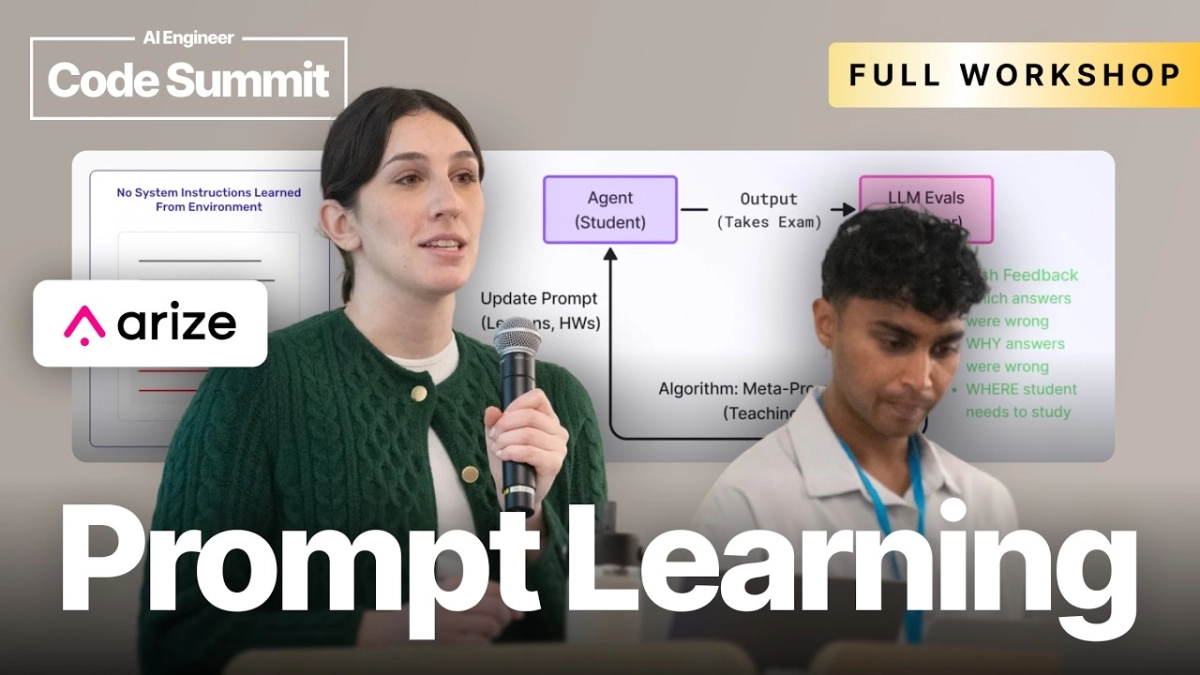
The transition from a proof-of-concept large language model to a reliable, production-grade application hinges entirely on solving one problem: prompt degradation. Models deployed in the real world are subject to concept drift, adversarial inputs, and shifting user expectations, rendering even the most carefully engineered initial prompts obsolete within weeks. This fundamental fragility necessitates a shift in thinking, moving LLM operations away from static deployment and toward continuous, adaptive iteration. This concept, the Prompt Learning Loop, was the central thesis articulated by Arize experts SallyAnn DeLucia and Fuad Ali.
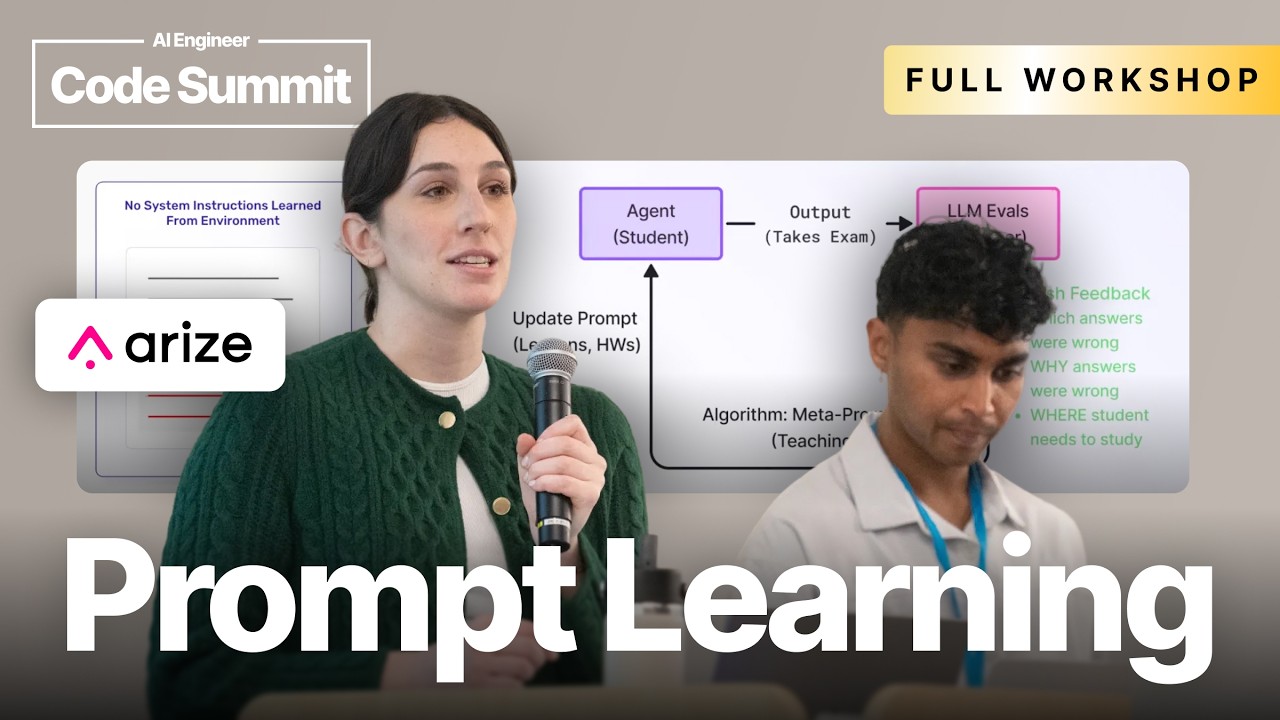
DeLucia and Ali, both key contributors at Arize, recently detailed the necessary infrastructure required to move beyond static prompt engineering, speaking following Aparna Dhinakaran’s preceding talk. They focused specifically on establishing a systematic methodology for continuously refining AI behavior based on real-world usage and feedback. For founders and engineering leaders building on the LLM stack, the learning loop is not an optional feature; it is the core mechanism of governance and performance optimization, fundamentally elevating prompt engineering from an art form to a measurable engineering discipline.
The cost of repeated failure prompts is not trivial. Latency spikes and poor response quality directly erode user trust and increase operational expenditure.
The Prompt Learning Loop, as described, follows a three-stage architectural pattern: Observe, Evaluate, and Improve. The Observation stage mandates comprehensive data logging. This goes far beyond logging the final output; it requires capturing the input prompt, the model version, all retrieved context (in RAG architectures), intermediate chain steps, and critical metadata like latency and cost. This comprehensive logging stack provides the necessary telemetry to understand when and where performance begins to falter.
The Evaluation stage presents the greatest technical challenge because traditional machine learning metrics, like accuracy or F1 score, rarely apply directly to generative outputs. Success must be defined by subjective criteria such as tone, safety, relevance, and adherence to specific brand guidelines. SallyAnn DeLucia emphasized the complexity of this initial definition: "You need to figure out what good looks like, and then you need to figure out how to measure that, and that is often the hardest part." This measurement often requires hybrid evaluation methods, combining automated LLM-as-a-Judge techniques with structured, human-in-the-loop (HITL) feedback.