
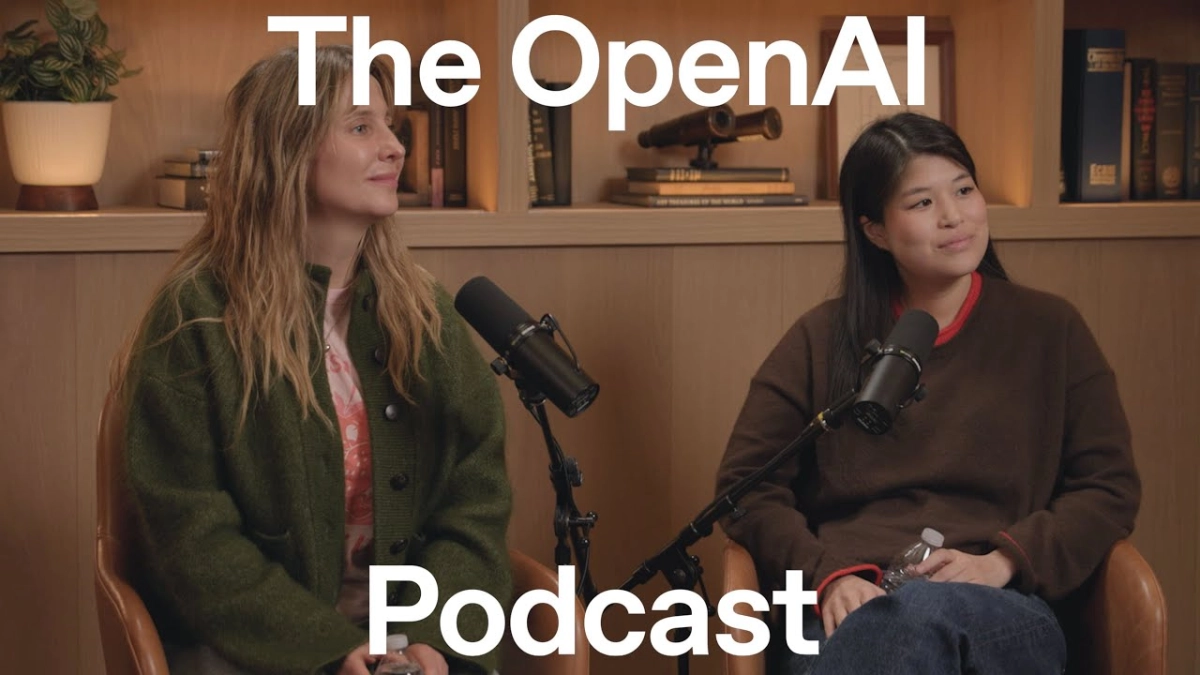
"Part of the art here is figuring out how to pull out these quirks in the model that can come across as personality without breaking steerability." This insight from Laurentia Romaniuk, a product manager at OpenAI, encapsulates the nuanced challenge at the heart of the latest advancements in AI. Romaniuk, alongside researcher Christina Kim, recently sat down with host Adrian Maen on the OpenAI Podcast to discuss GPT-5.1, delving into the intricate balance of building models that excel in both cognitive ability and emotional intelligence, all while offering users unprecedented control over their AI interactions. Their conversation illuminated the complex interplay of technical innovation and human-centric design in shaping the future of conversational AI.
The primary objective for GPT-5.1 was to address crucial user feedback from its predecessor, GPT-5, and to fundamentally enhance the model's reasoning capabilities. Kim highlighted a significant technological leap, stating that "for the first time ever, all of the models in chat are reasoning models." This means that even the baseline model now possesses a deeper capacity for logical thought and problem-solving, allowing it to "think" through complex queries and refine its responses before delivery. This inherent intelligence across all tiers represents a foundational improvement, leading to a smarter, more capable AI experience for every user.
A key driver behind GPT-5.1's development was the community's response to GPT-5. Romaniuk candidly shared, "With the ChatGPT 5 launch, one of the things we heard was that the model felt like it had weaker intuition and that it was less warm." Users perceived a certain coldness or a lack of understanding in the model's interactions, often feeling as though it forgot crucial context from earlier in the conversation. This feedback underscored the need for advancements beyond mere factual accuracy, pushing OpenAI to infuse more emotional intelligence into the system.