

The promise of artificial intelligence has long extended beyond simple query-response systems to truly autonomous entities capable of complex reasoning and action. Annie Wang, an AI expert, articulated this vision succinctly when she stated, "An agent is essentially an LLM that can reason, act, and observe." This fundamental shift, from a static language model to a dynamic, goal-oriented system, was the core subject of a recent Google Cloud {Dev}cember livestream.
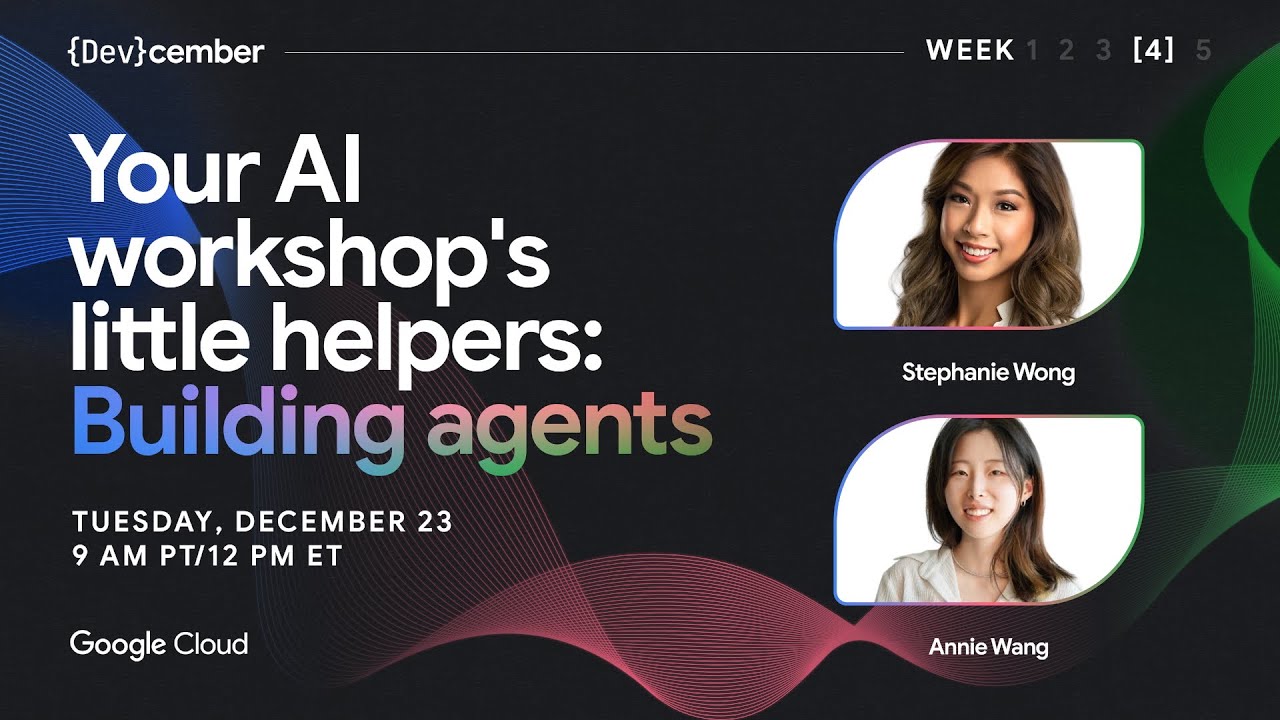
During the session, Annie Wang spoke with host Stephanie Wong at the #DEVcember event, detailing the intricacies of building AI agents, showcasing the Agent Development Kit (ADK), and demonstrating its integration with Vertex AI for deployment. Their discussion highlighted the critical evolution in AI development, moving beyond basic large language model (LLM) calls to sophisticated, multi-step workflows. This transition is paramount for enterprises seeking to embed AI into mission-critical operations, demanding reliability and explainability that single-turn interactions cannot provide.
The Agent Development Kit emerges as a pivotal tool in this new paradigm. It is not merely a collection of libraries but a structured framework designed to manage the inherent complexity of agentic systems. Historically, developers faced significant hurdles in orchestrating LLMs to perform sequences of actions, interact with external tools, and maintain state over time. The ADK addresses these challenges by providing a systematic approach to defining an agent's capabilities, its interaction patterns, and, crucially, its evaluation.
At its heart, an ADK-powered agent comprises several key components. It begins with a clear prompt, defining the agent's objective. This prompt guides the LLM to leverage a suite of "tools", external functions or APIs that extend its capabilities beyond pure text generation. These tools could range from simple search queries to complex database interactions or even proprietary business logic. For instance, the demonstration illustrated an agent capable of analyzing a CSV file, writing SQL queries to extract insights, and then summarizing its findings, a multi-faceted task requiring both reasoning and tool utilization.
Memory is another vital aspect, allowing agents to retain context over longer interactions. The ADK facilitates both short-term memory, maintained within the LLM's context window, and long-term memory, often powered by vector databases, ensuring agents can recall past interactions or learned information. This capability is crucial for sustained engagement, enabling agents to handle ongoing customer service dialogues or lengthy data analysis projects without losing their train of thought.