

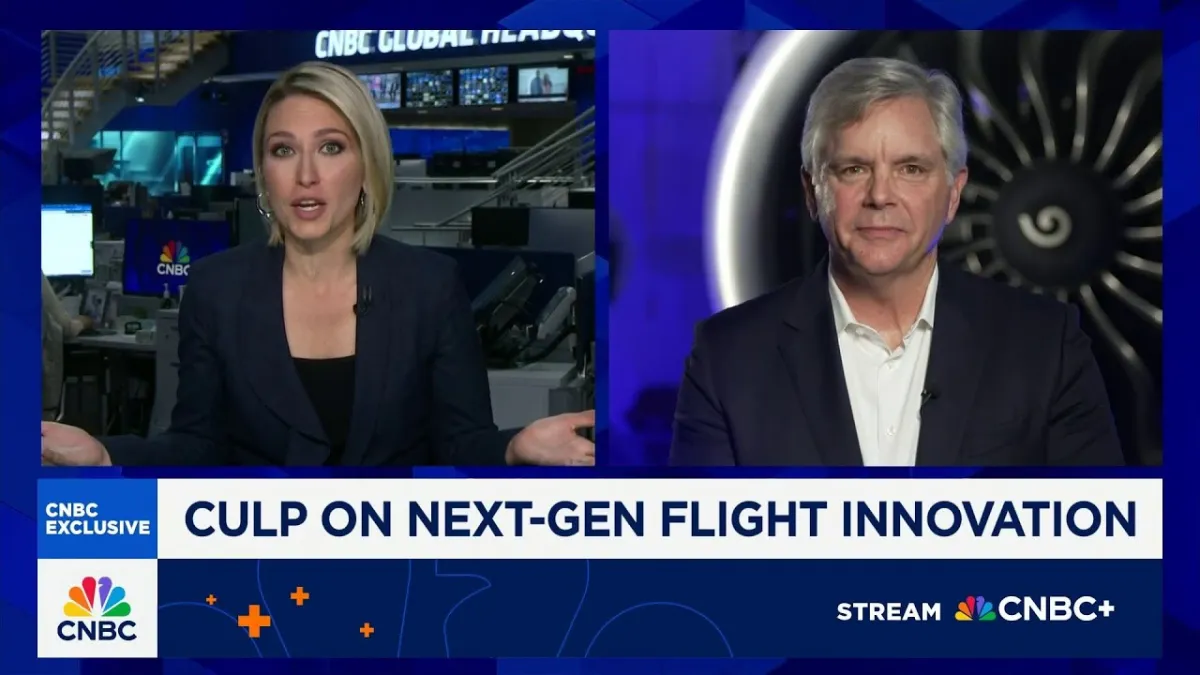
GE Aerospace CEO Larry Culp, speaking from the company's Cincinnati training center, offered a robust outlook on the aerospace industry, highlighting strong global demand, a substantial order backlog, and a forward-thinking approach to innovation and workforce development. His conversation with CNBC's Morgan Brennan underscored a pivotal theme: artificial intelligence is not merely a disruptive force but a powerful tool to enhance human performance across the vast aerospace ecosystem, from advanced manufacturing to critical engine maintenance.
Culp's remarks provided crucial context for the industry's current state. He confirmed a “very strong demand from our airframers,” noting that while there have been supply chain issues, significant progress is being made. This demand is further evidenced by a mid-single-digit growth in departures year-over-year, indicating a global stabilization in air travel. This positive trajectory is particularly significant for GE Aerospace, given that over three-quarters of its business originates from the aftermarket, necessitating robust support for both new aircraft and the existing global fleet.
The scale of GE Aerospace's market position is formidable. The division boasts a staggering $170 billion backlog, effectively sold out through the remainder of the decade. This considerable pipeline underscores the long-term nature of aerospace planning and the sustained need for advanced engineering and manufacturing capabilities. Culp emphasized the company’s commitment to competing for every opportunity, whether supporting airlines in their Maintenance, Repair, and Overhaul (MRO) operations or facilitating fleet modernization and expansion.
Beyond current demand, GE Aerospace is deeply invested in "inventing the future of flight." This encompasses a diverse portfolio of innovation, including testing hypersonic engines, developing propulsion systems for military drones, and strategic partnerships with emerging startups like Beta Technologies and Merlin. These collaborations signal a proactive engagement with the broader tech landscape, integrating new ideas and capabilities into GE's established expertise. Culp noted a $3 billion investment in U.S. manufacturing over the next five years, signaling a commitment to domestic production and technological leadership.
The core of their future flight investment, Culp explained, lies in the commercial sector, particularly in developing technologies for the next generation of narrow-body aircraft. These planes, while not expected to enter service until 2035-2040, require substantial upfront investment in technology today. The company's RISE (Revolutionary Innovation for Sustainable Engines) program stands as a prime example, aiming for a 20% increase in fuel efficiency through its open fan architecture. This long-horizon planning is critical in an industry where product development cycles span decades.