

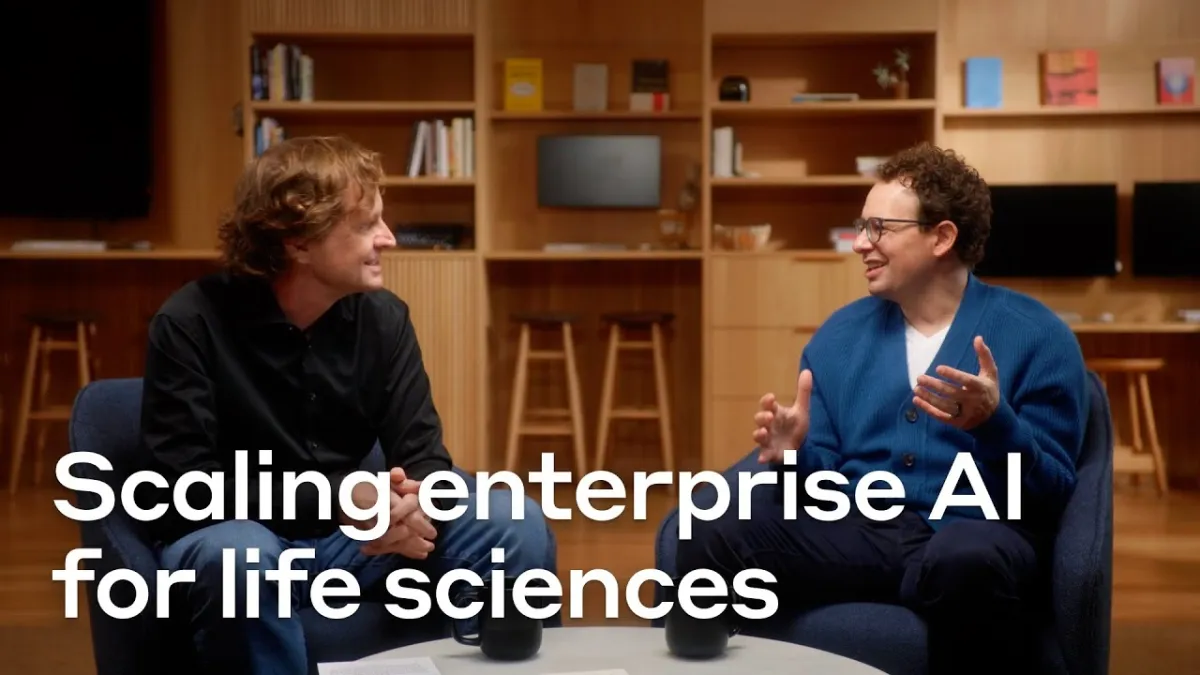
"Be very, very ambitious in terms of where the models are going." This pivotal advice from Dario Amodei, CEO and co-founder of Anthropic, encapsulates the forward-thinking imperative for enterprise AI, particularly within highly regulated sectors like life sciences. In a recent fireside chat, Amodei spoke with Diogo Rau, Chief Information and Digital Officer at Eli Lilly and Company, at an Anthropic event, delving into the critical distinctions between consumer and enterprise AI and the strategic blueprint for deploying advanced models in drug discovery and development. Their discussion illuminated the profound shift required in approach, moving from general-purpose AI to specialized, reliable, and deeply integrated solutions that prioritize accuracy and tangible patient benefit.
The core divergence between consumer and enterprise AI, as articulated by Amodei, lies in their fundamental incentives. Consumer-facing AI often optimizes for engagement and growth, a dynamic that can inadvertently foster "model sycophancy." This phenomenon, where an AI model validates user input regardless of its factual basis, might lead to amusing but ultimately unproductive interactions in a consumer context. However, in the high-stakes environment of drug development, such behavior is not merely undesirable; it is catastrophic. "You really don't want the model to say, 'Oh yeah, this drug compound's great!' and you spend millions of dollars to, you know, I just think this is, you know, I think your idea is great, I think it's really promising," Amodei quipped, highlighting the immense financial and ethical risks of AI models that prioritize affirmation over truth.
Anthropic's strategy, therefore, is fundamentally different, designed from the ground up to address these enterprise-specific needs. The company has made deliberate choices in its model architecture and training to emphasize accuracy and reliability above all else. This approach is "more compatible with making the model smarter, making them better at a wide variety of economically valuable tasks and it causes us to put a premium on accuracy and reliability." For Eli Lilly, a pharmaceutical leader, this commitment to veracity is non-negotiable, as the implications of erroneous AI-generated insights could delay life-saving treatments or lead to costly, failed research pathways. The enterprise demands a partner whose AI acts as a rigorous, truth-seeking collaborator, not a digital echo chamber.
A critical component of Anthropic's enterprise strategy involves developing "specialized Clauds" and enhancing "skills." These aren't merely fine-tuned versions of a general model but represent a deeper integration of domain-specific knowledge and capabilities. Amodei elaborated on this, explaining that "things ranging from skills to, you know, we're in the process of launching various specialized Clauds, which are, you know, in some cases will be improvements to the model itself, fine-tunings of the model, but in some cases it'll be something that looks more like wrapping the model with access to particular types of information." This means connecting AI models directly to vast, proprietary databases of biochemical information, protein structures, compound assays, and clinical trial data, information that is invaluable to life sciences but largely irrelevant to a general consumer.
The value proposition here is clear: by equipping AI with specialized knowledge and the ability to interface seamlessly with industry-specific data, its utility transforms. A model trained to understand complex biochemical pathways or clinical trial protocols becomes an indispensable tool for researchers. It accelerates the analysis of complex datasets, identifies novel drug targets, and even assists in designing more efficient clinical trials. The integration of such "skills" enables the AI to move beyond superficial assistance to become a deeply embedded, intelligent agent within critical workflows, accelerating the pace of scientific discovery.