Anthropic’s introduction of Claude Code in its desktop application marks a significant evolution in how large language models integrate into the demanding world of software development. This release, highlighted in a concise video demonstration, showcases a product designed not merely for generating snippets but for actively participating in complex, multi-faceted coding projects, offering a glimpse into a future where AI agents become indispensable partners in the developer’s daily grind. The core innovation lies in its capacity for parallel processing of development tasks, moving beyond simple conversational interfaces to a more deeply embedded, agentic workflow.
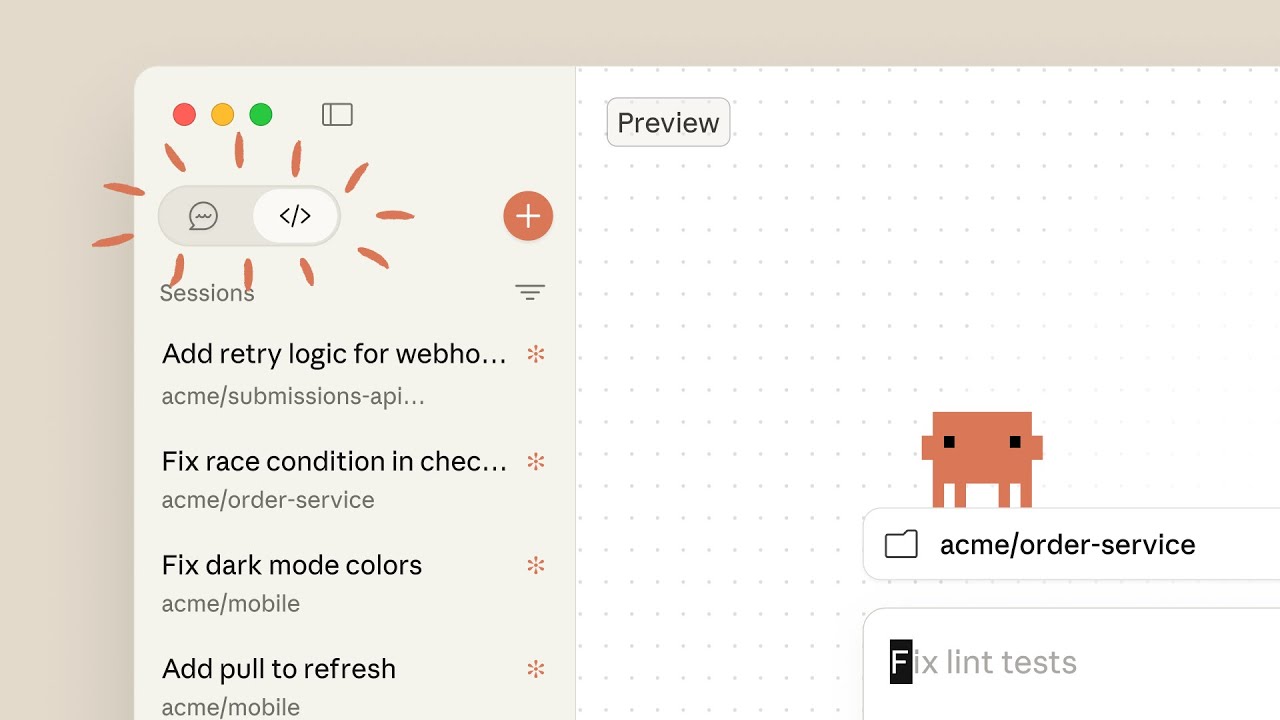
The video demonstrates Anthropic’s Claude Code, now available in research preview within their desktop apps. It showcases the ability to manage multiple coding projects and tasks simultaneously, allowing developers to allocate different responsibilities to distinct AI sessions. This paradigm shift enables a developer to initiate, track, and manage several AI-driven coding efforts concurrently, streamlining what were previously sequential and often time-consuming processes.
A pivotal insight from this release is the emphasis on parallelization. Developers frequently juggle numerous tasks: debugging, feature implementation, documentation, and testing. Claude Code directly addresses this by allowing users to "run multiple local and remote Claude Code sessions in parallel," as stated in the product description. This means one AI agent can be dedicated to "fixing bugs," while another is "researching GitHub" for relevant information or code examples, and a third is simultaneously "updating docs" to reflect recent changes. This concurrent execution capability is a game-changer for productivity, allowing teams to accelerate development cycles and reduce bottlenecks that arise from single-threaded human-AI interaction. The visual interface in the demo clearly illustrates this, presenting a sidebar populated with various active "Sessions" like "Add retry logic for webhooks" or "Fix race condition in checkout," each representing an independent AI-managed task.
Another crucial aspect is the seamless integration into existing developer environments. Claude Code is not a walled garden; it is built to complement established workflows. The product leverages "git worktrees for parallel repo work," ensuring that AI-generated changes can be managed and version-controlled alongside human contributions. This integration extends to the user interface, which "offers a clean user interface with the option to open in VS Code or resume in CLI." This flexibility is paramount for adoption among developers who rely heavily on their preferred IDEs and command-line tools. The ability to switch between a graphical desktop application and more traditional coding environments ensures that Claude Code enhances rather than disrupts the developer's established habits, making it a pragmatic tool for real-world application.
The nature of tasks Claude Code is designed to handle also reveals a significant leap in agentic capabilities. The demo prompts, such as "Add unit tests to the checkout flow to cover payment failure scenarios," are far more complex than typical single-line code generation requests. These tasks imply a deeper understanding of project context, architectural patterns, and potential failure points. Claude Code appears capable of not just writing code but understanding the intent behind a request, identifying relevant files, proposing solutions, and even suggesting further improvements, such as recommending "areas to improve our tests." This moves the AI beyond a passive code assistant to an active participant in the problem-solving process, capable of autonomously executing multi-step operations within a codebase.
Related Reading
- AI Hardware Engineer: Flux Revolutionizes PCB Design with Autonomous Agents
- GLM 4.6 Challenges Frontier Models with Open-Source Prowess
- AI Won't Build Your Winning Product: Why Human Ingenuity Remains Paramount
This level of intelligent automation has profound implications for startup founders and VCs evaluating the next wave of developer tools. The ability to offload routine, albeit complex, coding tasks to AI agents frees up human developers to focus on higher-level architectural design, innovative problem-solving, and strategic project direction. For a lean startup, this could mean significantly faster iteration cycles and a more efficient allocation of engineering resources, directly impacting time-to-market and competitive advantage. AI professionals will recognize this as a step towards more autonomous software agents, where the model maintains state across multiple interactions and takes proactive steps to achieve a defined goal, rather than simply responding to isolated prompts.
The shift from chat-based code generation to an integrated, parallelized desktop agent represents a maturation of AI in software development. It positions Claude Code as a sophisticated tool for enhancing developer productivity and efficiency, rather than a mere novelty. The focus on practical integration and multi-tasking capabilities suggests a clear understanding of real-world developer needs and challenges.