


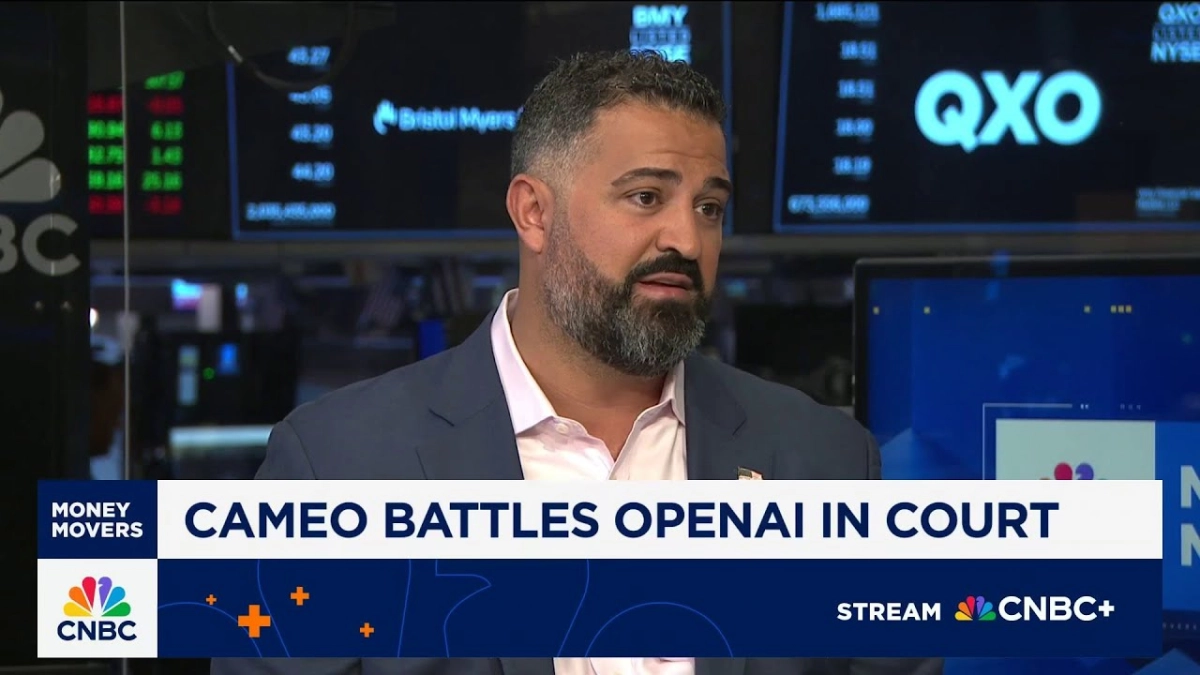
The burgeoning landscape of artificial intelligence, while promising innovation, is simultaneously exposing the critical fault lines in intellectual property law, particularly concerning brand identity. This tension was starkly illuminated when Steven Galanis, CEO of the personalized celebrity video platform Cameo, appeared on CNBC’s "Money Movers" to discuss his company’s trademark lawsuit against OpenAI. Galanis articulated a clear distinction between technological advancement and the unlawful appropriation of established brand names, asserting that while OpenAI’s Sora AI video generation technology is impressive, its use of "Cameo" for a similar feature constitutes a direct and damaging infringement.
Galanis spoke with the CNBC "Money Movers" team about the lawsuit, which centers on OpenAI’s alleged knowing use of the "Cameo" name for a video product within its Sora AI, leading to direct competition and consumer confusion. OpenAI, through a spokesperson, has countered that "no one can claim exclusive ownership over the word ‘cameo’," a position Galanis vehemently disputes given his company's federal trademarks. This legal battle underscores a pivotal challenge for founders and VCs: how to protect brand equity in an era where AI models can rapidly generate content or services that blur the lines with existing offerings.
Cameo holds federal trademarks for "CAMEO®" in both Class 42 (software services) and Class 9 (downloadable media), registrations secured over five years ago, making them incontestable. Galanis highlighted this foundational legal protection, stating, "We have the federal trademark for this and we've had it for over five years... it literally covers downloadable video assets made by celebrities, actors, entertainers that are coming through a web app or a mobile application." This isn't merely about a word; it's about a well-defined service category that Cameo pioneered and legally protected.



