xAI's Ethan He on Grok, Video Agents & AI Futures

xAI's Ethan He discusses how language models drive visual AI, the rapid development of Grok Imagine, and the future of AI-generated interfaces.

5 min read
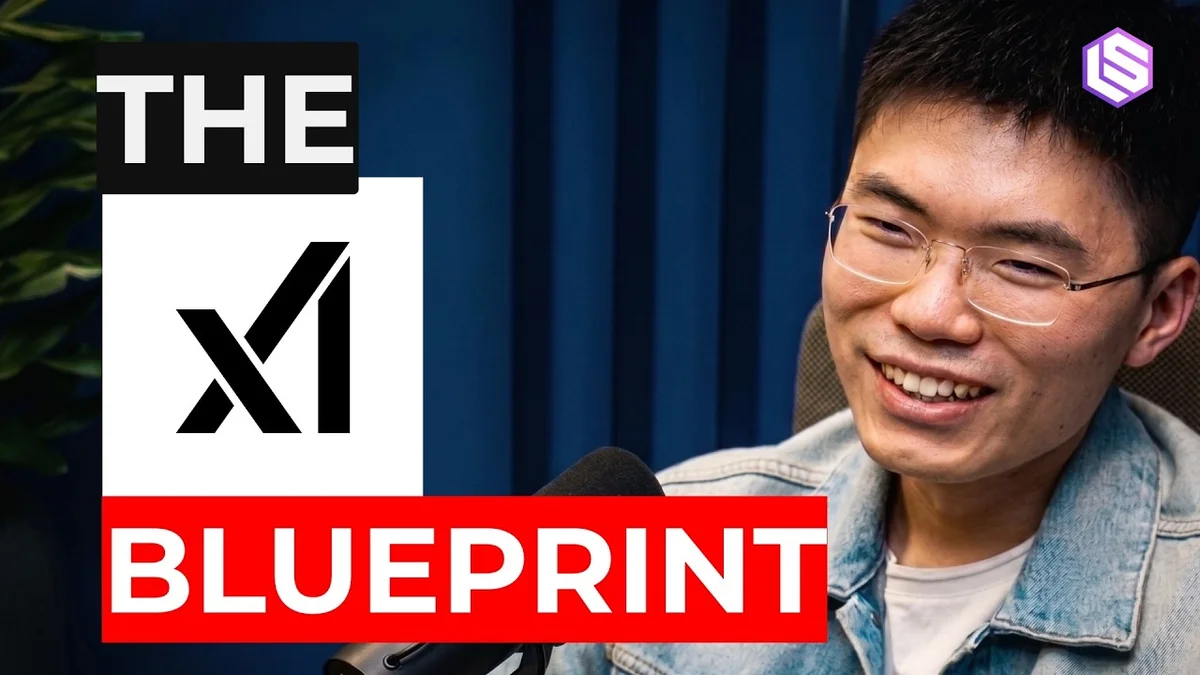
Ethan He, AI Research Engineer, speaking into a microphone.
Latent Space
Visual TL;DR
Mature language modelsContext
sophisticated and mature language model technologies are key
From the article 5 mentionsHe highlighted a significant claim: that much of the progress in visual intelligence is rooted in the advancements of language models, a trend that is increasingly shaping the capabilities of video diffusion models as they mature.
Adapt image techniquesContext
From the articleThis rapid development was facilitated by leveraging existing image generation techniques and adapting them for video, demonstrating the power of building upon established AI architectures.
Data and computeContext
From the article 3 mentionsHe highlighted the critical role of both data and compute in developing advanced AI models.
Ethan He, xAICore
AI Research Engineer discussing xAI's AI advancements
From the article 2 mentionsEthan He, an AI Research Engineer, recently sat down with Latent Space to discuss the rapid development of AI models, particularly in the realm of visual intelligence and video generation.
Language drives visionDriver
advancements in language models unlock visual intelligence capabilities
Grok Imagine builtOutcome
xAI's Grok Imagine model created in just three months
From the article 2 mentionsHe shared insights into the creation of xAI's Grok Imagine model, a feat accomplished in a remarkably short three-month period.
Video diffusion modelsEffect
From the article 5 mentionsHe highlighted a significant claim: that much of the progress in visual intelligence is rooted in the advancements of language models, a trend that is increasingly shaping the capabilities of video diffusion models as they mature.
Generative UIs futureContext
future of AI interfaces will be generative and AI-driven
Contents(4)

Ethan He, an AI Research Engineer, recently sat down with Latent Space to discuss the rapid development of AI models, particularly in the realm of visual intelligence and video generation. He highlighted a significant claim: that much of the progress in visual intelligence is rooted in the advancements of language models, a trend that is increasingly shaping the capabilities of video diffusion models as they mature.

xAI's Ethan He on Grok, Video Agents & AI Futures - Latent Space
xAI's Ethan He on Grok, Video Agents & AI Futures, from Latent Space

He shared insights into the creation of xAI's Grok Imagine model, a feat accomplished in a remarkably short three-month period. This rapid development was facilitated by leveraging existing image generation techniques and adapting them for video, demonstrating the power of building upon established AI architectures.

The Language-Centric Nature of Visual Intelligence

He emphasized a core thesis: that visual intelligence in AI is predominantly driven by language understanding. As language models become more sophisticated and their technologies more mature, they unlock significant improvements in video models. He elaborated that advancements in language models directly translate to better performance in video generation, suggesting a symbiotic relationship where progress in one area fuels breakthroughs in the other.

Building Grok Imagine in Three Months

The discussion delved into the creation of Grok Imagine, a project that exemplifies the accelerated pace of AI development. He explained that the team was able to build and release the initial version (0.9) in just three months, a testament to efficient engineering and a clear understanding of the underlying technologies. This rapid iteration cycle, he noted, is crucial for pushing the boundaries of what's possible in AI research and development.

The Future of AI Interfaces: Generative UIs

Looking ahead, He painted a picture of a future where AI-driven interfaces are not static but dynamically generated and personalized. He envisions a scenario where users can interact with AI models through natural language, and the AI, in turn, constructs a tailored user interface in real-time. This could mean anything from customized chat interfaces to interactive explorations of information, moving beyond the limitations of current static displays. He drew a parallel to the evolution of the internet, suggesting that the future of computing will involve AI models translating user intent directly into pixels, creating a more fluid and intuitive user experience.

He also touched upon the concept of 'Flipbook,' an infinite visual browser that generates content entirely on demand in real time. This technology, which gained viral attention, showcases the potential for AI to create immersive and interactive experiences, allowing users to explore complex topics like the architecture of the Great Pyramid of Giza through a dynamically generated visual narrative. This approach, he suggested, represents a significant leap forward in how we consume and interact with information.

The Role of Data and Compute

He highlighted the critical role of both data and compute in developing advanced AI models. For video models, the availability of large, high-quality datasets, particularly synthetic data that pairs language with visual content, is paramount. He noted that while existing internet data often lacks direct correlation between video content and its associated text, synthetic data generation can bridge this gap. Furthermore, the sheer computational power required for training these models means that access to robust infrastructure is essential for rapid iteration and discovery.

© 2026 StartupHub.ai. All rights reserved. You may not republish this article in full without a license. Search engines and AI research tools may crawl and summarize for reference. Bulk reproduction or model training requires a license. See our terms.