


Visual TL;DR
Jure LeskovecCore
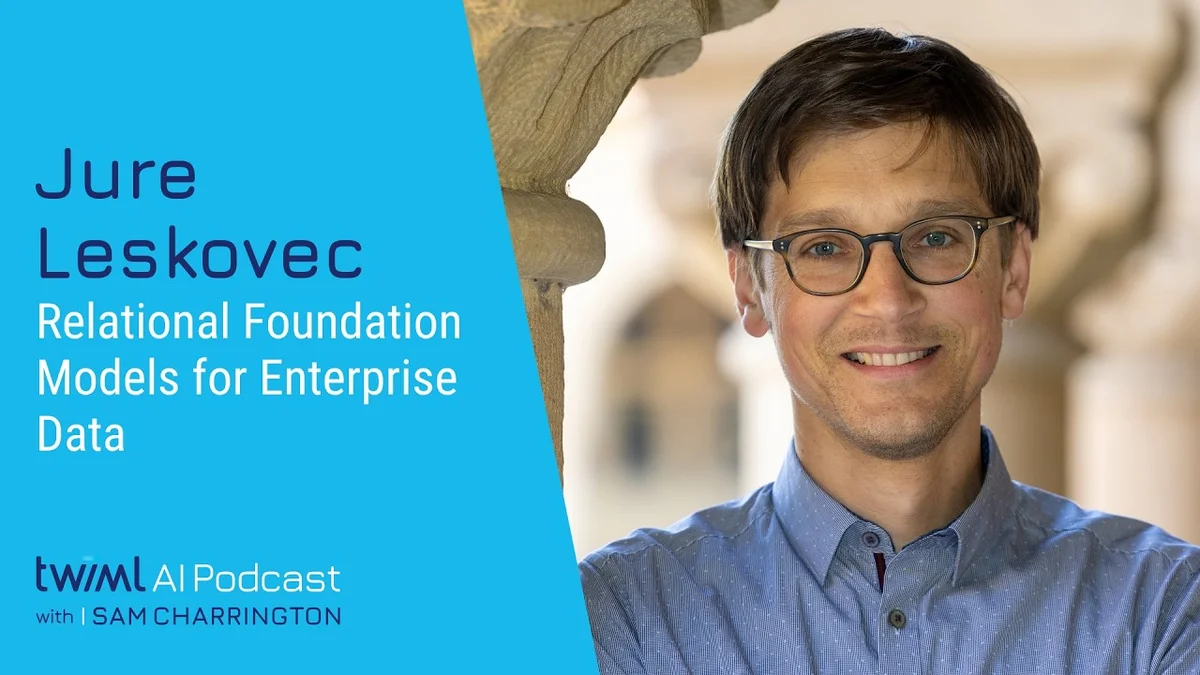
From the article 7 mentionsIn a recent AI Podcast episode, Jure Leskovec, co-founder and chief scientist at Kumo, and professor at Stanford University, discussed the transformative potential of Relational Foundation Models for enterprise data.
Enterprise Data ChallengesDriver
Complex structured data beyond text/images
From the article 8 mentionsLeskovec emphasized that while the potential is immense, scaling these models to the complexity and volume of enterprise data remains a significant research and engineering challenge.
Graph Neural NetworksCore
From the articleLeskovec is particularly known for his contributions to graph neural networks, recommender systems, and the analysis of large-scale data, including social networks and, more recently, enterprise data.
Relational Foundation ModelsCore
From the article 7 mentionsLeskovec introduced Relational Foundation Models as a new class of models designed to understand and reason over the inherently structured and relational nature of enterprise data.
Key CapabilitiesContext
Understanding complex relationships in data
From the articleLeskovec highlighted several key capabilities of Relational Foundation Models:
Transformative PotentialEffect
Revolutionizing enterprise data understanding and applications
From the article 2 mentionsIn a recent AI Podcast episode, Jure Leskovec, co-founder and chief scientist at Kumo, and professor at Stanford University, discussed the transformative potential of Relational Foundation Models for enterprise data.
Future ApplicationsOutcome
Road ahead for advanced enterprise AI
![Relational Foundation Models for Enterprise Data [Jure Leskovec] - 768 - TWIML](https://img.youtube.com/vi/khSSuUyvqno/maxresdefault.jpg)