


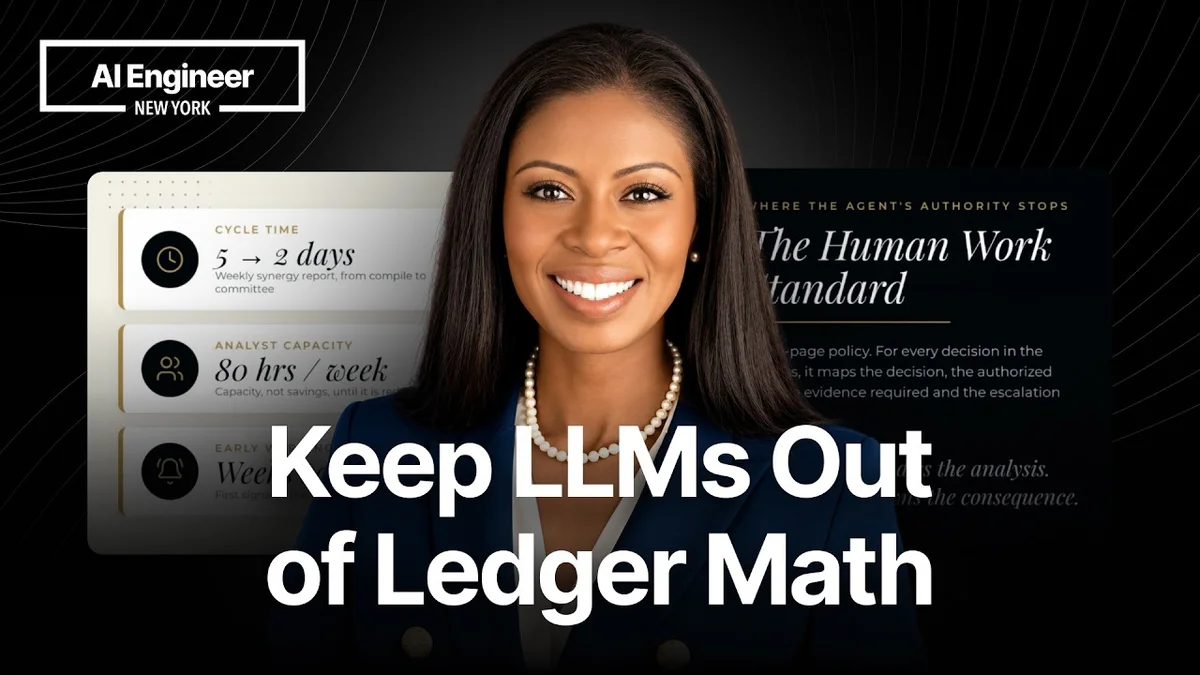
Michele Grant told AI Engineer the agent working is not the test. Trust is. The creator of Leading at Scale framed the enterprise question bluntly: the agent works, does anyone trust it?
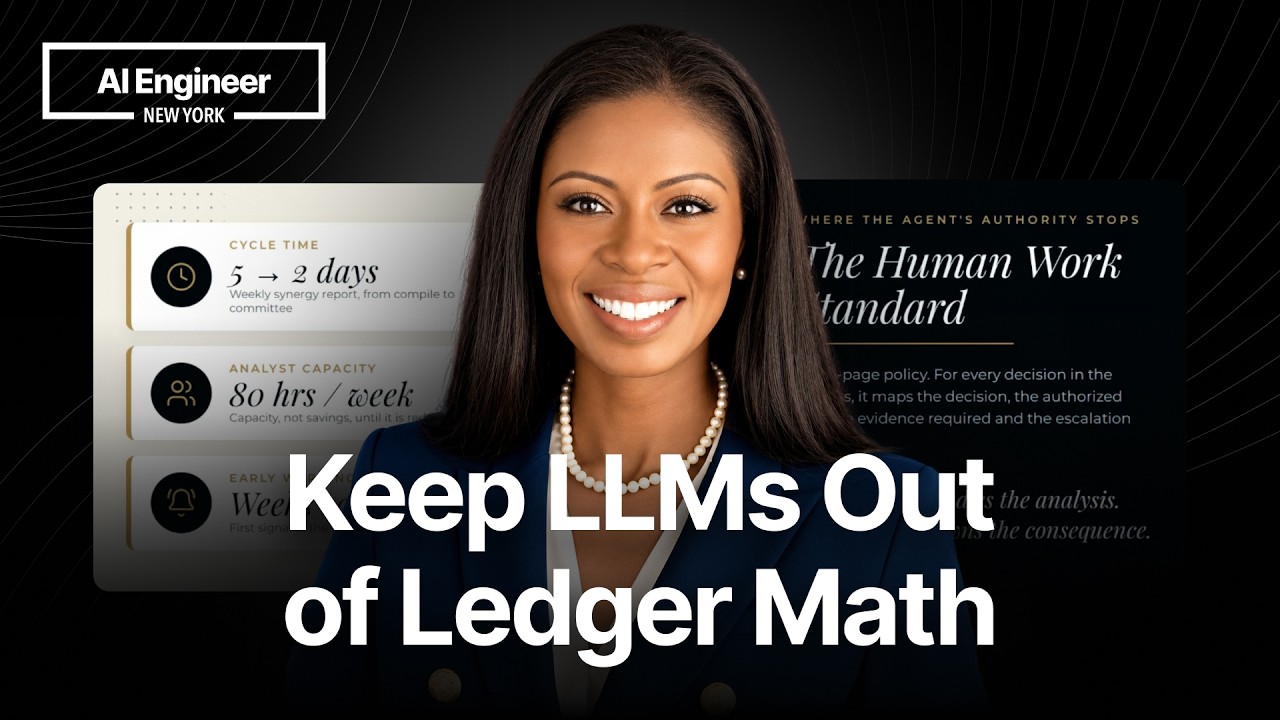
That trust has to be engineered before go-live, Grant argued, the same way she did for more than a decade leading M&A integrations across media, tech and consumer goods. An agent earns permission to run only when it delivers budgeted value inside the firm's risk appetite, policies and regulatory guardrails.
Grant grounded the framework in a $15 billion acquisition chasing $400 million in net synergies. The integration management office runs 40 workstreams, from vendor contracts to ERP consolidation, with analysts reconciling actuals to the general ledger every week for a steering committee of the CFO, chief risk officer and integration lead. Engineers built an agent to ingest weekly updates, reconcile the ledger, run variance math and flag lagging initiatives. A four-week pilot matched the analyst reports line for line. Tech works. Value is still unproven.
So Grant put three questions to leadership. What value does it create, who is on the hook, and what evidence earns autonomy. For value, she required a written case and a pre-deployment baseline on three metrics. Cut the five-day report build to a target of two days, count the 80 hours a week freed when four analysts spend half their week on the deck only after that time is redeployed to behind-plan workstreams net of compute and review cost, and most critically, shrink detection time from first data slip to steering committee visibility. If you cannot state the baseline, Grant said, do not deploy.
Ownership follows the three lines model, Grant said. The integration lead owns the output in the first line. Risk and compliance challenge it in the second, calibrated to exposure. An internal draft reviewed by a senior analyst gets lighter scrutiny than an agent publishing to the board. Internal audit decides in the third line when the agent enters the audit plan on material risk. Day to day, one employee, the senior analyst, must understand boundaries, interpret output, override or reverse it, and hit a kill switch. Grant codified authority in a one-page human work standard. The agent prepares analysis. Humans make the decisions. The senior analyst calls timing difference versus cash shortfall, the workstream lead owns remediation, the integration lead flags at-risk initiatives. No assigned owner means no deployment.