

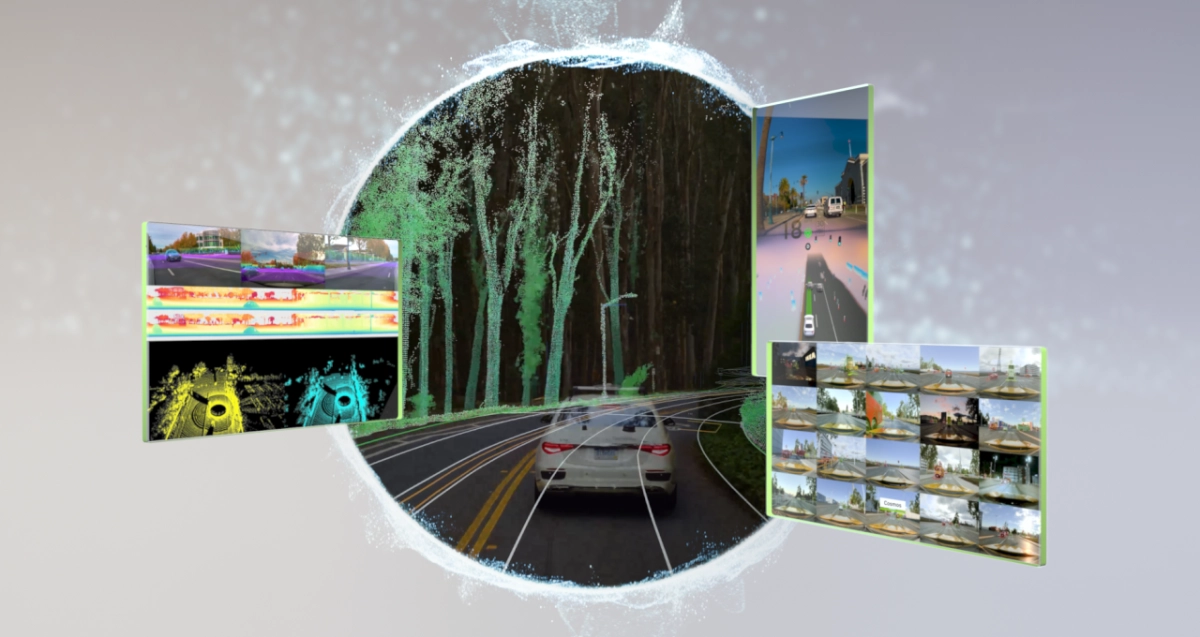
The landscape of autonomous vehicle development is undergoing a significant transformation, driven by advancements in simulation and validation. NVIDIA is pushing the boundaries of physical AI safety, particularly for robotaxis, by leveraging OpenUSD, Omniverse, and its new Halos framework. This integrated approach aims to accelerate the safe, scalable deployment of intelligent robots and autonomous vehicles from research labs into unpredictable real-world conditions.
A core component of this evolution is the OpenUSD Core Specification 1.0, which establishes standard data types and behaviors for interoperable simulation pipelines. This standardization, powered by NVIDIA Omniverse libraries, enables developers to create "SimReady" assets and high-fidelity digital twins that accurately reflect real-world environments. For robotaxi AI safety, this means generating robust synthetic data and conducting extensive virtual testing in conditions that precisely mirror operational realities, minimizing discrepancies between simulation and physical deployment. The ability to reuse these assets across tools and teams significantly streamlines the development process.
Crucially, addressing rare and challenging edge cases is paramount for robotaxi AI safety, a task nearly impossible with real-world data alone. Generative AI techniques like Gaussian splatting and advanced world models are now accelerating this process. Technologies such as NVIDIA Research's Play4D and World Labs' Marble generative model allow researchers to rapidly create photorealistic, physics-ready 3D environments from simple prompts or images. This high-fidelity simulation workflow dramatically expands the range of scenarios robots can practice, keeping dangerous experimentation safely within the virtual realm.
Standardizing Robotaxi AI Safety Validation
The NVIDIA Halos framework marks a critical step towards rigorous, standards-based validation for autonomous systems. Advancements like the Sim2Val framework statistically combine real-world and simulated test results, significantly reducing the need for costly physical mileage while proving safe behavior across critical scenarios. Complementing this, the NVIDIA Halos AI Systems Inspection Lab, accredited by ANAB, provides impartial inspection and certification of Halos elements across robotaxi fleets and AV stacks. This independent validation is essential for building public trust and ensuring regulatory compliance, directly addressing the industry's need for verifiable robotaxi AI safety.
Industry leaders are already adopting these safety advancements. Bosch, Nuro, and Wayve are among the first participants in the Halos AI Systems Inspection Lab, with Onsemi recently becoming the first company to pass inspection. Furthermore, the open-source CARLA simulator now integrates NVIDIA NuRec and Cosmos Transfer for diverse scenario generation, while Mcity at the University of Michigan is enhancing its 32-acre AV test facility's digital twin using Omniverse libraries. These collaborations and integrations across the AV ecosystem underscore a collective commitment to building robust testing environments and sharing data, further solidifying the foundation for robotaxi AI safety.